四个半小时之后,桌上只剩三道题:阿布扎比三方会谈首日的进展与僵局
先说清这件事在谈什么
用大白话讲,这件事就是美国把俄罗斯和乌克兰拉到同一张桌子前,商量这场打了近五年的战争能不能停、怎么停、停了以后谁来保证不再打起来。
谈判地点在阿拉伯联合酋长国首都阿布扎比,时间是11月10日到11日,一共两天。11月10日是第一天,谈了大约四到四个半小时。11月11日还要接着谈第二天。
这不是三方第一次见面,却是今年2月以来第一次恢复这种三方格式。中间隔了大约九个月没有谈,所以光是人重新坐下来这件事本身,就成了各方口中的一个信号。
但读者需要先有一个清醒的预期:第一天谈完,没有宣布停火,没有宣布和平协议,也没有任何一份正式成果文件。有的只是各自的表态、一个还没有被官方确认的大规模换俘说法,以及第二天继续谈的安排。
第一天到底怎么谈的
据阿联酋外交部11月10日发布,阿联酋副总理兼外交部长阿卜杜拉·本·扎耶德出席了本轮三方会谈的启动仪式。阿方表示,主办本轮会谈是阿联酋支持美国推动对话、寻求政治解决的努力的一部分,并希望会谈能带来结束这场持续近五年危机的实际步骤。
据法媒《世界报》11月11日报道,首日会谈持续约四小时而无具体成果。据 The Europe Today 援引熟悉进程的消息人士报道,首轮会谈共约四个半小时,其中包括约40分钟休息。美联社经俄新社报道的口径同样是首日会谈在近四小时后结束。综合各方口径,本文取约四到四个半小时这一区间表述。
坐在桌前的人需要先认清。美方是总统特使史蒂夫·威特科夫和总统女婿贾里德·库什纳,负责居中斡旋。乌方代表团由对外情报局局长鲁斯泰姆·乌梅罗夫率领,总统办公室主任基里洛·布达诺夫也在代表团中。俄方代表团由总统助理弗拉基米尔·梅金斯基率领,他自2022年3月伊斯坦布尔首轮直接会谈起就一直率领俄方谈判团队。
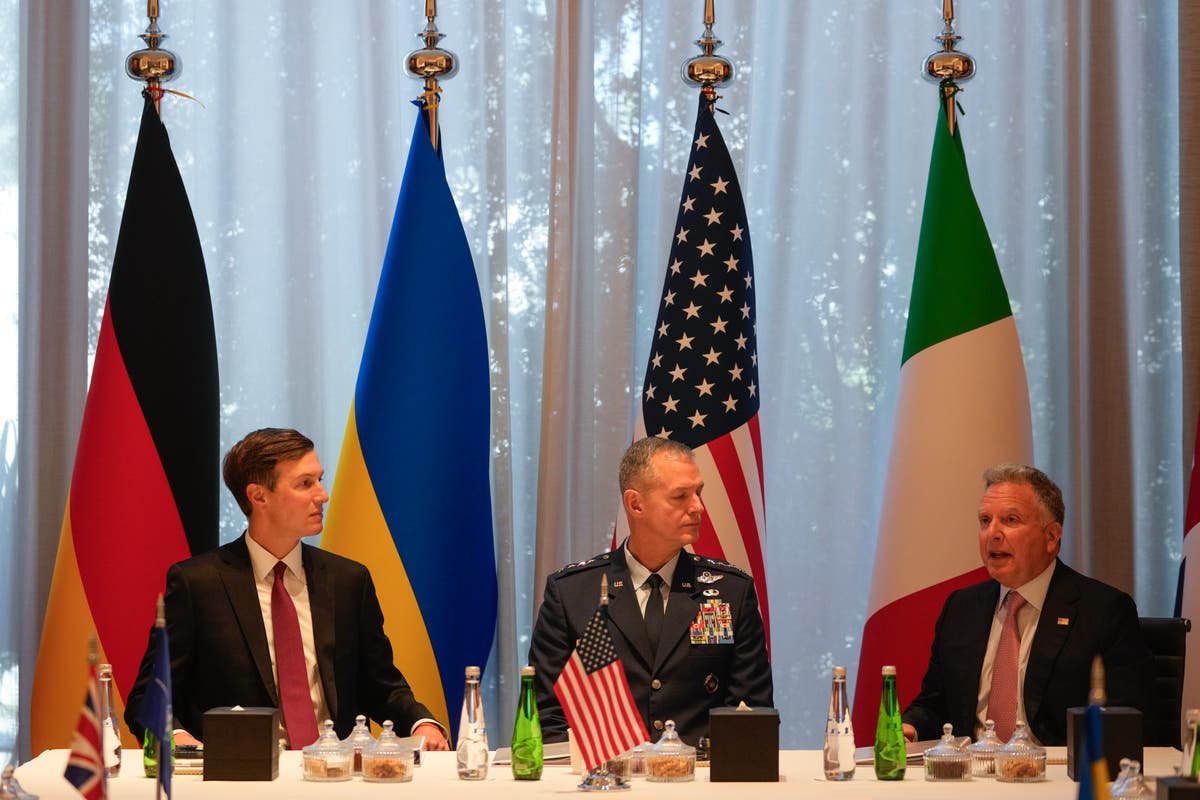
当天的顺序也很重要。乌梅罗夫在社交媒体上说,这一天先从乌克兰团队与美国特使,以及英国、法国、德国、意大利、北约和欧盟委员会代表的会面开始协调,然后才进入乌克兰、美国、俄罗斯的三方格式。也就是说,欧洲人当天到了场、先开了协调会,但没有进入三方谈判室本身。
第一道题:先谈人,换俘与被带走的孩子
据乌克兰总统泽连斯基11月10日在听取谈判团队汇报后在 X 上发布的说法,首日讨论先落在人道议题上,包括释放战俘、乌克兰安全保障,以及防止战争重演的机制和降级步骤的必要性。泽连斯基把释放战俘称为优先事项,并说讨论还涉及被带离乌克兰的儿童的返回问题。
换俘是第一天唯一接近具体成果的话题,但必须把话说准。乌克兰媒体《乌克兰真理报》和 Interfax-Ukraine 援引乌方代表团消息人士报道称,双方已商定在近期进行一次大规模换俘。截至首日结束,这一说法没有得到任何一方的正式公开确认,人数与日期都没有官方公布。
另有报道称,泽连斯基提到讨论中出现了千人对千人、甚至1500人对1500人的交换规模说法。本文对此的标注是:这是讨论中被提及的规模说法,不是一份已经签定的换俘协议,更没有执行日期,读者不应把它当作已经达成的成果。
这个话题之所以被放在最前面,有它的现实背景。据阿联酋方面此前数据,10月23日完成的一次斡旋换俘中,俄乌各交换270人,阿联酋斡旋下累计获释人数已达8537人。换俘是这场战争中少数反复真正执行过的合作事项,也是谈判桌上信任成本最低的一块。
第二道题:安全保障,同一句话的两种读法
白宫在会谈前就已定调,本轮两天会谈的重点是安全保障。泽连斯基说,首日详细讨论了对乌克兰安全保障的内容,以及让这些保障长期运转的基础,并强调需要真正能阻止战争重演的工具。乌梅罗夫列出的乌方优先事项还包括结束敌对行动、可靠的战后保障、经济恢复与人道措施。
俄方的读法顺序正好相反。据报道,俄罗斯外长拉夫罗夫表示,美方发起的会谈将聚焦地区安全框架的要素,并称对乌克兰和俄罗斯的安全保障应当在冲突得到全面、完整的解决之后才生效。
顺序之争不是文字游戏。乌方与欧洲的顺序是先停火、再谈保障、最后才谈更大的安排。俄方的顺序是先有全面解决,保障随后才谈。两种顺序背后是对战场时间的不同计算:一方担心停火前谈大框架会把停火本身挤出议程,另一方则不愿在军事压力尚在时先交出停火这张牌。
美方试图把这道题再放大一层。库什纳在开场表态中说,目标是建立一个新的框架和新的理解,并在 X 上表示,他与威特科夫正在推动一项能带来持久和平的谈判解决,让乌克兰成为一个主权、安全、繁荣的国家,并处在一个更稳定的欧洲安全环境之中。用大白话翻译这句话:美方想把结束这一场战争,与整个欧洲今后如何安排安全绑在一起谈,而不只是谈乌克兰一国的停火线。
第三道题:领土,桌上没有明说、桌下绕不开
首日公开议程里,领土并不是被摆在台面中央的词,但它是所有表态背后的硬约束。
据美联社报道,俄罗斯总统普京要求乌克兰从顿涅茨克、卢甘斯克、扎波罗热和赫尔松四地撤军。这四地是俄罗斯在2022年9月宣布吞并、但从未完全控制的地区。泽连斯基在丹麦访问期间明确拒绝主动让出俄军在战场上没有拿下的土地。
顿涅茨克的控制权是其中最具体的一处僵点。俄方要的是乌军撤出其声称拥有主权的顿巴斯地区,乌方拒绝以领土让步换取一份无法保证不再开战的安排。另有11月11日晨间的简报类报道提到美方曾提出重划顿涅茨克与卢甘斯克边界的设想,让俄方在文件上获得完整的顿巴斯、乌方保留其仍控制的城市。本文对此的标注是:该设想目前只有简报类二手转述,未见当事方正式文本或公开确认,只能记为一种被报道的设想推测,不能写成美方正式提案。
《世界报》对首日的评论标题直接写了进展甚微。该报指出,俄方对乌方与盟友要求的停火持抵制态度,首日结束后俄方保持沉默,而泽连斯基在无具体成果的情况下仍称讨论具有建设性。这与乌方和美方的公开措辞形成了温差,读者应当同时看到这两种温度。
欧洲在门外:协调在先,入场未定
欧洲这一天的角色,可以用一句话概括:在场,但不在屋里。
三方会谈开始前,美乌先与英国、法国、德国、意大利、北约和欧盟委员会代表开了协调会。英、法、德三国代表还专程到阿布扎比与美方斡旋者沟通。据《世界报》报道,欧洲方面最担心的是美方为了尽快达成一纸解决而向俄方作出更多让步,并明确向威特科夫和库什纳重申了欧洲的顺序:先停火,再给乌克兰安全保障以防新的侵略,最后才谈更广泛的计划。
欧洲担忧的另一层,是美方话术的变化。《世界报》报道称,库什纳在阿布扎比表示欧洲的安全是美国的责任,美方还谈到要建立一套新的欧洲安全架构,以纠正过去的不足、更好地容纳俄罗斯。欧洲方面则担心,在这套新架构的话语里,停火的要求会被推到一边,乌克兰的位置会受到威胁。周二发表的一份欧美联合声明把双方的共同底线写进了文字:支持建立强有力的战后欧洲安全架构与安排,同时坚持尊重乌克兰的主权与领土完整。
俄方对欧洲入场的态度是公开的拒绝。克里姆林宫发言人佩斯科夫11月9日表示,欧洲有自己与基辅和华盛顿沟通的渠道,阿布扎比格式仍是俄乌之间、由美国居中调解的三方谈判。《世界报》还援引拉夫罗夫在莫斯科的话说,让欧洲人留在酒店里。格式之争至此已经很清楚:俄方坚持只谈三方,欧方坚持凡涉及欧洲安全的安排欧洲必须在场,美方则在中间留了一道以后再说的门。
卢比奥在巴黎说了什么
美国国务卿卢比奥本人不在阿布扎比。他11月9日在巴黎出席七国集团外长会议期间,在场边对记者谈了这轮会谈。
据《世界报》引述,卢比奥说,美国似乎是世界上唯一能把俄乌拉到同一张桌前的国家,总统也是唯一能做到这一点的领导人。他同时承认任务艰难,需要尝试创造性的办法。据多家媒体报道,卢比奥把阿布扎比会谈称为非常有成效,同时提醒显然还有大量工作要做。
在欧洲入场问题上,卢比奥的口径是留有余地的开放。据报道,他表示美国不反对欧洲在今后某个阶段直接参与谈判,欧洲是长期解决这一问题的一部分,但时机尚未到。他还表示,在战后对乌安全保障的形态上已取得一些进展,但尚未有任何定案。德国外长瓦德富尔在巴黎与卢比奥单独会面后则强调,欧洲必须在谈判中占有一席之地。
这几句话拼在一起,就是美方目前完整的姿态:先由三方把最难的几道题谈出轮廓,欧洲的正式入场往后放,但不能把欧洲排除在最终安排之外。这个姿态能不能同时安抚基辅、莫斯科与欧洲三方,正是11月11日第二天会谈要继续检验的。
GSM观察:一场会谈,三种计时器
以下为 GSM 在已核实事实基础上的观察与解读,推测之处已标明。
第一种计时器在战场上。首日会谈进行的同时,前线并没有安静下来。据美联社报道,会谈前后俄乌仍在进行远程打击,两军在前线大体僵持。谈判桌上的每一天拖延,在战场上都有对应的代价,这也是乌方与欧洲坚持先停火顺序的现实理由。
第二种计时器在华盛顿。据《世界报》报道,特朗普在11月3日中期选举中遭遇挫败后,把解决这场冲突列为优先事项,而新一届国会将在1月就职。这一时间背景是法媒的报道与评论口径,本文在此标注为背景推测:美方斡旋者希望在政治窗口收窄之前拿出可展示的进程,这种急切既可能推动妥协,也可能让欧洲担心仓促成交。两种可能同时存在,目前没有证据能排除其中任何一种。
第三种计时器在人道线上。换俘是唯一不需要先解决领土与安全架构就能执行的事。如果第二天或随后几天真的落地一次千人量级的交换,它将成为本轮会谈第一个可验证的成果,也将成为判断这张桌子是否有效的最硬指标。反之,如果连换俘都只停留在被报道已商定的阶段,那么建设性与非常有成效这些形容词的含金量,就要被打上折扣。
GSM的解读是,首日的真正成果不是任何一项协议,而是议程本身被重新排了序:人道步骤被推到最前面试水,安全保障被确认为主菜,领土被暂时留在桌下,而欧洲安全架构被美方端上了桌面当作更大的盘子。这个排序让会谈得以继续,却没有让任何一道难题变小。
接下来看什么
11月11日第二天会谈有三个可验证的观察点。
第一,换俘说法会不会得到任一方的正式确认,包括人数、对象类别与大致时间。没有确认,它就仍然只是一则报道。
第二,安全保障会不会出现任何成文的东西,哪怕只是一份欧美或三方的原则声明。周二的欧美联合声明已经写了主权与领土完整,如果第二天再无新文本,说明保障仍停留在口头轮廓。
第三,欧洲的角色会不会从协调会向谈判室挪动哪怕一步。卢比奥已经把门留开了一条缝,俄方的拒绝也已经说在明处,这道缝在第二天是变宽还是合上,将直接决定下一轮会谈的格式。
总结
阿布扎比首日谈了四个多小时,谈出了继续谈的理由,没有谈出停战的答案。
对普通读者来说,记住三句话就够了。第一,人重新坐下来了,这是九个月来的第一次,光这一点美方就称之为有成效。第二,最有可能先落地的是换人回家,但截至首日结束它还没有被官方证实。第三,真正决定战争能不能结束的领土与安全保障两道题,一道被留在桌下,一道各方连先谈哪一步都没有谈拢。
第二天的会谈不会终结这场战争。它能做的至多是把其中一道题,从形容词推进到数字与日期。GSM 将按这个标准,继续盯住后续每一份正式文本,而不是任何一方的表态。
(来源:阿联酋外交部、美联社、法国《世界报》)
After Four and a Half Hours, Three Questions Remain: Progress and Deadlock on Day One in Abu Dhabi
What this story is about, in plain language
In plain terms, the United States has brought Russia and Ukraine to the same table to discuss whether a war now in its fifth year can stop, how it would stop, and who would guarantee that it does not start again.
The talks are in Abu Dhabi, the capital of the United Arab Emirates, on November 10 and 11. Day one, on November 10, lasted about four to four and a half hours. Day two follows on November 11.
It was not the first trilateral meeting, but it was the first in that format since February, after a gap of about nine months. The fact that the sides sat down again at all became a signal in itself.
Readers should keep one clear expectation. Day one produced no ceasefire, no peace agreement and no formal outcome document. It produced statements, a reported but officially unconfirmed large prisoner exchange, and an agreement to keep talking.
How day one unfolded
The UAE Ministry of Foreign Affairs said on November 10 that Deputy Prime Minister and Foreign Minister Abdullah bin Zayed attended the launch of this round of trilateral talks. The ministry said hosting the talks was part of UAE support for United States efforts to promote dialogue and reach a political solution, and expressed hope for practical steps to end a crisis that has lasted nearly five years.
Le Monde reported on November 11 that the first day ran about four hours with no tangible results. The Europe Today, citing a source familiar with the process, put the first round at four and a half hours including a break of about 40 minutes. The Associated Press, citing RIA Novosti, also reported that day one ended after nearly four hours. This piece therefore uses the range of about four to four and a half hours.
The people at the table matter. The United States was represented by special envoy Steve Witkoff and Jared Kushner, the president's son-in-law, acting as mediators. Ukraine's delegation was led by Rustem Umerov, head of the Foreign Intelligence Service, with presidential office chief Kyrylo Budanov also in the delegation. Russia's delegation was led by presidential aide Vladimir Medinsky, who has headed Moscow's team since the first direct talks in Istanbul in March 2022.
The order of the day also matters. Umerov said on social media that the day began with a meeting between the Ukrainian team, the United States envoys and representatives of the United Kingdom, France, Germany, Italy, NATO and the European Commission, and only then moved to the trilateral format of Ukraine, the United States and Russia. Europe was therefore present and coordinated first, but did not enter the trilateral room itself.
Question one: people first, prisoners and taken children
President Volodymyr Zelenskyy said on X on November 10, after receiving a report from his negotiating team, that day one addressed humanitarian steps, the release of prisoners, security guarantees for Ukraine, and the need for de-escalation measures and tools to block any recurrence of the war. He called the release of prisoners a priority, and the discussions also covered the return of Ukrainian children.
A prisoner exchange was the only topic that came close to a concrete outcome, and precision matters here. Ukrainska Pravda and Interfax-Ukraine, citing sources in Ukraine delegation, reported that the sides had agreed to carry out a large exchange in the near future. By the end of day one, no side had publicly confirmed that report, and no official numbers or date had been released.
Other reporting said Zelenskyy mentioned that a scale of 1,000 for 1,000, possibly 1,500 for 1,500, had been discussed. Our label for that figure is explicit: it is a scale said to have been discussed, not a signed exchange agreement, and it carries no execution date. It should not be read as an achieved result.
The topic came first for a practical reason. UAE figures cited for the October 23 mediated exchange put that swap at 270 people from each side, bringing the total released through UAE mediation to 8,537. Prisoner exchanges are among the few forms of cooperation in this war that have repeatedly been carried out, and they carry the lowest trust cost at the table.
Question two: security guarantees, one phrase read two ways
The White House set the focus before the talks: the two-day session would centre on security guarantees. Zelenskyy said day one discussed in detail the content of guarantees for Ukraine and the basis for their long-term functioning, stressing the need for real tools to prevent a repeat of the war. Umerov listed Kyiv priorities as ending hostilities, reliable postwar guarantees, economic recovery and humanitarian measures.
Russia reads the sequence in reverse. Foreign Minister Sergei Lavrov was reported as saying the United States initiated talks would focus on elements of a regional security framework, and that security guarantees for Ukraine and Russia should take effect only after a full and comprehensive settlement of the conflict.
Sequence is not a word game. The Ukrainian and European order is ceasefire first, guarantees second, and a broader arrangement only after that. The Russian order is a comprehensive settlement first, with guarantees to follow. Behind the two orders are two calculations about battlefield time: one side fears that talking about a grand framework before a ceasefire will push the ceasefire itself off the agenda, while the other is unwilling to surrender the card of a ceasefire while military pressure remains.
Washington is trying to widen the question further. Kushner said in opening remarks that the goal was to create a new framework and a new understanding, and wrote on X that he and Witkoff were working on a negotiated solution that can deliver lasting peace and create the conditions for a sovereign, secure and prosperous Ukraine within a more stable European security environment. In plain language, the United States wants to link ending this war to the future security arrangements of Europe as a whole, not only to a ceasefire line inside Ukraine.
Question three: territory, unspoken at the table and unavoidable beneath it
Territory was not the word placed at the centre of the public agenda on day one, but it is the hard constraint behind every statement.
The Associated Press reported that President Vladimir Putin wants Ukraine to pull its troops back from Donetsk, Luhansk, Zaporizhzhia and Kherson, the four regions Moscow annexed in September 2022 but has never fully captured. Zelenskyy, visiting Denmark on Tuesday, rejected demands to voluntarily cede territory that Russia has not taken on the battlefield.
Control of Donetsk is the most concrete point of deadlock. Moscow wants a Ukrainian withdrawal from the Donbas areas it claims, while Kyiv refuses to trade land for an arrangement that cannot guarantee the war will not resume. A briefing style report on the morning of November 11 also mentioned a reported United States idea to redraw the boundaries of Donetsk and Luhansk, allowing Russia to claim the full Donbas on paper while Ukraine retained the cities it still holds. Our label is explicit: that idea currently rests only on second hand briefing summaries, with no formal text or public confirmation from any party. It can be recorded only as a reported idea and speculation, not as a formal United States proposal.
Le Monde headlined its assessment as talks making little progress. It noted Russian resistance to the ceasefire demanded by Ukraine and its allies, Russian silence at the end of day one, and Zelenskyy welcome for a constructive discussion despite the absence of tangible results. That cooler temperature should be read alongside the warmer public wording from Kyiv and Washington.
Europe outside the room: coordinated first, admission undecided
Europe's role on day one can be summed up in one line: present, but not in the room.
Before the trilateral session, the United States and Ukraine met representatives of the United Kingdom, France, Germany, Italy, NATO and the European Commission. Representatives of the three European powers also travelled to Abu Dhabi to speak to the American mediators. Le Monde reported that Europe feared further concessions to the Kremlin in pursuit of a hasty settlement, and that Europeans restated their order clearly to Witkoff and Kushner: a ceasefire first, then security guarantees for Ukraine to prevent new aggression, and only after that a broader plan.
Europe other concern was a shift in American language. Le Monde reported that Kushner stated in Abu Dhabi that Europe's security was a United States responsibility, and that the envoys spoke of defining a new European security architecture that would correct previous shortcomings to better accommodate Russia. Europeans worried that in that language the demand for a ceasefire would be pushed aside and Ukraine's position threatened. A joint European American statement on Tuesday put shared red lines in writing, expressing support for a strong postwar European security architecture and arrangements while insisting on respect for Ukraine's sovereignty and territorial integrity.
Russia's rejection of a European seat was public. Kremlin spokesman Dmitry Peskov said on November 9 that Europe had its own channels of communication with Kyiv and Washington, and that the Abu Dhabi format remained a trilateral negotiation between Russia and Ukraine with the United States as mediator. Le Monde also quoted Lavrov in Moscow saying, let the Europeans stay at the hotel. The dispute over format is now plain: Russia insists on three parties only, Europe insists it must be present for any arrangement about European security, and the United States has left a door marked later.
What Rubio said in Paris
Secretary of State Marco Rubio was not in Abu Dhabi. He spoke to reporters on November 9 in Paris, on the sidelines of the G7 foreign ministers meeting.
Le Monde quoted Rubio as saying the United States seemed to be the only country in the world, and the president the only leader, that could get the Russians and the Ukrainians to the same table. He acknowledged the difficulty of the task and the need to try to be creative. Multiple outlets reported that Rubio called the Abu Dhabi meeting very productive while cautioning that there was obviously a lot of work to be done.
On a European seat, his wording left the door open. He was reported as saying Washington did not oppose eventual European involvement in direct negotiations, that Europe was part of solving the problem for the long term, but that the time was not yet right. He also said some progress had been made on the shape of postwar security guarantees, with nothing finalised. German Foreign Minister Johann Wadephul, who met Rubio separately in Paris, stressed that Europe must have a place in the negotiations.
Taken together, that is the current American posture: let the three parties sketch the hardest questions first, postpone a formal European seat, but do not exclude Europe from the final arrangement. Whether that posture can reassure Kyiv, Moscow and Europe at the same time is what day two will keep testing.
GSM observation: one meeting, three clocks
The following is GSM observation and interpretation based on the verified facts above. Speculation is labelled as such.
The first clock is on the battlefield. The Associated Press reported that long range strikes continued around the talks and that the two armies remained largely deadlocked on the front line. Every day of delay at the table carries a cost in the field, which is the practical reason behind the Ukrainian and European ceasefire first order.
The second clock is in Washington. Le Monde reported that President Trump, after a stinging defeat in the November 3 midterm elections, had made resolving the conflict a priority, with a new Congress due to take office in January. We label the following as background speculation: American mediators may want demonstrable progress before that political window narrows, and that urgency could push compromise forward while also feeding European fears of a rushed deal. Both possibilities remain open, and no evidence currently excludes either.
The third clock is humanitarian. An exchange is the one thing that can be carried out without first settling territory or a security architecture. If an exchange on the order of a thousand people actually takes place on day two or in the following days, it will be the first verifiable result of this round and the hardest test of whether this table works. If even the exchange stays at the stage of a reported agreement, the value of adjectives such as constructive and very productive will have to be discounted.
Our reading is that the real result of day one was not any agreement, but a reordering of the agenda: humanitarian steps were moved to the front as a test, security guarantees were confirmed as the main course, territory was left beneath the table for now, and a European security architecture was placed on the table by Washington as a larger frame. That ordering lets the talks continue. It does not make any of the hard questions smaller.
What to watch next
Day two on November 11 offers three verifiable tests.
First, whether the reported prisoner exchange receives formal confirmation from any side, including numbers, categories of people and an approximate timing. Without confirmation, it remains a report.
Second, whether security guarantees produce anything in writing, even a statement of principles. The Tuesday joint European American statement already affirmed sovereignty and territorial integrity. If day two adds no new text, guarantees remain an oral outline.
Third, whether Europe role moves even one step from the coordination meeting toward the negotiating room. Rubio left the door ajar and Russia's refusal is on the record. Whether that opening widens or closes on day two will decide the format of the next round.
In summary
Day one in Abu Dhabi lasted more than four hours. It produced reasons to keep talking, and no answer on ending the war.
For the general reader, three sentences are enough. First, the sides sat down together for the first time in nine months, and Washington counts that alone as productive. Second, the outcome most likely to land first is people going home, but by the end of day one it had not been officially confirmed. Third, of the two questions that will decide whether this war can end, territory was left beneath the table, and on security guarantees the sides have not even agreed on which step comes first.
Day two will not end this war. At most, it can move one question from adjectives to numbers and dates. GSM will judge what follows by that standard, and by formal texts rather than by any side's statements.
(Source: UAE Ministry of Foreign Affairs, Associated Press, Le Monde)
来源:阿联酋外交部、美联社、法国《世界报》
发布:GSM·美国(发布链接)
图片来源:11月10日阿布扎比三方会谈前协调会:库什纳(左)、北约欧洲盟军最高司令格林克维奇(中)与美国特使威特科夫(右),美联社池照片(Altaf Qadri/AP),经 Press Association 图库发布
GSM Global · 本篇英文版 English edition of this story
- 2026-11-09 17:15阿布扎比前夜:一座城里的两场僵局—美俄乌三方会谈11月10日开场,美伊全面和解仍无突破
- 2026-11-09 19:12美国官员称对阿布扎比三方会谈「谨慎乐观」:俄乌双方均显灵活性,战后安全保障是焦点
- 2026-11-10 02:25俄美乌三方会谈在阿布扎比开始举行:乌方称先与美欧伙伴协调、再转入三方会谈 会期两天
- 2026-11-10 07:12跟进:阿布扎比三方会谈首日谈近4小时 11日继续举行
- 2026-11-10 01:01阿布扎比会谈前夕卢比奥11月9日表态:对乌战后安全保障须为俄罗斯所接受才能奏效,最终方案尚未谈定
- 2026-11-11 01:12四个半小时之后,桌上只剩三道题:阿布扎比三方会谈首日的进展与僵局本篇