阿布扎比前夜:一座城里的两场僵局—美俄乌三方会谈11月10日开场,美伊全面和解仍无突破
阿拉伯联合酋长国首都阿布扎比,11月9日—地缘政治会议「阿布扎比战略辩论」的会场里,阿联酋总统外交顾问安瓦尔·加尔加什(Anwar Gargash)把话说得很直:这个地区应当为一段长期的不确定期做准备。同一座城市,次日即11月10日,美国、俄罗斯与乌克兰三方代表团将坐到同一张桌前,举行自今年2月以来首轮三方会谈。两场外交日程在阿布扎比前后相隔不到24小时,谈的却是两场尚未结束的战争—一场在乌克兰,一场在伊朗。加尔加什11月9日的判断,正是这两条谈判线共同的注脚:美国同时居中斡旋两场冲突,而两边都没有哪一方公开说过,协议已经临近。
一、加尔加什的讲话:把「长期不确定」说在会谈前夜
据路透社11月9日报道,加尔加什在阿布扎比战略辩论上表示,美国与伊朗之间达成一项结束这场已持续八个多月战争的全面政治和解,看起来难以实现。他说:「我们应当为一段长期的不确定期做准备,在此期间,既不能想当然地认为会有决定性结果,也不能想当然地认为会有稳定的地区秩序。」
加尔加什说,这场美国与伊朗战争的后果「可能持续很长时间」,阿联酋因此须投入于自身的「防御能力、可信威慑的维持以及更强的国际安全伙伴关系」。他表示,阿联酋自一开始就反对美国对伊朗的战争;同时,这场战争表明了阿联酋与华盛顿防务与安全合作的重要性。他感谢法国、以色列、希腊、埃及与印度在今年早些时候伊朗袭击期间向阿联酋提供的「支持与声援」—路透社指出,其中部分国家曾在今年早些时候协助阿联酋抵御伊朗袭击。
加尔加什还表示,长期的地区不确定将要求阿联酋与伊朗及其他地区和国际伙伴保持持续的外交接触,近期的部分接触出于必要可能带有交易性质,但他未具体说明所指内容。这不是他第一次发出这类警告:11月1日在巴林首都马纳马发言时,加尔加什曾表示,地区担忧美国即将打击伊朗、德黑兰将以袭击海湾国家报复,阿联酋已为最坏情况做好准备。
美国国务卿马尔科·卢比奥(Marco Rubio)11月8日(周日)的表态与加尔加什隔日呼应。路透社报道,卢比奥当日表示,他不认为结束美伊战争的外交努力即将取得突破。同一天,卢比奥在启程赴法国巴黎出席七国集团外长会议前,还就乌克兰线给出了一组措辞不同的判断—下文详述。两条线、两种温度,出自同一位国务卿的同一天,这是理解本周阿布扎比外交的起点。
二、11月10日开场的会谈:谁来谈、谈什么
据路透社11月2日报道,美国总统特使史蒂夫·维特科夫(Steve Witkoff)当日宣布,美国将于11月10日至11日在阿布扎比召集乌克兰与俄罗斯代表团举行工作层级谈判。一名美国高级官员对路透社说,会谈将涵盖四项议程:战后安全协议、局势降级、人道主义措施以及结束战争。美方首席谈判代表为维特科夫与贾里德·库什纳(Jared Kushner)。这是自今年2月以来首次三方会谈:此前的正式三方轮次曾于今年1月、2月在阿布扎比举行,上一轮于2月17日至18日在瑞士日内瓦举行;2月28日美国与以色列对伊朗发动军事行动后,华盛顿的外交重心转向伊朗,三方进程随之中断至今。
各方代表团构成在会前一周内陆续确认。俄方:克里姆林宫发言人德米特里·佩斯科夫(Dmitry Peskov)确认,俄方代表团由总统助理弗拉基米尔·梅金斯基(Vladimir Medinsky)率领;据克里姆林宫11月7日经国际文传电讯社发布的消息,代表团成员还包括外交部副部长谢尔盖·里亚布科夫(Sergei Ryabkov)与米哈伊尔·加卢津(Mikhail Galuzin)、军事情报总局局长伊戈尔·科斯秋科夫(Igor Kostyukov)等。俄方同意举行本轮会谈,源于俄罗斯总统弗拉基米尔·普京(Vladimir Putin)10月21日在圣彼得堡与维特科夫会谈约三小时后表态愿意在11月10日之后恢复三方会谈;佩斯科夫10月23日首次给出阿布扎比这一地点与「11月上旬」的时间,并称会谈将聚焦和平达成后俄乌双方的安全保障、不排除欧洲参与。
乌方:据乌克兰总统办公室通报,乌克兰总统弗拉基米尔·泽连斯基(Volodymyr Zelenskyy)11月4日与维特科夫、库什纳通话90分钟,为本轮会谈做准备。乌方代表团由首席谈判代表鲁斯泰姆·乌梅罗夫(Rustem Umerov)率领,成员包括总统办公室主任基里洛·布达诺夫(Kyrylo Budanov)与副主任谢尔盖·基斯利茨亚(Sergiy Kyslytsya)、执政党议会党团领袖达维德·阿拉哈米亚(Davyd Arakhamia)。泽连斯基在通话后表示:「谈判必须全速推进,尽快结束这场战争。乌克兰已准备好采取必要步骤。我们的提议很明确,已经交给美方。」乌克兰外交部长安德里·西比哈(Andrii Sybiha)11月6日列出乌方在阿布扎比的优先事项:安全保障、黑海局势降级、能源停火、乌克兰儿童返回以及战俘交换。基辅方面11月4日的通报还确认,通话中「爱国者」拦截弹自美国交付延迟是焦点议题之一。
欧洲的位置在本轮发生了变化。谈判最初宣布时为美、俄、乌三方形式,欧盟方面曾表示不参与这一三方形式;11月8日,法国外交部长让-诺埃尔·巴罗(Jean-Noël Barrot)在接受法国RTL电台采访时公开确认:「欧洲方面将有充分的代表;法国将前往阿布扎比参加这些讨论。」他未透露法方代表人选。11月9日的报道显示,欧盟委员会与欧洲理事会将派出联合高级官员团队与会,由欧盟委员会主席冯德莱恩的办公室主任比约恩·塞贝特(Bjoern Seibert)与欧洲理事会主席安东尼奥·科斯塔(António Costa)的首席外交政策顾问安娜-玛丽亚·布拉(Anna-Maria Boura)领衔。在此之前,库什纳11月5日表示,美方官员已在布鲁塞尔与乌克兰、北约及欧洲伙伴就乌克兰安全保障与更广泛的欧洲安全框架举行了「富有成效且实质性」的讨论;乌克兰、美国、欧洲与北约官员11月4日至5日亦在布鲁塞尔会谈,议题包括战后重建与2027年资金需求。
三、会前表态:乌克兰线说「有进展」,伊朗线说「未临近」
卢比奥11月8日在佛罗里达州霍姆斯特德登机赴巴黎前对记者说,乌克兰与欧洲战后「安全架构」的形态讨论已取得一些进展。他说:「战后乌克兰、乃至整个欧洲大陆的安全基础设施会是什么样?」他表示,这正是总统所指的进展所在,同时明确限定:「还没有任何事情定案,或许在阿布扎比能取得一些进展—届时贾里德(库什纳)与史蒂夫(维特科夫)将在那里。」美国国务院11月6日公告,卢比奥于11月8日至10日访问巴黎出席七国集团外长会议;据美联社报道,俄乌战争与伊朗冲突同为巴黎会议的主要议题。
俄方在会前的公开信号集中在两点。其一是代表团规格:里亚布科夫等副外长级官员与军事情报负责人进入代表团,被克里姆林宫作为正式安排对外公布。其二是佩斯科夫11月7日前后的表态—他表示莫斯科真诚希望,尽管民主党在11月3日美国中期选举中获胜,特朗普总统仍能继续推进乌克兰和平努力,并称选举结果是美国内政。战场节奏未因会谈临近而放缓:11月7日至8日,俄乌双方互以导弹与无人机大规模袭击对方,泽连斯基在社交平台上就俄方对乌克兰关键基础设施的袭击作出公开评论;卢比奥所说的「安全保障」卡点—即停火之后靠什么阻止战争重起—仍是各方公开文件里唯一被反复点名、却没有公开文本的核心议题。
伊朗线的会前表态则明显更冷。卢比奥11月8日同日表示,美伊外交努力未到突破边缘,并称德黑兰的要求不切实际。伊朗方面的最新动作是经卡塔尔调停人向美方递交新的核与和平提案:据半岛电视台11月9日梳理,伊朗提出,该提案只能在华盛顿先满足德黑兰七项要求之后再行讨论,美方正在审议。
伊朗外交部长阿巴斯·阿拉格齐(Abbas Araghchi)此前对半岛电视台说明了这套以9月在联合国大会提出的「七日计划」为底本的方案逻辑:「第一天,美方落实一揽子措施;第二天,霍尔木兹海峡将重新开放,航行恢复如初。」伊朗外交部发言人伊斯梅尔·巴加埃(Esmaeil Baghaei)11月2日确认,9月提交的七步方案经压缩后「现在可以在两日内实施」;该方案的原始结构为:美国结束对伊朗港口的封锁、伊朗重开霍尔木兹海峡、美国放宽伊朗石油销售限制、取消新制裁,随后再谈其他议题—美国总统特朗普已于9月拒绝过该方案。阿拉格齐上周在48小时内与12位地区同行通话;伊朗最高国家安全委员会秘书莫赫森·雷扎伊(Mohsen Rezaei)公开列出的七项条件包括:全面停止敌对行动与军事打击、释放伊朗在海外被冻结资产、结束海上封锁、解除经济制裁、削减美国在地区的军事存在、战争赔偿,以及结束威胁与干涉。阿拉格齐11月9日前还警告,若美国恢复袭击,德黑兰将作出强烈回应。
调停渠道在本周一(11月9日)直接进入白宫日程:特朗普定于当日在白宫与卡塔尔首相兼外交大臣谢赫穆罕默德·本·阿卜杜勒拉赫曼·本·贾西姆·阿勒萨尼(Sheikh Mohammed bin Abdulrahman bin Jassim Al Thani)举行闭门会晤,卡塔尔是美伊之间主要的传话与斡旋方。卡塔尔首相此前曾公开表示,斡旋努力仍在继续,美方有意愿「采取步骤寻找解决方案」,并曾呼吁美伊接受「一个好的协议而非完美的协议」。另据以色列第12频道经《卫报》转述的报道(11月7日),卡塔尔正在推动一份调停框架草案:美方解除霍尔木兹海峡海上封锁并解冻部分伊朗资产,伊方则邀请国际原子能机构核查人员进入核设施并重开海峡,草案版本中美方先行、伊方次日邀请核查人员、海峡随后重开—该草案未获任何一方公开确认已接受,以上内容为媒体报道的草案版本,不作为已达成安排陈述。
四、美伊谈判的来龙去脉:八个月、三次搁浅与一个海峡
把时间线拉长,美伊这条线的卡点结构在2026年内已经重复出现三次。
第一段是战争本身。美国与以色列于2026年2月28日突然对伊朗发动军事行动,伊朗随后关闭霍尔木兹海峡这一全球石油运输要道,美国则对伊朗港口实施封锁,战争持续至今已逾八个月。海峡关闭与油轮遇袭贯穿其间:据站内此前市场报道,仅11月2日一天,受美伊和谈希望升温影响,国际油价双双跌逾7%,布伦特原油收于每桶104.77美元、美国WTI原油收于每桶96.46美元—谈判消息与油价之间的这种即时联动,是这场僵局进入全球日常经济生活的最直接刻度。
第二段是6月的短暂缓和。据半岛电视台11月9日梳理,美伊曾在卡塔尔与巴基斯坦斡旋下于6月在巴基斯坦伊斯兰堡签署一份谅解备忘录,设定60天谈判窗口,但该备忘录在数周内即告破裂,此后双方制裁与封锁安排大体回到备忘录之前的状态,伊朗冻结资产的解冻与石油销售豁免也随之成为今日七项条件的一部分。
第三段是9月以来的方案往返。伊朗9月在联合国大会期间提出七步(七日)方案,特朗普9月予以拒绝;10月28日,伊朗拒绝了美方提出的七日霍尔木兹方案;11月1日,伊朗谈判代表在多哈与卡塔尔调停人多日会谈后离开,路透社11月2日报道称会谈无突破但接触继续、一份提案草案正在传阅,卡塔尔调停人当晚前往德黑兰与阿拉格齐讨论草案版本。伊朗总统马苏德·佩泽希齐扬(Masoud Pezeshkian)11月9日前后表示,最高领袖穆杰塔巴·哈梅内伊(Mojtaba Khamenei)已授予政府推进结束冲突谈判的相应权限。截至11月9日,各方共同承认的事实只有:接触未断、草案在传阅、没有任何一方宣布接受对方的方案文本。
核问题是这条线最深的一层。国际原子能机构(IAEA)总干事拉斐尔·格罗西(Rafael Grossi)10月27日在联合国安理会表示,该机构自2025年6月受损设施遭袭以来,未发现受损场址有修复或重建迹象,但仍无法核实伊朗高浓缩铀库存的数量、构成与存放地点,也无法确认受保障监督的核材料未被转用。机构最后一次可核实的数字是截至2025年6月13日的440.9公斤纯度60%的浓缩铀;核查人员自2025年6月袭击开始后出于安全原因撤出,目前仅在布什尔核电站保留保障监督工作。伊方立场是:只有在核实其全部条件得到满足后,才会回到核问题谈判,且会谈中未提出、伊方也未同意转移高浓缩铀库存。美方立场是:若制裁解除在议程上,伊朗的离心机与浓缩态势必须从一开始就摆上桌面。
11月6日,美国国务院「正义悬赏」计划经美国中央司令部社交账号发布通告,以最高2000万美元悬赏征集伊朗核计划的设施、设备、人员及其动向信息—这一安排本身即显示,在核查人员无法入境的条件下,华盛顿正以公开征集的方式补足其对伊朗核计划现状的信息缺口。以上核查状态为IAEA公开口径;该机构同时表示,没有可信证据表明伊朗存在 coordinated 的核武器计划,本稿对库存现状不作超出IAEA口径的推断。
海湾国家自身的日常也在为这场僵局付账,且账目就写在阿布扎比的航班表上:据11月8日航班状态汇总,阿提哈德航空阿布扎比往返沙特阿拉伯利雅得与达曼的航班取消期已延至11月19日,阿联酋航空11月8日迪拜往返利雅得、达曼的全部航班取消;美国驻沙特阿拉伯使团11月7日发布安全提醒,称伊朗支持的胡塞武装袭击威胁上升,并提及此前针对沙特民用机场的袭击,利雅得哈立德国王国际机场自10月初袭击后关闭、10月25日起才以缩减规模部分重开。这组事实与加尔加什「长期不确定」的措辞互为表里:不确定不是一个外交辞令,而是已经排进航班时刻表的东西。
五、关键时间线(2026年)
1月、2月:美、俄、乌三方正式会谈先后在阿布扎比举行数轮;2月17日至18日,上一轮三方会谈在瑞士日内瓦举行,未取得重大突破。
2月28日:美国与以色列对伊朗发动军事行动;伊朗关闭霍尔木兹海峡,美国封锁伊朗港口;美俄乌三方进程中断。
6月:美伊在卡塔尔、巴基斯坦斡旋下于伊斯兰堡签署谅解备忘录,设60天谈判窗口;备忘录数周内破裂。
9月:伊朗在联合国大会期间提出七步(七日)方案;特朗普拒绝该方案。
10月21日:普京在圣彼得堡与维特科夫会谈约三小时后,表态愿在11月10日之后恢复三方会谈,提议讨论战后「安全框架」。
10月23日:佩斯科夫宣布三方会谈将于11月上旬在阿布扎比举行,聚焦安全保障,不排除欧洲参与。
10月27日:IAEA总干事格罗西在联合国安理会通报:440.9公斤60%浓缩铀(截至2025年6月13日最后可核实数字)的数量、构成与地点仍无法核实。
10月28日:伊朗拒绝美方提出的七日霍尔木兹方案。
11月1日:加尔加什在马纳马称阿联酋已为最坏情况做好准备;同日,伊朗谈判代表结束多哈会谈离开,草案开始传阅。
11月2日:维特科夫宣布11月10日至11日阿布扎比三方会谈及四项议程;路透社同日报道美伊多哈接触无突破但继续;国际油价当日双双跌逾7%。
11月4日:泽连斯基与维特科夫、库什纳通话90分钟;乌、美、欧、北约官员11月4日至5日在布鲁塞尔会谈。
11月5日:库什纳称布鲁塞尔讨论「富有成效且实质性」,议题为乌克兰安全保障与欧洲安全框架。
11月6日:西比哈列出乌方阿布扎比优先事项;美国国务院公告卢比奥11月8日至10日巴黎七国集团外长会议行程;美方发布最高2000万美元伊朗核计划信息悬赏。
11月7日:克里姆林宫公布俄方代表团完整构成;佩斯科夫就中期选举后美方和平努力表态;俄乌会前互以导弹与无人机大规模袭击。
11月8日:卢比奥同日双线表态(乌克兰线:安全架构有进展、未定案;伊朗线:未到突破边缘);巴罗确认法国与欧洲将参加阿布扎比会谈;阿联酋航司赴沙特航班大面积取消。
11月9日:加尔加什在阿布扎比战略辩论警告长期不确定、美伊全面和解难以达成;特朗普在白宫与卡塔尔首相举行闭门会晤(据白宫日程与半岛电视台梳理);欧盟联合官员团队参加阿布扎比会谈的消息见报。
11月10日至11日:美、俄、乌三方会谈在阿布扎比举行(工作层级),法国与欧盟团队参加相关讨论。
六、回到阿布扎比
11月9日的阿布扎比因此同时装着两件未定案的事:一件的谈判桌已经摆好—日期、地点、四项议程、三方加欧洲的代表团名单都已公开,剩下的分歧写在「安全保障」四个字里,没有公开文本;另一件连谈判桌都还没有—方案在多哈、德黑兰与华盛顿之间以天数计价(一日、两日、六日、七日)来回传阅,海峡何时重开取决于哪一方的步骤先被对方接受,而核查人员已经有近一年半没能正常站在伊朗的核设施里。加尔加什在会谈前夜把结论说在了前面:决定性结果与稳定秩序,都不能想当然。次日上午,维特科夫与库什纳将走进阿布扎比的会场;他们身后,是同一座城市里另一场还没有会场的谈判。
—-
关联:阿联酋总统外交顾问加尔加什11月9日在阿布扎比警告:美伊全面政治和解难以达成,地区须为长期不确定期做准备
The Eve in Abu Dhabi: Two Deadlocks in One City — U.S.-Brokered Ukraine Talks Open on November 10 as a Comprehensive U.S.-Iran Settlement Remains Out of Reach
ABU DHABI, United Arab Emirates, November 9 — In a conference hall at the Abu Dhabi Strategic Debate, Anwar Gargash, diplomatic adviser to the President of the United Arab Emirates, put it plainly: the region should prepare for a long period of uncertainty. In the same city, the next day, November 10, delegations from the United States, Russia and Ukraine are due to sit at the same table for their first trilateral talks since February. The two diplomatic appointments in Abu Dhabi fall less than 24 hours apart, and they concern two unfinished wars — one in Ukraine, one in Iran. Gargash's judgment on November 9 is the shared footnote to both negotiating tracks: the United States is mediating both conflicts at once, and no party on either track has publicly said that an agreement is near.
1. Gargash's address: "a long period of uncertainty," on the eve of the talks
Reuters reported on November 9 that Gargash told the Abu Dhabi Strategic Debate that a comprehensive political settlement between the United States and Iran to end the war of more than eight months appeared difficult to achieve. "We should ... prepare for a long period of uncertainty in which neither a decisive resolution nor stable regional order can be taken for granted," he said.
Gargash said the consequences of the U.S. war with Iran "may persist for a long time," requiring the UAE to invest in its "defensive capabilities, the maintenance of credible deterrence, and stronger international security partners." He said the UAE had opposed the U.S. war with Iran from the outset, and that the war had demonstrated the importance of the UAE's defence and security cooperation with Washington. He thanked France, Israel, Greece, Egypt and India for their "support and solidarity" during Iranian attacks earlier this year; Reuters noted that some of those countries helped defend the UAE against Iranian attacks earlier this year.
Gargash added that prolonged regional uncertainty would require sustained diplomatic engagement by the UAE with Iran and with other regional and international partners, and that some of that engagement in the near term might be transactional by necessity, without specifying what that might entail. It was not his first such warning: speaking in Manama, Bahrain, on November 1, Gargash said the UAE was "braced for the worst" amid regional fears that the United States was on the verge of striking Iran and that Tehran would retaliate by attacking Gulf states.
U.S. Secretary of State Marco Rubio's remarks on Sunday, November 8, rhymed with Gargash's a day later. Reuters reported that Rubio said he did not believe a breakthrough in diplomatic efforts to end the U.S.-Iran war was imminent. The same day, before departing for Paris and a Group of Seven foreign ministers' meeting, Rubio offered a differently worded assessment of the Ukraine track, detailed below. Two tracks, two temperatures, from the same secretary of state on the same day: that is the starting point for understanding this week's diplomacy in Abu Dhabi.
2. The talks opening on November 10: who is coming, and to discuss what
According to Reuters reporting on November 2, U.S. Special Envoy Steve Witkoff announced that the United States would bring together Ukrainian and Russian delegations in Abu Dhabi on November 10–11 for working-level negotiations. A senior U.S. official told Reuters the discussions would cover four items: post-war security agreements, de-escalation, humanitarian measures, and ending the war. The lead U.S. negotiators are Witkoff and Jared Kushner. The round is the first trilateral meeting since February: earlier formal trilateral rounds were held in Abu Dhabi in January and February of this year, and the most recent round took place in Geneva, Switzerland, on February 17–18. After the United States and Israel launched military operations against Iran on February 28, Washington's diplomatic focus shifted to Iran and the trilateral process was suspended until now.
Delegation line-ups were confirmed piece by piece in the week before the talks. Russia: Kremlin spokesman Dmitry Peskov confirmed that presidential aide Vladimir Medinsky would lead the Russian delegation; a Kremlin announcement carried by Interfax on November 7 listed Deputy Foreign Ministers Sergei Ryabkov and Mikhail Galuzin and military intelligence chief Igor Kostyukov among its members. Russia's agreement to the round traces to President Vladimir Putin's meeting with Witkoff in St. Petersburg on October 21 — a conversation of about three hours after which Putin said Russia was ready to resume trilateral talks after November 10. Peskov first named Abu Dhabi and an early-November window on October 23, saying the talks would focus on security guarantees for both Russia and Ukraine after peace is reached, and not ruling out European participation.
Ukraine: according to the Office of the President of Ukraine, President Volodymyr Zelenskyy held a 90-minute call with Witkoff and Kushner on November 4 to prepare for the round. Ukraine's delegation is led by chief negotiator Rustem Umerov, with Kyrylo Budanov and Sergiy Kyslytsya, the head and deputy head of the president's office, and Davyd Arakhamia, leader of the ruling party's parliamentary faction. Zelenskyy said after the call: "The negotiations must move forward at full throttle to bring this war to an end as quickly as possible. Ukraine is ready to take the necessary steps. Our proposals are clear, and we have given them to the American side." Foreign Minister Andrii Sybiha on November 6 listed Kyiv's priorities in Abu Dhabi as security guarantees, de-escalation in the Black Sea, an energy ceasefire, the return of Ukrainian children, and prisoner exchanges. Kyiv's November 4 readout also confirmed that delays in U.S. deliveries of Patriot interceptor missiles were a central topic of the call.
Europe's place in the format changed. The talks were first announced as a three-party format, and European Union officials had said the EU would not take part in that format. On November 8, French Foreign Minister Jean-Noël Barrot told French radio station RTL: Europeans would be well represented, and "France will be in Abu Dhabi to take part in these discussions." He did not name France's representative. Reporting on November 9 said the European Commission and the European Council would send a joint team of senior officials, led by Bjoern Seibert, chief of cabinet to Commission President Ursula von der Leyen, and Anna-Maria Boura, chief foreign policy adviser to European Council President António Costa. Before that, Kushner said on November 5 that U.S. officials had held "productive and substantive discussions" in Brussels with Ukrainian, NATO and European partners on security guarantees for Ukraine and a broader European security architecture; Ukrainian, U.S., European and NATO officials also met in Brussels on November 4–5 on post-war reconstruction and 2027 funding needs.
3. Pre-talk signals: "some progress" on Ukraine, "not imminent" on Iran
Speaking to reporters in Homestead, Florida, on November 8 before flying to Paris, Rubio said discussions on what the post-war "security architecture" of Ukraine and Europe could look like had made some advances. "What is the postwar security infrastructure of Ukraine and more broadly of the European continent going to look like?" he said, adding that this was the progress the president had been alluding to — while setting the limit himself: "Nothing's been finalized yet, and maybe some progress can be made in Abu Dhabi" when Kushner and Witkoff are there. The State Department announced on November 6 that Rubio would visit Paris from November 8 to 10 for the G7 foreign ministers' meeting; the Associated Press reported that the Russia-Ukraine war and the Iran conflict were both among the meeting's main topics.
Russia's public pre-talk signals centred on two points. The first was delegation rank: deputy foreign ministers and the military intelligence chief were formally announced by the Kremlin as members. The second was Peskov's statement around November 7 that Moscow sincerely hoped President Donald Trump would continue his Ukraine peace efforts despite the Democratic Party's victories in the November 3 U.S. midterm elections, which he called an internal U.S. matter. The battlefield did not slow as the talks approached: on November 7–8, Russia and Ukraine traded large-scale missile and drone strikes, and Zelenskyy commented publicly on X about Russian attacks on Ukrainian critical infrastructure. The security-guarantee question Rubio named — what, after a ceasefire, would stop the war from restarting — remains the core issue that every side's public documents keep naming and none has published a text for.
The Iran track's pre-talk signals were markedly colder. Rubio said on November 8 that U.S.-Iran diplomacy was not at the verge of a breakthrough and described Tehran's demands as unrealistic. Iran's latest move was to deliver a new nuclear and peace proposal to the United States through Qatari mediators: according to Al Jazeera's November 9 summary, Tehran proposed that the document be discussed only after Washington meets Iran's seven standing demands, and the United States is reviewing it.
Foreign Minister Abbas Araghchi previously explained the logic of the plan — built on the seven-day plan Iran announced at the UN General Assembly in September — to Al Jazeera: "On day one, the US implements a set of measures. On day two, the Strait of Hormuz will reopen, and navigation will be restored to what it used to be." Foreign Ministry spokesperson Esmaeil Baghaei confirmed on November 2 that the seven-step plan submitted in September had been condensed so it could "be implemented within two days." In its original structure the plan called for the United States to end its blockade of Iranian ports, Iran to reopen the Strait of Hormuz, a U.S. waiver on Iranian oil sales, the cancellation of new sanctions, and then talks on other issues; President Trump rejected the plan in September. Supreme National Security Council Secretary Mohsen Rezaei has publicly listed Tehran's seven conditions as a full halt to hostilities and military strikes, the release of frozen Iranian assets abroad, an end to the naval blockade, the lifting of economic sanctions, a drawdown of U.S. forces in the region, war reparations, and an end to threats and interference in Iran's affairs. Araghchi also spoke with 12 regional counterparts over 48 hours in the past week, and warned ahead of November 9 that Tehran would respond forcefully if the United States resumed attacks.
The mediation channel enters the White House schedule directly on Monday, November 9: Trump is due to hold a closed-door meeting at the White House with Sheikh Mohammed bin Abdulrahman bin Jassim Al Thani, Qatar's prime minister and foreign minister. Qatar is the principal intermediary between Washington and Tehran. The Qatari prime minister has said publicly that mediation efforts continue, that the United States has the intention and willingness to "take steps towards finding a solution," and has urged the two sides to accept a good deal over a perfect one. Separately, Israel's Channel 12, as reported via The Guardian on November 7, said Qatar was promoting a mediators' draft framework under which the United States would lift the Hormuz naval blockade and unfreeze part of Iran's assets, while Iran would invite International Atomic Energy Agency inspectors to nuclear facilities and reopen the strait, with Washington moving first. No side has publicly confirmed accepting that framework; it is presented here as a media-reported draft, not as an agreed arrangement.
4. How the U.S.-Iran track got here: eight months, three stalls, and one strait
Over the course of 2026, the sticking points on the Iran track have recurred three times.
First, the war itself. The United States and Israel launched sudden military operations against Iran on February 28, 2026. Iran then closed the Strait of Hormuz, the global oil chokepoint, and the United States imposed a blockade on Iranian ports; the war has now lasted more than eight months. The closure and repeated tanker attacks run through it. In GSM's earlier market reporting, on November 2 alone, international oil prices fell more than 7 per cent as hopes for U.S.-Iran talks rose — Brent crude settled at $104.77 a barrel and U.S. WTI at $96.46 — a measure of how directly negotiating headlines now move the daily economics of the stalemate.
Second, the brief June thaw. According to Al Jazeera's November 9 summary, the United States and Iran signed a memorandum of understanding in Islamabad, Pakistan, in June, after Qatari and Pakistani mediation, setting a 60-day window for talks; the memorandum collapsed within weeks, sanctions and blockade arrangements largely reverted to their pre-MoU state, and the unfreezing of Iranian assets and oil-sale waivers granted under it became part of today's seven conditions.
Third, the exchange of plans since September. Iran presented its seven-step (seven-day) plan at the UN General Assembly in September; Trump rejected it in September. On October 28, Iran rejected a U.S. seven-day plan for Hormuz. On November 1, Iranian negotiators left Doha after days of talks with Qatari mediators; Reuters reported on November 2 that the talks had ended without a breakthrough but that contacts continued and a draft proposal was being circulated, with Qatari mediators travelling to Tehran that evening to discuss draft versions with Araghchi. President Masoud Pezeshkian said around November 9 that Supreme Leader Mojtaba Khamenei had granted the government the powers needed to pursue negotiations to end the conflict. As of November 9, the facts all sides acknowledge in common are only these: contacts have not stopped, a draft is circulating, and no side has announced acceptance of the other's text.
The nuclear file is the deepest layer. International Atomic Energy Agency (IAEA) Director General Rafael Grossi told the UN Security Council on October 27 that the agency had identified no repair or reconstruction at facilities damaged since June 2025, but still could not verify the amount, composition or location of Iran's stockpile of uranium enriched to 60 per cent, and could not confirm that no safeguarded material had been diverted. The agency's last verified figure is 440.9 kilograms of uranium enriched to 60 per cent purity, as of June 13, 2025. Inspectors were withdrawn for safety when the attacks began in June 2025 and have been unable to work normally in Iran since; safeguards work continues only at the Bushehr nuclear power plant. Iran's position is that it will return to nuclear talks only after it verifies that all its conditions have been met, and that no transfer of its highly enriched uranium stockpile was raised in the talks or agreed. The U.S. position is that Iran's centrifuge and enrichment posture must be on the table from the start if sanctions relief is in play.
On November 6, the State Department's Rewards for Justice programme, publicised by U.S. Central Command, offered up to $20 million for information on Iran's nuclear facilities, equipment, personnel and their movements — an arrangement that itself shows Washington filling its information gap on the current state of Iran's programme by public solicitation while inspectors cannot enter. The verification status above is the IAEA's public account; the agency has also said it has no credible evidence of a coordinated Iranian nuclear weapons programme, and this report draws no inference about the stockpile's current state beyond the IAEA's account.
The Gulf states' daily life is also paying for the stalemate, and the bill is printed on Abu Dhabi's own flight boards. According to a November 8 summary of flight status and airline schedules, Etihad Airways has extended cancellations on its Abu Dhabi–Riyadh and Abu Dhabi–Dammam services through November 19, and Emirates cancelled all of its November 8 Dubai–Riyadh and Dubai–Dammam flights. The U.S. Mission to Saudi Arabia issued a security alert on November 7 warning of an increased threat of attacks by Iranian-backed Houthis and noting earlier attacks on Saudi civilian airports; Riyadh's King Khalid International Airport, closed after attacks in early October, has operated only on a reduced, partly reopened basis since October 25. These facts and Gargash's phrase "a long period of uncertainty" describe the same condition from two sides: the uncertainty is not a diplomatic formula — it is already written into the timetable.
5. Key timeline (2026)
January–February: Formal U.S.-Russia-Ukraine trilateral rounds are held in Abu Dhabi; the most recent round follows in Geneva on February 17–18, without a major breakthrough.
February 28: The United States and Israel launch military operations against Iran; Iran closes the Strait of Hormuz, the United States blockades Iranian ports, and the trilateral process is suspended.
June: The United States and Iran sign a memorandum of understanding in Islamabad after Qatari and Pakistani mediation, setting a 60-day talks window; it collapses within weeks.
September: Iran presents its seven-step (seven-day) plan at the UN General Assembly; Trump rejects it.
October 21: After meeting Witkoff for about three hours in St. Petersburg, Putin says Russia is ready to resume trilateral talks after November 10 and proposes discussing a post-war "security framework."
October 23: Peskov announces that trilateral talks will be held in Abu Dhabi in early November, focused on security guarantees, with European participation not ruled out.
October 27: IAEA Director General Grossi tells the UN Security Council that the amount, composition and location of the 440.9 kg of 60 per cent enriched uranium (last verified figure, June 13, 2025) still cannot be verified.
October 28: Iran rejects a U.S. seven-day plan for Hormuz.
November 1: Gargash says in Manama that the UAE is "braced for the worst"; Iranian negotiators leave Doha and a draft begins circulating.
November 2: Witkoff announces the November 10–11 Abu Dhabi trilateral talks and their four agenda items; Reuters reports the same day that U.S.-Iran contacts in Doha ended without a breakthrough but continue; international oil prices fall more than 7 per cent that day.
November 4: Zelenskyy holds a 90-minute call with Witkoff and Kushner; Ukrainian, U.S., European and NATO officials meet in Brussels on November 4–5.
November 5: Kushner calls the Brussels discussions "productive and substantive," covering security guarantees for Ukraine and a European security framework.
November 6: Sybiha lists Ukraine's Abu Dhabi priorities; the State Department announces Rubio's November 8–10 Paris trip for the G7 foreign ministers' meeting; a U.S. reward of up to $20 million is posted for information on Iran's nuclear programme.
November 7: The Kremlin publishes the full Russian delegation list; Peskov comments on the U.S. midterm elections and Moscow's hopes for the peace push; Russia and Ukraine trade large-scale missile and drone strikes ahead of the talks.
November 8: Rubio speaks on both tracks on the same day (Ukraine: advances on a security architecture, nothing finalised; Iran: no breakthrough imminent); Barrot confirms France and Europe will take part in the Abu Dhabi talks; UAE carriers cancel Saudi-bound flights in large numbers.
November 9: Gargash warns at the Abu Dhabi Strategic Debate of prolonged uncertainty and a difficult U.S.-Iran settlement; Trump holds a closed-door White House meeting with Qatar's prime minister (per the White House schedule and Al Jazeera's summary); the EU joint officials' team for the Abu Dhabi talks is reported.
November 10–11: The U.S.-Russia-Ukraine trilateral talks take place in Abu Dhabi at working level, with French and EU teams joining related discussions.
6. Back to Abu Dhabi
Abu Dhabi on November 9 therefore holds two unfinished pieces of business at once. For one of them, the table is already set — the dates, the venue, the four agenda items and the delegation lists of three parties plus Europe are all public; what remains in dispute is contained in the words "security guarantees," for which no text has been published. For the other, there is not yet even a table: proposals travel between Doha, Tehran and Washington priced in days — one day, two days, six days, seven days — the reopening of a strait depends on whose steps the other side accepts first, and inspectors have been unable to stand normally inside Iran's nuclear facilities for close to a year and a half. Gargash said the conclusion out loud on the eve of the talks: neither a decisive resolution nor a stable regional order can be taken for granted. The next morning, Witkoff and Kushner will walk into a conference room in Abu Dhabi — with another negotiation, in the same city, that still has no conference room behind them.
(This report states facts and the parties' public positions only, without commentary.)
Related: UAE's Gargash Warns of Prolonged Regional Uncertainty, Says U.S.-Iran Settlement Appears Difficult
Related: U.S.-Russia-Ukraine trilateral talks set for Abu Dhabi, November 10-11
来源:路透社、美联社、半岛电视台、国际原子能机构
发布:GSM·美国(发布链接)
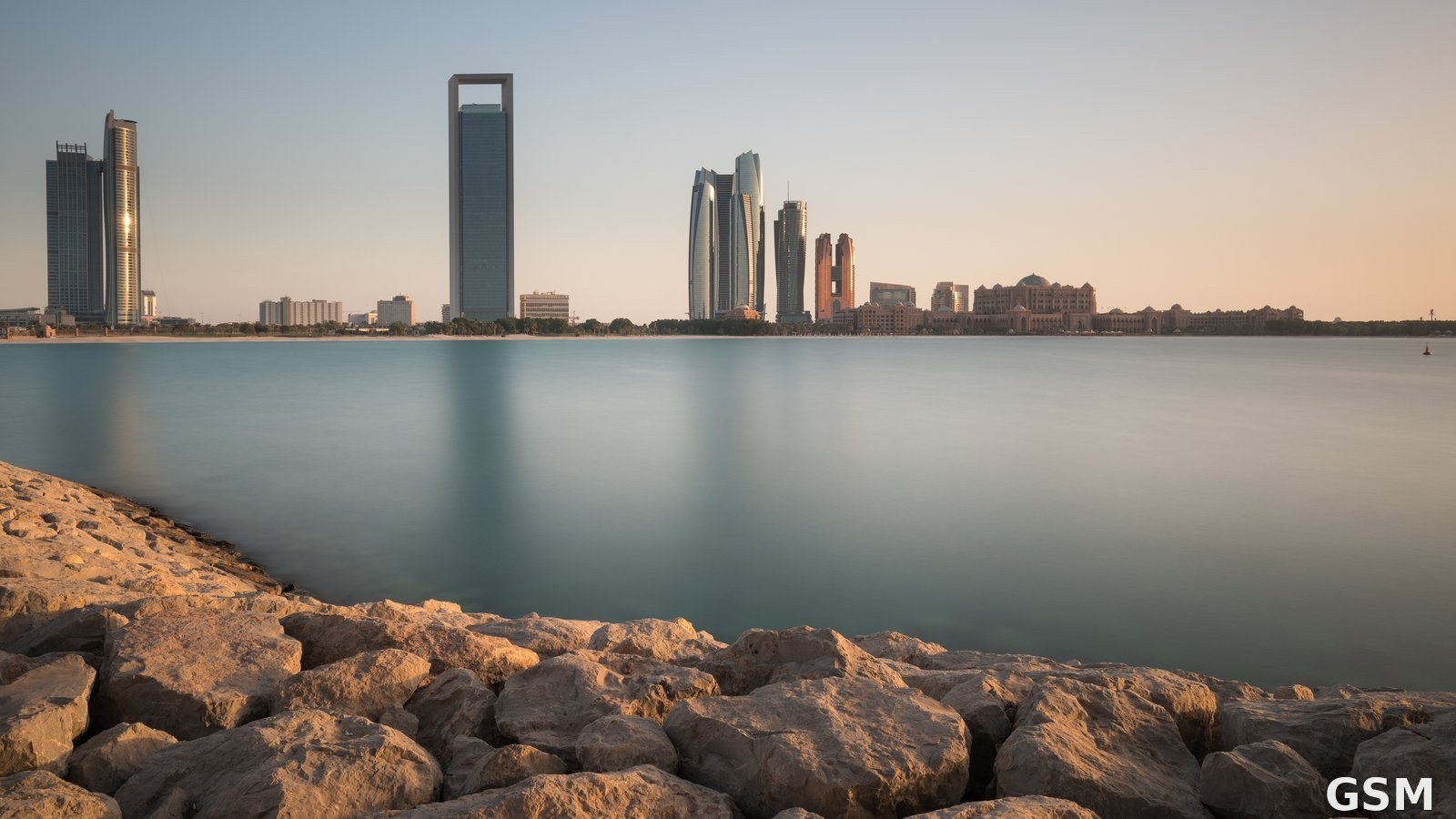
图片来源:阿布扎比天际线(资料图)。(Wikimedia Commons/CC BY 2.0)|The Abu Dhabi skyline (file photo). (Wikimedia Commons / CC BY 2.0)
GSM Global · 本篇英文版 English edition of this story