跟进:Swift天文台已再入大气层:太空军确认美东时间11月4日7时39分坠于印尼北苏门答腊上空
美国航天局(NASA)11月4日更新其Swift任务博客确认,Neil Gehrels Swift天文台已于当天再入地球大气层,为近22年的在轨运行画上句号。本站此前报道,这台约3,200磅重的航天器原预计于11月4日前后再入,太空军先前给出的预测时刻为美东时间凌晨3时30分前后、误差11小时。
美国太空军确认,Swift航天器于美东时间11月4日上午7时39分在印度尼西亚北苏门答腊地区上空再入大气层,位置约为北纬3.4度、东经98.6度。航天局表示,预计航天器大部分在穿越大气层时烧毁,但可能有少量部件残存坠落。
Swift于2004年发射升空,原设计寿命仅为两年主要任务期。它是首台同类多波段天文台,携三台望远镜研究宇宙中最强大的爆炸——伽马射线暴。
在二十多年的科学运行中,Swift如同一件多功能工具:观测范围广泛的光线,能迅速转向短暂的爆发事件,并向其他观测设施发出警报以协调后续观测。它拓宽了人类对多种宇宙天体与事件的理解,对象从超大质量黑洞驱动的活动星系、发生X射线耀发的恒星,到超新星爆发以及太阳系内的彗星和小行星。
关联:跟进:Swift天文台再入时刻提前至11月4日:太空军预测美东凌晨3时30分前后、误差11小时
Follow-up: Swift Observatory Has Re-Entered the Atmosphere: Space Force Confirms 7:39 a.m. EST Re-Entry Over North Sumatra, Indonesia
NASA updated its Swift mission blog on November 4 to confirm that the Neil Gehrels Swift Observatory re-entered Earth's atmosphere that day, closing out nearly 22 years in orbit. GSM previously reported that the roughly 3,200-pound spacecraft was expected to re-enter around November 4, with the U.S. Space Force initially predicting re-entry at approximately 3:30 a.m. EST, give or take 11 hours.
The U.S. Space Force confirmed that the Swift spacecraft re-entered Earth's atmosphere at 7:39 a.m. EST on Wednesday, November 4, over the North Sumatra region of Indonesia, at approximately 3.4 degrees north latitude and 98.6 degrees east longitude. NASA said it expected most of the spacecraft to burn up as it traveled through the atmosphere, but some components may have survived re-entry.
Swift launched in 2004 and was originally designed for a two-year prime mission. At launch, it was a first-of-its-kind multiwavelength observatory designed to study the most powerful explosions in the cosmos, gamma-ray bursts, using its three telescopes.
During more than two decades of science operations, Swift served as a multi-tool for exploring the universe: observing a wide range of light, rapidly pointing at short-lived outbursts, and sending alerts to other facilities to help coordinate follow-up observations. It broadened our understanding of a wide variety of cosmic objects and events, from active galaxies powered by supermassive black holes and stars undergoing X-ray flares, to supernova explosions and comets and asteroids in our own solar system.
来源:美国航天局
发布:GSM·美国(发布链接)
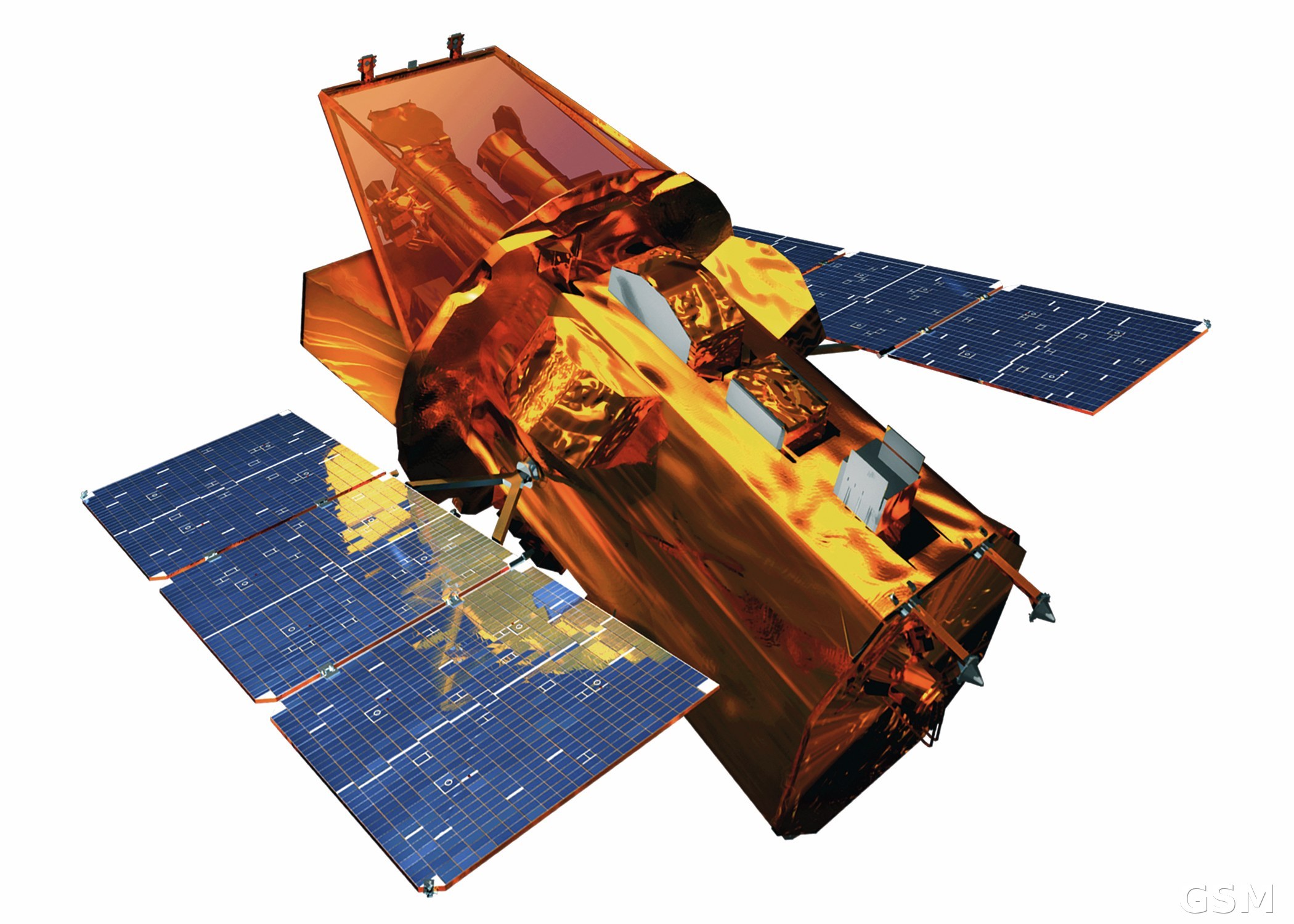
图片来源:图:Neil Gehrels Swift天文台航天器模型图。图片来源:美国航天局NASA,公共领域,经Wikimedia Commons。 / Photo: Model of the Neil Gehrels Swift Observatory spacecraft. NASA, public domain, via Wikimedia Commons.
GSM Global · 本篇英文版 English edition of this story
- 2026-10-24 03:03美国航天局Swift天文台结束运行:轨道降至171英里后进入安全模式,数周内再入大气层
- 2026-11-01 08:34Swift天文台预计11月6日前后再入大气层:22年探测逾2000次伽马暴,残骸料坠大洋
- 2026-11-02 12:33跟进:Swift天文台再入时刻提前至11月4日:太空军预测美东凌晨3时30分前后、误差11小时
- 2026-11-04 15:16跟进:Swift天文台已再入大气层:太空军确认美东时间11月4日7时39分坠于印尼北苏门答腊上空本篇