美国农业部确认印第安纳州一奶牛群感染高致病性禽流感:为该州奶牛首例
华盛顿——美国农业部(USDA)动植物卫生检验局(Animal and Plant Health Inspection Service,APHIS)11月2日宣布,该局国家兽医服务实验室(NVSL)经 PCR 检测确认,印第安纳州一个奶牛群感染高致病性禽流感(HPAI)H5N1 B3.13 基因型病毒。这起检出来自例行的全国牛奶检测策略(National Milk Testing Strategy)采样,并非运输前监测。
APHIS表示,这是印第安纳州首次报告奶牛感染高致病性禽流感。自2024年3月本轮疫情暴发以来,全美已有21个州的奶牛群被感染,今年也已在先前未受影响的州出现病例。APHIS正与印第安纳州动物卫生委员会密切协作,开展进一步的农场调查、诊断检测与流行病学数据收集,以查明检出原因、防止疫情进一步扩散。
APHIS表示,这起检出不改变农业部既定的高致病性禽流感根除策略,生物安全仍是降低疾病引入与场间传播风险的关键。APHIS建议所有奶牛场加强生物安全措施,养殖者如发现牲畜出现临床症状,或发现异常患病、死亡的野生动物,应立即报告本州兽医。
在食品安全方面,APHIS表示,这起检出不构成消费者健康风险,也不影响商业牛奶供应的安全。美国食品药品监管局(FDA)确信,巴氏杀菌能有效灭活高致病性禽流感病毒,商业渠道的巴氏杀菌牛奶是安全的;奶牛场只能将健康动物的牛奶送入人类消费加工渠道,受影响动物的牛奶会被分流或销毁,不进入人类食品供应。
据美国疾病控制与预防中心(CDC)评估,在禽类与美国奶牛中传播的高致病性禽流感病毒对美国普通公众的风险较低;但因职业或娱乐活动接触受感染禽类、哺乳动物的人群感染风险较高,应按 CDC 指引采取防护措施。
关联:萨克拉门托两处后院禽群检出高致病性禽流感:全部扑杀、公共卫生风险仍低
USDA Confirms Highly Pathogenic Avian Influenza in an Indiana Dairy Herd: First Case in Cattle in the State
Washington — The U.S. Department of Agriculture's Animal and Plant Health Inspection Service (APHIS) announced on November 2 that its National Veterinary Services Laboratories (NVSL) had confirmed, by PCR detection, highly pathogenic avian influenza (HPAI) H5N1 genotype B3.13 in a dairy cattle herd in Indiana. The detection resulted from routine National Milk Testing Strategy testing, not pre-movement surveillance.
APHIS said this marks the first reported case of HPAI in cattle in Indiana. Dairy cattle in a total of 21 states have been infected since the outbreak began in March 2024, and APHIS has seen cases in previously unaffected states this year. APHIS is working closely with the Indiana State Board of Animal Health to conduct additional on-farm investigations, diagnostic testing and epidemiological data collection to better understand the detection and prevent further disease spread.
The detection does not change USDA's HPAI eradication strategy, APHIS said, and biosecurity remains key to mitigating the risk of disease introduction or spread between premises. APHIS recommends enhanced biosecurity measures for all dairy farms, and said producers should immediately report any livestock with clinical signs, or any unusual sick or dead wildlife, to their state veterinarian.
APHIS said the detection does not pose a risk to consumer health or affect the safety of the commercial milk supply. The U.S. Food and Drug Administration is confident that pasteurization is effective at inactivating HPAI virus and that the commercial, pasteurized milk supply is safe; dairies are required to send only milk from healthy animals into processing for human consumption, and milk from impacted animals is diverted from the commercial milk tank or destroyed so that it does not enter the human food supply.
According to the U.S. Centers for Disease Control and Prevention (CDC), HPAI viruses circulating in birds and U.S. dairy cattle pose a low risk to the general public in the United States, while people with job-related or recreational exposures to infected birds or mammals are at higher risk of infection and should take precautions outlined in CDC guidance.
来源:美国农业部动植物卫生检验局
发布:GSM·美国(发布链接)
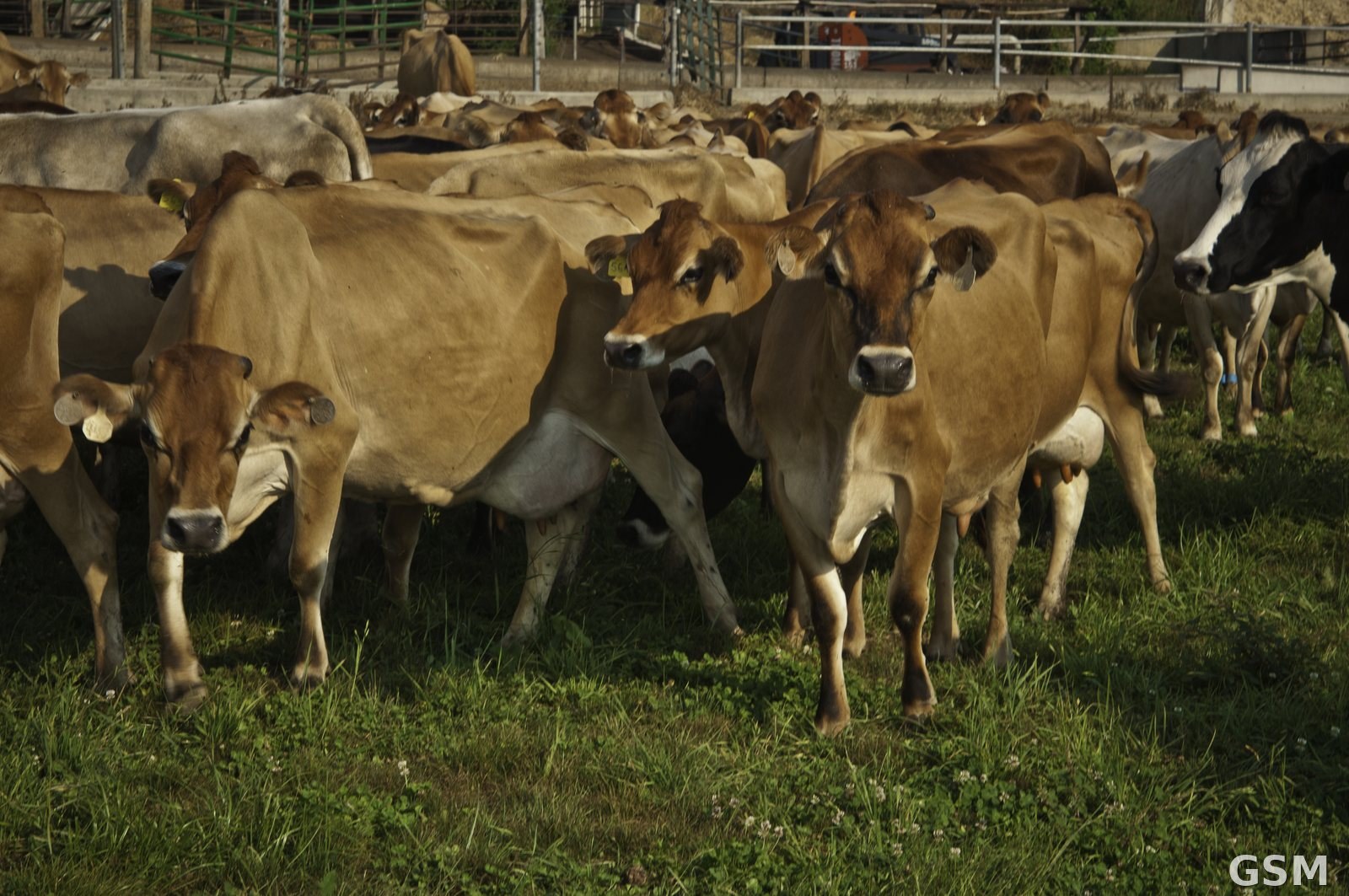
图片来源:图:Maryland 州 Easton 一处奶牛场的 Jersey 与 Holstein 奶牛(资料图)。Bob Nichols 摄,美国农业部(USDA),公共领域,经 Wikimedia Commons。 / Jersey and Holstein dairy cows at a farm in Easton, Maryland (file photo). Photo by Bob Nichols, U.S. Department of Agriculture, public domain, via Wikimedia Commons.
GSM Global · 本篇英文版 English edition of this story