众议院中国委员会要求扩大国防部研究安全限制名单:中国留学基金委及受资助学者拟纳入,在美留学生受关注
华盛顿——美国众议院中国委员会 10 月 14 日宣布,委员会主席 John Moolenaar 已致函战争部长 Pete Hegseth,要求国防部扩大其「第 1286 条名单」(Section 1286 List),将中国留学基金委(China Scholarship Council,简称 CSC)及受其资助的学者纳入名单,并禁止接受 CSC 资助的人员参与国防部资助的研究。这封信落款日期为 10 月 1 日,正文共 16 页,随函附有附件和补充材料,逐项列明提名机构的依据。
委员会建议新增的名单对象共 150 多家机构与项目:除中国留学基金委及受其资助学者外,还包括中国科学院 14 家研究所、62 家实验室与国防实验室、58 所大学和 22 个外国人才招聘项目。委员会称,这些机构与中国的国防科研和工业基础之间存在有据可查的隶属关系、正式协议、监管关系或其他重要联系:中科院相关研究所被委员会称为中国的核心国防合作伙伴;相关实验室从事武器、航空航天、高超音速、半导体、水下系统、电子战等军事技术研究;58 所大学由中国国家国防科技工业局正式共建或联合支持;人才招聘项目则集中在量子、超级智能等关键和新兴技术领域。
「第 1286 条名单」源自 2019 财年《国防授权法》第 1286 条,由国防部维护,列明被认定对美国研究事业构成国家安全风险的外国机构和人才招聘项目。Moolenaar 在信中写道,这份名单已经成为一项日益重要的研究安全工具,因为一个机构是否被列入名单,将直接影响获得国防部资助的研究人员能否与该机构保持研究关系;随着国防部加强这方面的工作,这份名单的完整与准确变得更加重要。信中还提到,国防部此前已就已识别的风险通知 30 家美国机构,并要求其采取纠正措施。
对中国留学基金委,信中称,不同于其他国际学生项目,CSC 因学术自由、对学生的监控、意识形态管控和潜在间谍活动等问题,正受到越来越多的审视与批评。Moolenaar 要求国防部规定:任何接受 CSC 经费或财务资助的研究人员、研究生、博士后或其他科研人员,在受资助期间不得从事、参与或以其他方式参加国防部资助的研究;这一禁令应适用于所有受资助者,无论其是否在国防部的资助项目中被正式列为受涵盖人员、首席研究员、共同研究员或其他具名参与者。CSC 是中国教育部下属的国家留学基金管理机构,负责中国公民出国留学等资助事务,在美国高校有受其资助的中国研究生和访问学者;由于拟议禁令直接针对接受资助的个人,这一动向与在美中国留学生和学者直接相关。
这封信是国会委员会向国防部提出的建议,函件本身并不改变名单:是否扩围、纳入哪些机构,由国防部按其既定标准决定。委员会在宣布中没有提及国防部的回应。
关联:美国国土安全部下令联邦文职机构清除DeepSeek产品并禁止采购 含使用其技术的第三方产品
House China Committee Urges Pentagon to Expand Research Security List: China Scholarship Council and Its Funded Scholars Named
WASHINGTON — The U.S. House Select Committee on China announced on October 14 that its chairman, Rep. John Moolenaar, has written to Secretary of War Pete Hegseth urging the Department of War to expand its Section 1286 List to include the China Scholarship Council (CSC) and scholars funded by it, and to bar anyone receiving CSC support from participating in research funded by the Department. The 16-page letter is dated October 1 and was released with an annex and supplemental documentation setting out the basis for each nomination.
In all, the committee proposed adding more than 150 institutions and programs: besides the CSC and its affiliated scholars, the list would grow by 14 institutes of the Chinese Academy of Sciences, 62 Chinese laboratories and national defense laboratories, 58 universities and 22 foreign talent recruitment programs. The committee said the nominated entities have documented affiliations, formal agreements, oversight relationships or other significant ties to China's defense research and industrial base. The Academy institutes were described as core Chinese defense partners; the laboratories conduct research relevant to weapons, aerospace, hypersonics, semiconductors, underwater systems, electronic warfare and other military technologies; the 58 universities are formally co-administered or jointly supported by China's State Administration for Science, Technology and Industry for National Defense; and the talent programs are concentrated in critical and emerging technology sectors such as quantum and super intelligence.
The Section 1286 List, named for a provision of the fiscal 2019 National Defense Authorization Act and maintained by the Department of War, identifies foreign institutions and talent recruitment programs that present national security risks to the U.S. research enterprise. In the letter, Moolenaar called the list an increasingly important research security tool, because an entity's inclusion can directly affect whether Department-funded researchers may have a research relationship with that entity, and said the list's completeness and accuracy become more important as the Department strengthens its work. The letter also noted that the Department has already notified 30 U.S. institutions of identified risks and directed them to take corrective action.
On the CSC — the Chinese Ministry of Education agency that administers government funding for Chinese citizens studying abroad, including graduate students and visiting scholars at U.S. universities — the letter said that, unlike other international student programs, the council has faced increasing scrutiny and criticism over concerns about academic freedom, surveillance of students, ideological control and potential espionage. Moolenaar asked the Department to prohibit any researcher, graduate student, postdoctoral researcher or other research personnel receiving CSC funding or financial support from participating in Department-funded research for the duration of that support: "Individuals receiving CSC support should not be permitted to work on, contribute to, or otherwise participate in DOW-funded research for the duration of that support." The prohibition, he wrote, should apply regardless of whether the individual is formally listed as a covered individual, principal investigator, co-investigator or other named participant on the award. Because the proposed ban would apply to individual recipients, it bears directly on Chinese students and scholars in the United States.
The letter is a request from a congressional committee and does not itself change the list; whether to expand it, and which entities to add, is for the Department of War to decide under its established criteria. The committee's announcement did not mention a response from the Department.
Related:
来源:GSM·美国(原文链接)
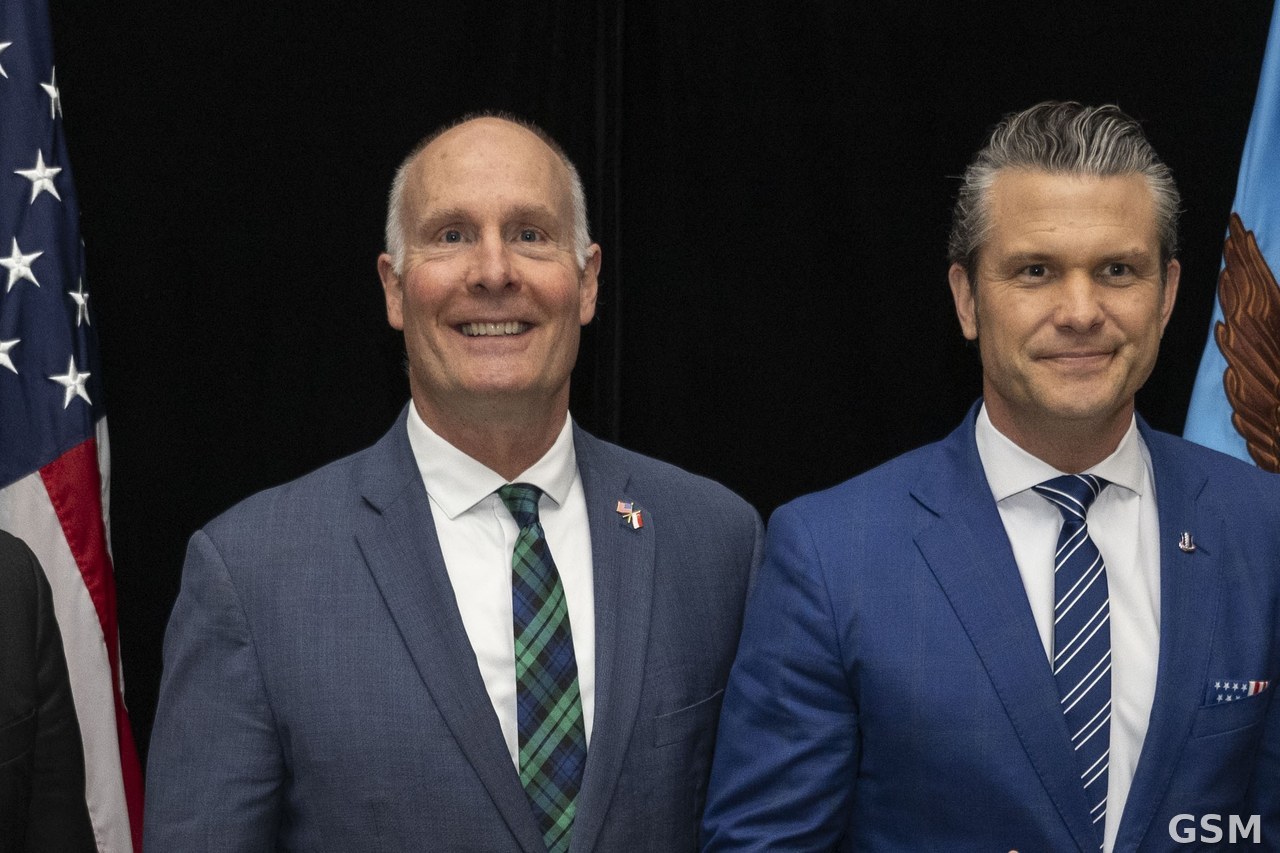
图片来源:众议院中国委员会主席 John Moolenaar(左)与战争部长 Pete Hegseth,2025 年 5 月摄于新加坡(资料图) · 美国国防部供图,Wikimedia Commons,公共领域
GSM Global · 本篇英文版 English edition of this story