NASA第二期火星模拟任务结束:四名志愿者在Houston栖息舱生活378天后出舱
美国航空航天局(NASA)第二期火星模拟任务10月31日结束。四名志愿者当天走出位于德克萨斯州 Harris 县 Houston 市的 NASA 约翰逊航天中心(Johnson Space Center)内的模拟火星栖息舱,结束为期378天的隔离生活。NASA Johnson 官方频道对出舱仪式作了直播,仪式回放已在该频道上线。
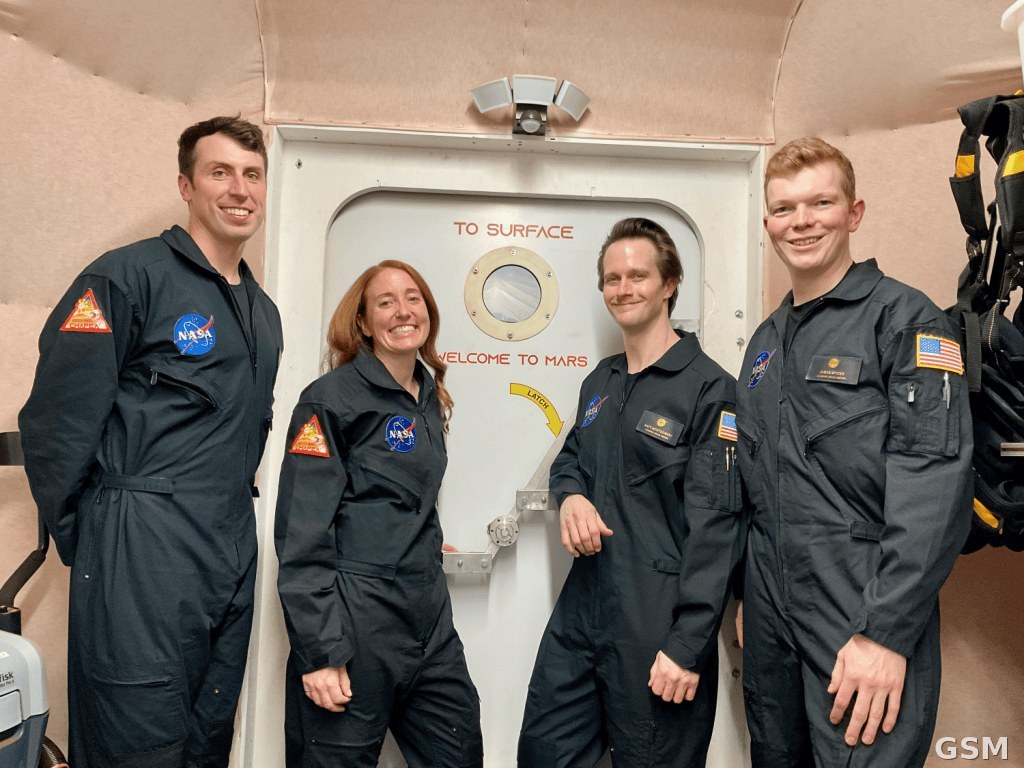
四名队员是指令长 Ross Elder、医疗官 Ellen Ellis、飞行工程师 James Spicer 和科学官 Matthew Montgomery。出舱仪式上,约翰逊航天中心主任 Vanessa Wyche 与 NASA 宇航员 Jack Hathaway 致辞,四名队员也分别发言。
这期任务于2025年10月19日开始。四名队员在一座3D打印、面积约1,700平方英尺的栖息舱 Mars Dune Alpha 内生活和工作,执行模拟火星行走、机器人操作、栖息舱维护、体育锻炼和种植作物等任务。
任务期间,队员要应对未来深空乘组可能遇到的压力条件,包括与外界隔离、资源受限、最长22分钟的通信延迟和设备故障等;任务中还安排过模拟通信中断等科目。
NASA 表示,这次模拟收集的人体健康与表现数据,将帮助该机构为未来的阿尔忒弥斯(Artemis)登月任务和月球基地任务制定对策,降低载人航天风险。相关数据还将用于优化食品系统设计、乘组时间与深空网络带宽的使用,并加强航天医疗与行为支持。
CHAPEA 全称「乘组健康与表现探索模拟」(Crew Health and Performance Exploration Analog)。第一期任务于2023年至2024年进行,同样历时378天。据 NASA 介绍,该机构已开始受理把 CHAPEA 等模拟要素结合起来的「月球与火星探索模拟」新一期申请,任务启动不早于2027年8月。
NASA's Second Mars Simulation Ends: Four Volunteers Exit Houston Habitat After 378 Days
NASA's second Mars simulation mission ended on October 31, when four volunteers stepped out of a simulated Mars habitat at the agency's Johnson Space Center in Houston, Harris County, Texas, after 378 days of isolation. NASA Johnson's official channel livestreamed the egress ceremony, and the replay is now posted on the channel.
The crew members are Commander Ross Elder, Medical Officer Ellen Ellis, Flight Engineer James Spicer and Science Officer Matthew Montgomery. Johnson Center Director Vanessa Wyche and NASA astronaut Jack Hathaway gave remarks at the ceremony, as did the four crew members.
The mission began on October 19, 2025. The four volunteers lived and worked inside Mars Dune Alpha, a 3D-printed, roughly 1,700-square-foot habitat, conducting simulated Marswalks, robotic operations, habitat maintenance, physical exercise and crop cultivation.
During the mission the crew dealt with stressors future deep-space crews are likely to face, including isolation, limited resources, communication delays of up to 22 minutes and equipment failures; a simulated communications blackout was also part of the mission.
NASA said the health and performance data collected from the simulation will help the agency develop methods to counter human spaceflight risks for future Artemis and Moon Base missions. The data will also inform food system design, efficient use of crew time and Deep Space Network bandwidth, and stronger medical and behavioral support for crews.
CHAPEA stands for Crew Health and Performance Exploration Analog. Its first mission ran from 2023 to 2024 and also lasted 378 days. NASA said it is already accepting applications for a broader Moon and Mars Exploration Analog campaign combining elements of CHAPEA with other simulations, scheduled to start no earlier than August 2027.
来源:GSM·美国(原文链接)
图片来源:图:CHAPEA第二期四名队员在模拟火星栖息舱舱门前合影。照片由美国航空航天局 NASA 发布(公共领域)。 / The four CHAPEA Mission 2 crew members pose at the habitat airlock door. Photo: NASA (public domain).