FBI与CISA联合警示:中期选举前选举与竞选官员成网络钓鱼与深度伪造目标
华盛顿——美国联邦调查局(FBI)与网络安全和基础设施安全局(CISA)10月16日通过互联网犯罪投诉中心(IC3)发布公共服务公告(编号PSA261016),提醒在2026年美国中期选举临近之际选举与竞选官员面临的网络威胁,并介绍不法分子在以往选举周期使用过的网络钓鱼与短信钓鱼手法。
公告指出,恶意网络行为者可能利用网络钓鱼与短信钓鱼手段,试图干扰2026年中期选举,窃取包括登录凭证与敏感信息在内的用户数据。选举官员、候选人及其政治组织因可接触选民登记数据、在任政府官员信息或敏感竞选材料,成为这类行为者的目标。
两家机构表示,近年来不法分子制作的钓鱼与短信钓鱼信息越来越逼真,几乎与正常通信无异,目标难以分辨真伪。公告称,被其称为「超级智能」(SI)的技术让不法分子能生成规模更大、效率与效果更高的钓鱼内容;越来越多的不法分子还利用这类技术制作以假乱真的深度伪造音视频,用来创建新身份、窃取真实人物身份,或为钓鱼骗局铺垫。公告同时指出,过去两个选举周期里,针对选举官员的钓鱼尝试激增;过去一年里,FBI观察到通过加密聊天应用实施的短信钓鱼尝试有所增加。
在防护方面,公告敦促选举官员与公众审慎核查所收到邮件与手机信息的来源。给个人的建议包括:尽可能为所有服务、特别是电子邮箱、虚拟专用网络以及可访问关键系统的账户启用抗钓鱼多因素认证;检查可疑内容是否带有内容凭证或水印等由SI生成的标记。给机构的建议包括:安装或升级能识别入站恶意软件、垃圾邮件与新型钓鱼活动的安全软件;培训员工识别钓鱼与短信钓鱼,在提供登录凭证等敏感信息时保持谨慎,并通过其他渠道核实相关要求;为来自外部的邮件加注横幅标记;启用强力垃圾邮件过滤并拦截含可执行文件的邮件;要求使用强而唯一的口令短语并及时安装系统补丁;采用SPF与DKIM等标准减少域名仿冒;按最小权限原则管理数据访问。
公告说明,FBI负责调查与起诉选举犯罪,特别是针对选举基础设施与美国民主机构的外国影响与干预行动;CISA负责协助包括选举界在内的关键基础设施所有者与运营方抵御物理与网络威胁。两家机构请受害者将此类欺诈或可疑活动报告给当地FBI外地办公室或FBI互联网犯罪投诉中心(IC3)。
关联:美国选举制度(四):中期选举:2026年11月3日改选什么
关联:网传「工作人员在选票上写字选票就作废」 多州选举官员称标记属法定行政程序
关联:FBI与CISA发布公告:钓鱼攻击针对选举官员 冒充供应商与同僚窃取邮箱凭据
FBI and CISA Warn Election and Campaign Officials of Phishing, Smishing and Deepfake Tactics Ahead of the Midterms
Washington — The Federal Bureau of Investigation (FBI) and the Cybersecurity and Infrastructure Security Agency (CISA) on October 16 issued a public service announcement (PSA261016) through the Internet Crime Complaint Center (IC3), raising awareness of the cyber threats facing election and campaign officials during the upcoming 2026 U.S. midterm elections and describing phishing and smishing techniques that malicious actors have used in past election cycles.
According to the announcement, malicious cyber actors may attempt to disrupt the 2026 midterms using phishing and smishing to steal user data, including login credentials and sensitive information. Election officials, candidates and their political organizations are attractive targets because of their access to voter registration data, information on current government officials and sensitive campaign material.
The two agencies said that in recent years these actors have crafted increasingly sophisticated phishing and smishing campaigns that closely resemble legitimate communications, making them difficult to distinguish. The announcement said technology it calls super intelligence (SI) lets malicious actors generate larger, more efficient and more effective phishing campaigns, and that a growing number of adversaries and criminals have used SI to create convincing deepfake video and audio recordings to create new identities, steal the identities of real people and bolster phishing schemes. It added that election officials experienced a surge of phishing attempts during the last two election cycles, and that within the last year the FBI saw an increase in smishing attempts through encrypted chat applications.
On protection, the FBI and CISA urged election officials and the public to critically evaluate the sources of emails and mobile messages. Tips for individuals include implementing phishing-resistant multi-factor authentication wherever possible, particularly for email, virtual private networks and accounts that access critical systems, and examining potentially malicious content for content credentials or watermarking indicating it was SI-generated. Tips for organizations include keeping anti-malware and spam defenses current, training employees to identify phishing and smishing and to confirm requests for sensitive information through secondary channels, marking external emails with a banner, filtering out executable attachments, requiring strong and unique passphrases, patching systems promptly, using the SPF and DKIM standards, and applying role-based, least-privilege access.
The announcement states that the FBI is responsible for investigating and prosecuting election crimes, in particular foreign influence and interference operations targeting election infrastructure and other U.S. democratic institutions, while CISA helps critical infrastructure owners and operators, including those in the election community, remain resilient against physical and cyber threats. The FBI asked victims to report such fraudulent or suspicious activity to their local FBI field office or to the IC3.
Related: America's Electoral System (4): The Midterms: What Is on the Ballot on November 3, 2026
Related: Viral Claim That Poll-Worker Marks Void Ballots Is False, Election Officials in Multiple States Say
Related: FBI and CISA Warn of Phishing Attacks Targeting Election Officials
来源:GSM·美国(原文链接)
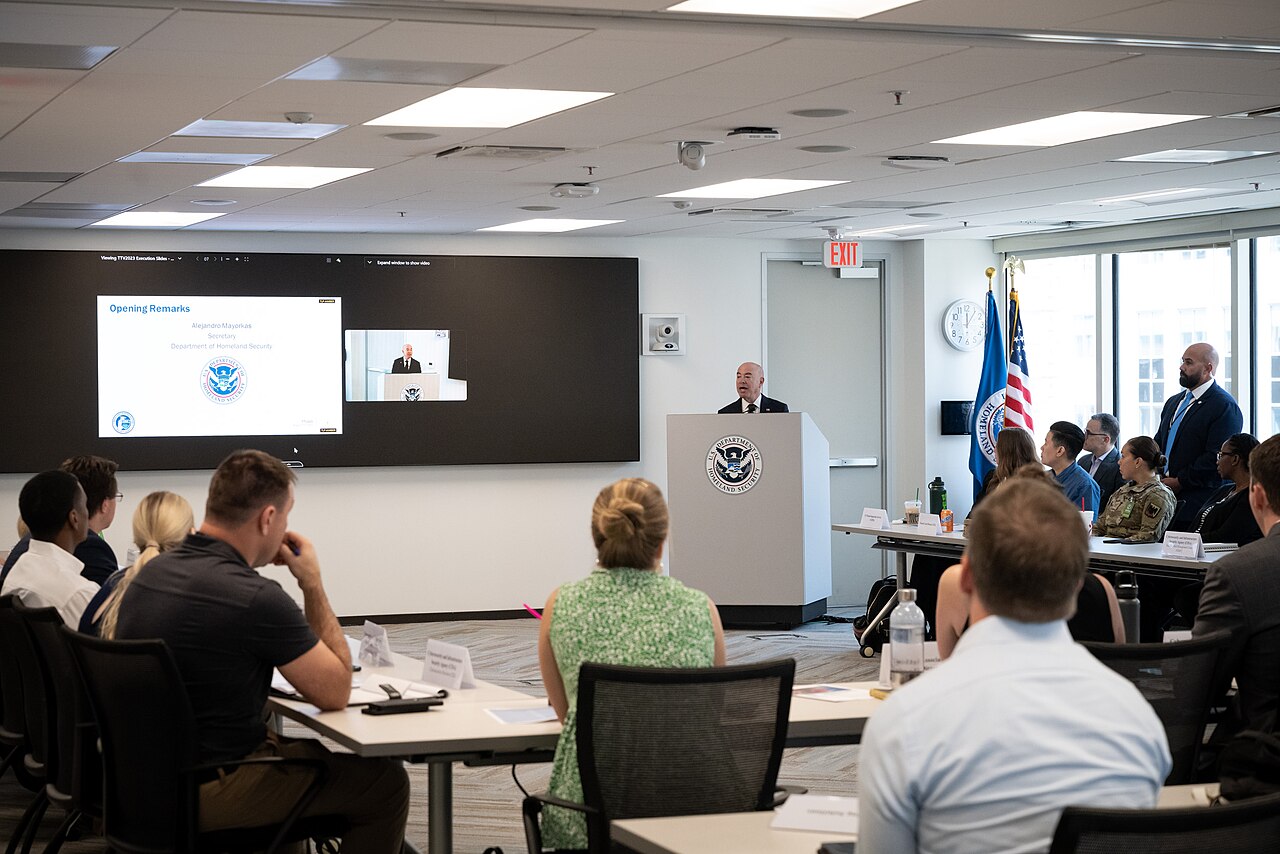
图片来源:CISA全国选举演习「Tabletop the Vote 2023」现场(弗吉尼亚州阿灵顿,2023年8月17日,资料图)· 美国国土安全部(DHSgov)摄,公共领域(维基共享资源)
GSM Global · 本篇英文版 English edition of this story