《Nature Communications》11月15日论文:EVGlyco 平台鉴定8,435个精浆胞外囊泡糖肽,两标志物组合区分无精子症类型
南京医科大学、东南大学与北京大学第三医院等机构的团队11月15日在《Nature Communications》发表论文,报告一套名为 EVGlyco 的低样本量分析流程,可对精浆胞外囊泡蛋白的位点特异性 N-糖链做分子分型,用于无精子症的无创鉴别。
无精子症是男性不育的一种严重形式,一直缺乏无创的分子分型工具。胞外囊泡的糖基化在多种疾病中有诊断潜力,但从微升量级的体液样本中高灵敏分析囊泡位点特异性 N-糖链,技术上一直困难。
EVGlyco 是一套整合的低输入工作流程,适用于7种不同的人体体液。在发现队列的精浆样本中,该流程共鉴定出8,435个胞外囊泡蛋白位点特异性 N-糖链,其完整 N-糖肽鉴定量高于既有方法。
靶向验证确认,一个由 MPO-N355-H6N2 与 ACP3-N94-H5N4F1 组成的两标志物组合,可以区分梗阻性无精子症与非梗阻性无精子症,并能进一步区分非梗阻性无精子症的亚型。
作者表示,该平台为无精子症的分子分型提供了一条无创路径。研究尚属方法与发现队列阶段,标志物组合仍须在更大临床队列中验证后才能进入常规检测。
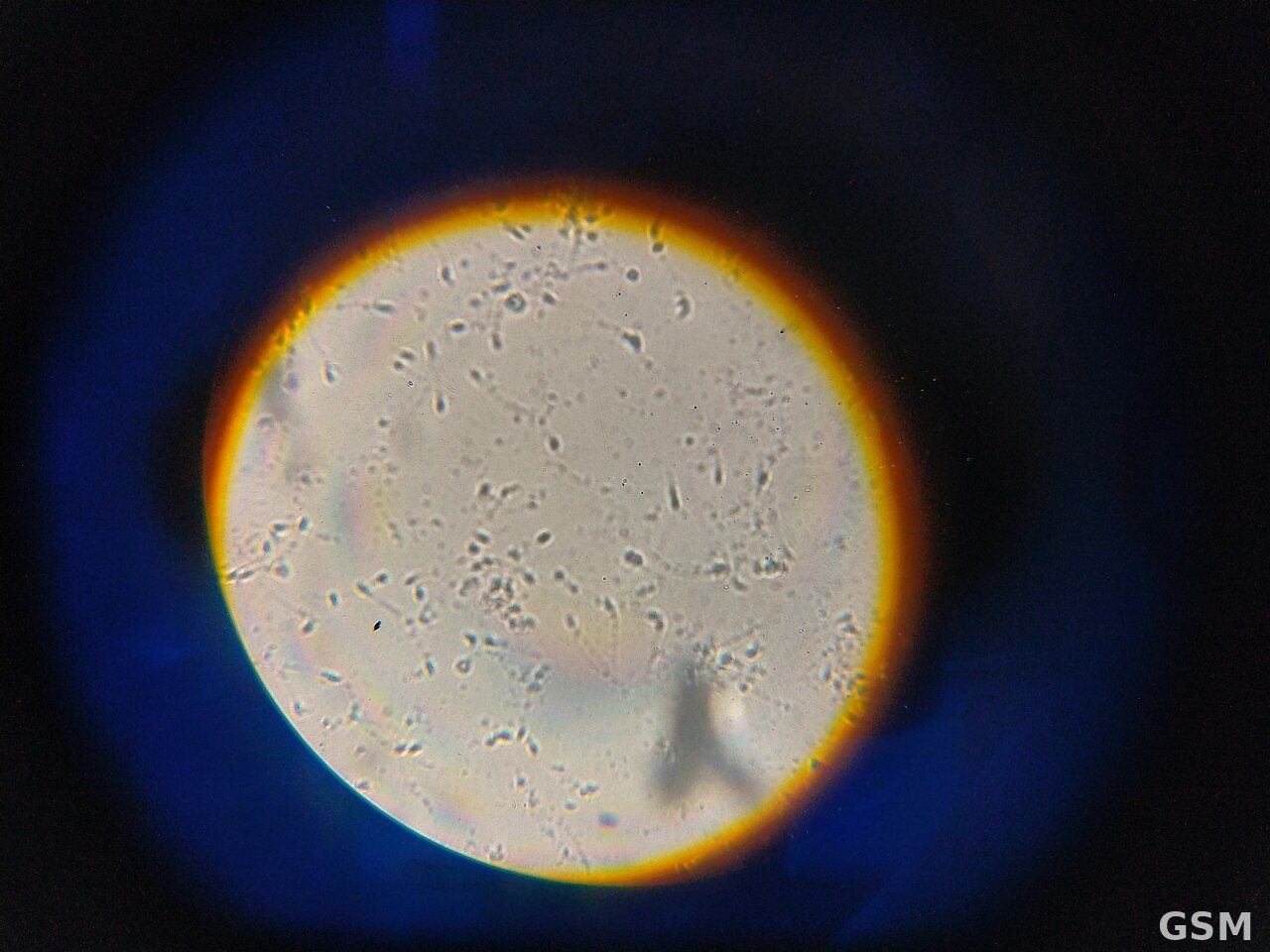
图中是显微镜下的人类精子,精浆胞外囊泡糖链分析为无精子症分型提供无创线索。
Nature Communications Paper on November 15: EVGlyco Platform Identifies 8,435 Seminal Plasma Vesicle Glycopeptides, and a Two-Marker Panel Distinguishes Azoospermia Types
A team from Nanjing Medical University, Southeast University and Peking University Third Hospital, among others, published a paper on November 15 in Nature Communications reporting EVGlyco, a low-input workflow for site-specific N-glycan analysis of extracellular vesicle proteins from seminal plasma, applied to the molecular typing of azoospermia.
Azoospermia, a severe form of male infertility, lacks non-invasive diagnostic tools for molecular typing. Glycosylation of extracellular vesicles has diagnostic potential in various diseases, but high-sensitivity analysis of vesicle site-specific N-glycans from microliter biofluids has remained challenging.
EVGlyco is an integrated low-input workflow applicable to seven distinct human biofluids. In seminal plasma from the study's discovery cohort, the workflow identified 8,435 extracellular vesicle protein site-specific N-glycans, yielding more intact N-glycopeptide identifications than existing approaches.
Targeted evaluation confirmed that a two-marker panel composed of MPO-N355-H6N2 and ACP3-N94-H5N4F1 distinguished obstructive azoospermia from nonobstructive azoospermia, and further separated nonobstructive subtypes.
The authors say the platform offers a non-invasive route to molecular typing of azoospermia. The work is at the method and discovery-cohort stage, and the marker panel still requires validation in larger clinical cohorts before routine testing.
发布:GSM·美国(发布链接)
图片来源:Wikimedia Commons, File:Human sperm under microscope.jpg — Author: Prof. Ideal. Licensing: CC0.
GSM Global · 本篇英文版 English edition of this story