约10秒尺度瞳孔基线上升趋势与更快反应相关:约8秒分量经双管线验证,《科学报告》11月13日刊出
《科学报告》于 2026 年 11 月 13 日刊出日本团队的一项研究,发现约 10 秒时间尺度上的瞳孔基线趋势可以追踪近期的任务表现,论文数字对象标识为 10.1038/s41598-026-73046-0。
人的任务表现会在慢时间尺度上波动,其中包括一个约 20 秒的任务正向与默认模式切换周期假说,但一直缺少可连续计算的生物标志物。任务诱发的瞳孔扩张能追踪表现的即时促进,缓慢基线动态与表现之间的联系此前并不一致。
由于以往研究多用高负荷的警觉与工作记忆任务,本研究改用一个相对简单、低错误率的执行与不执行任务,检验 10 秒基线上升趋势是否与更快反应相关。团队以两种独立管线量化基线瞳孔趋势,一是移动平均平滑,二是基于小波的尺度分离。
结果显示,上升趋势在包括 10 秒在内的多个平滑窗口上都与更快反应相关,尺度分离分析则识别出预设的约 8 秒二进分量;下降趋势与更慢的反应相关。目标出现前严格限定的 10 秒先行信号与控制了典型瞳孔与行为协变量后的试次级分析,都支持上述关联。
论文作者来自 NTT 通信科学实验室、NTT 接入网服务系统实验室与京都大学,通讯作者为 Jumpei Yamashita。作者称,这类特定时间尺度的瞳孔动态可望成为一个可连续计算的指标,用于监测真实场景中近期任务表现的局部波动。
(来源:《科学报告》)
Pupil Baseline Trends on About 10-Second Timescales Track Near-Term Task Performance: an About 8-Second Component Held Up Across Two Analysis Pipelines, Published in Scientific Reports on November 13
Scientific Reports published a Japanese study on November 13, 2026 finding that pupil baseline trends on about 10-second timescales track near-term task performance, under DOI 10.1038/s41598-026-73046-0. Human task performance fluctuates on infraslow timescales, including a putative about 20-second cycle of task-positive and default-mode switching, yet a continuously computable biomarker has remained scarce. Task-evoked pupil dilation tracks momentary facilitation of performance, but links between slow baseline dynamics and performance have been inconsistent. Because prior research used demanding vigilance and working memory tasks, the team tested whether upward 10-second baseline trends were associated with faster responses in a relatively simple, low-error go and no-go task. Baseline pupil trends were quantified as slope-like changes at predefined timescales using two independent pipelines, moving-average smoothing and wavelet-based scale isolation. Upward trends were associated with faster responses across several smoothing windows including 10 seconds, while the scale-isolated analysis identified the prespecified about 8-second dyadic component. Downward trends were linked to slower responses. The associations were supported by the strictly pre-target 10-second precursor and by trial-level analysis of the about 8-second component controlling for canonical pupil and behavior covariates. The authors are based at NTT Communication Science Laboratories, NTT Access Network Service Systems Laboratories and Kyoto University, with correspondence to Jumpei Yamashita. They say timescale-specific pupil dynamics may provide a continuously computable index of local fluctuations in near-term task performance, with potential utility for monitoring in ecologically valid settings.
(Source: Scientific)
来源:《科学报告》
发布:GSM·美国(发布链接)
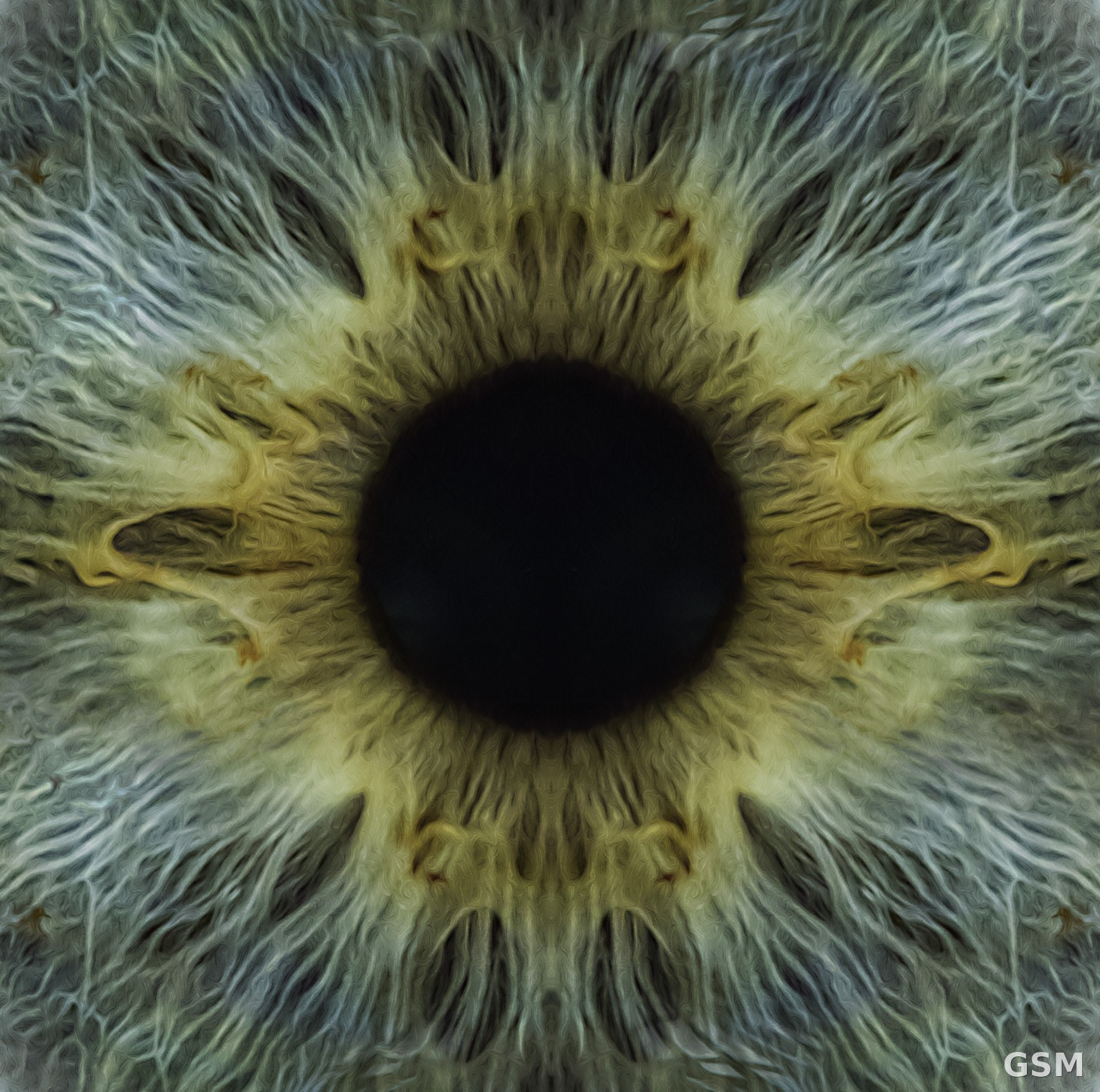
图片来源:图:人眼瞳孔与虹膜特写。Carlos Andrés Reyes from Cologne, Germany,CC BY 2.0,经 Wikimedia Commons。 / Photo: Carlos Andrés Reyes from Cologne, Germany, CC BY 2.0, via Wikimedia Commons.
GSM Global · 本篇英文版 English edition of this story