轻质膨胀黏土骨料替代20%至25%时混凝土强度与减重最均衡:对照组28天抗压强度31.45兆帕,《科学报告》11月13日刊出
《科学报告》11月13日刊出一项混凝土材料研究,考察用未浸泡的轻质膨胀黏土骨料(LECA)替代传统粗骨料的效果。研究以 M25 等级混凝土为对象,替代比例从0%到50%分级设置。论文于2026年5月5日投稿、9月9日接受、11月13日刊出,数字对象标识为 10.1038/s41598-026-71504-3,作者包括 S. M. Nair、N. Anand 与 D. Andrushia 等。
测试项目覆盖新拌混凝土的坍落度,以及硬化混凝土在28天时的密度、抗压强度、劈裂抗拉强度与抗折强度。耐久性评估包括酸与硫酸盐质量损失、吸水率与快速氯离子渗透测试。研究还用扫描电子显微镜与能谱分析观察微观结构,并评估了隐含能耗与二氧化碳排放。
结果显示,抗压强度与密度之间存在强线性关系,决定系数约为0.98。对照组混凝土的抗压强度为31.45兆帕。在替代比例为20%至25%时,抗压强度为17至19兆帕,混凝土密度降低15%至20%,研究团队认为这是强度保持与减重之间最有利的折中区间。
耐久性方面,随着 LECA 含量增加,吸水率、氯离子渗透与质量损失都有所上升,但研究团队称这些指标仍处于美国混凝土学会 ACI 213R-14 指南所认可的可接受水平。微观分析显示,界面过渡区变得更细化,氢氧化钙积聚减少,骨料与浆体之间的机械结合更强。
在可持续性方面,研究指出,使用 LECA 会提高混凝土的隐含能耗,但能降低密度,从而减轻结构自重,可能带来长期的运营与结构需求方面的收益。这一结论来自实验室配比测试,论文未报告实际工程项目中的应用数据。
LECA Replacement of 20 to 25 Percent Gives Best Balance in Concrete Study With Control Strength of 31.45 MPa at 28 Days, Published in Scientific Reports on November 13
Scientific Reports published on November 13 a concrete materials study examining unsoaked Light Expanded Clay Aggregate, or LECA, as a substitute for conventional coarse aggregate. The research used M25 grade concrete with replacement levels from 0 percent to 50 percent. The paper was received on May 5, 2026, accepted on September 9, 2026 and published on November 13, with digital object identifier 10.1038/s41598-026-71504-3. Authors include S. M. Nair, N. Anand and D. Andrushia.
Fresh concrete was evaluated by slump test. Hardened concrete was tested at 28 days for density, compressive strength, split tensile strength and flexural strength. Durability was assessed through acid and sulphate mass loss, water absorption and Rapid Chloride Penetration Testing. Microstructure was examined using scanning electron microscopy with energy dispersive X-ray analysis, and sustainability was evaluated using embodied energy and carbon dioxide emissions.
The results showed a strong linear relationship between compressive strength and density, with an R-squared value of approximately 0.98. The control mix reached a compressive strength of 31.45 MPa. At replacement levels of 20 to 25 percent, compressive strengths were 17 to 19 MPa while concrete density fell by 15 to 20 percent, which the authors identified as the most favourable trade-off between strength retention and density reduction.
On durability, water absorption, chloride penetration and mass loss increased as LECA content rose, but the authors said these levels remained within acceptable performance under the American Concrete Institute guide ACI 213R-14. Microscopic analysis showed a more refined interfacial transition zone, with less accumulation of calcium hydroxide, helping create stronger mechanical bonding between aggregate and paste.
On sustainability, the study said using LECA increases the embodied energy of concrete but reduces its density, thereby lowering the dead load on the structure and possibly contributing to long-term benefits such as reduced operational and structural demand. The findings come from laboratory mix testing, and the paper reported no data from real construction projects.
来源:《科学报告》
发布:GSM·美国(发布链接)
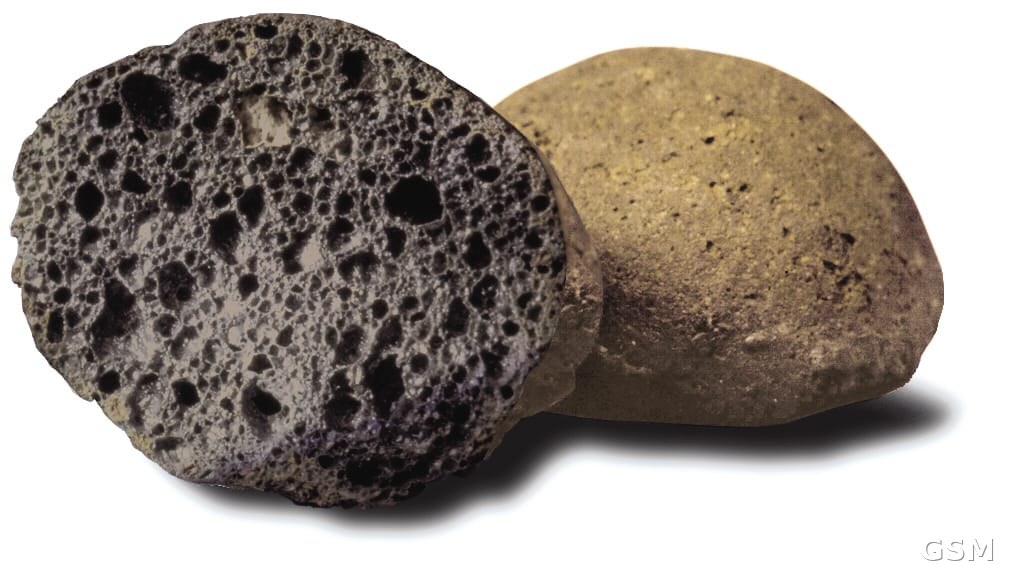
图片来源:图:轻质膨胀黏土骨料颗粒。作者:Leca67,公共领域,维基共享资源。 / Photo: Lightweight expanded clay aggregate pellets. Credit: Leca67, public domain, via Wikimedia Commons.
GSM Global · 本篇英文版 English edition of this story