双神经网络核伪随机数发生器在FPGA上达139.714兆比特每秒:《科学报告》通过全部16项NIST子测试、最大李雅普诺夫指数4.4662,11月13日刊出
《科学报告》2026年11月13日刊出一项研究,提出一个由新构建的四维超混沌系统驱动的硬件伪随机数发生器。这个带隐藏吸引子的四维超混沌系统经李雅普诺夫指数谱、分岔图、吸引盆与混沌0-1检验分析,最大李雅普诺夫指数为4.4662,并呈现稳健的多稳态。作者为Tuna、Vaidyanathan与Alçın等人,论文数字对象标识为10.1038/s41598-026-79716-3,2026年8月2日收稿、11月3日接受、11月13日刊出。
为解决无平衡点吸引子数字化时易退化的问题,作者提出双人工神经网络核架构,一层是以对数S型函数激活的预测层,另一层是以双曲正切S型函数激活的精修层。发生器在Xilinx Virtex-6现场可编程门阵列上以32位IEEE-754浮点标准实现,每个时钟周期取18位最低有效位切片,在139.714兆赫的工作频率下达到139.714兆比特每秒的实时吞吐量。
期刊摘要报告,统计验证显示,所生成的比特流通过了NIST SP 800-22测试套件全部16项子测试,P值均超过0.01。作者据此表示,双核神经架构保住了超混沌的复杂性,可为安全通信与图像加密提供熵源。
(来源:《科学报告》)
A Dual Neural Network Core PRNG on FPGA Reaches 139.714 Mbps: All 16 NIST Sub-Tests Passed and a Maximal Lyapunov Exponent of 4.4662 in Scientific Reports, Published November 13
A study published in Scientific Reports on November 13, 2026, introduces a hardware-implemented pseudo-random number generator driven by a constructed novel four-dimensional hyperchaotic system with hidden attractors. The dynamical properties of the oscillator were investigated through Lyapunov exponent spectra, bifurcation diagrams, basins of attraction, and the 0-1 test for chaos, revealing a maximal Lyapunov exponent of 4.4662 alongside robust multistability. The authors are Tuna, Vaidyanathan, Alçın and colleagues, and the paper carries digital object identifier 10.1038/s41598-026-79716-3, was received on August 2, 2026, accepted on November 3, 2026, and published on November 13, 2026. To resolve the challenge of digitizing delicate equilibrium-free attractors, the authors propose a dual artificial neural network core architecture consisting of a predictor layer activated by a log-sigmoid function and a refiner layer activated by a hyperbolic tangent sigmoid function. The generator is implemented on a Xilinx Virtex-6 FPGA using the 32-bit IEEE-754 floating-point standard, and by harvesting 18-bit least significant bit slices per clock cycle, the system achieves a real-time throughput of 139.714 Mbps at a 139.714 MHz operating frequency. The journal abstract reported that statistical verification shows the generated bitstreams pass all 16 sub-tests of the NIST SP 800-22 test suite with P-values exceeding 0.01, which the authors said shows the dual-core neural architecture preserves hyperchaotic complexity to deliver an entropy source for secure communications and image encryption.
(Source: Scientific)
来源:《科学报告》
发布:GSM·美国(发布链接)
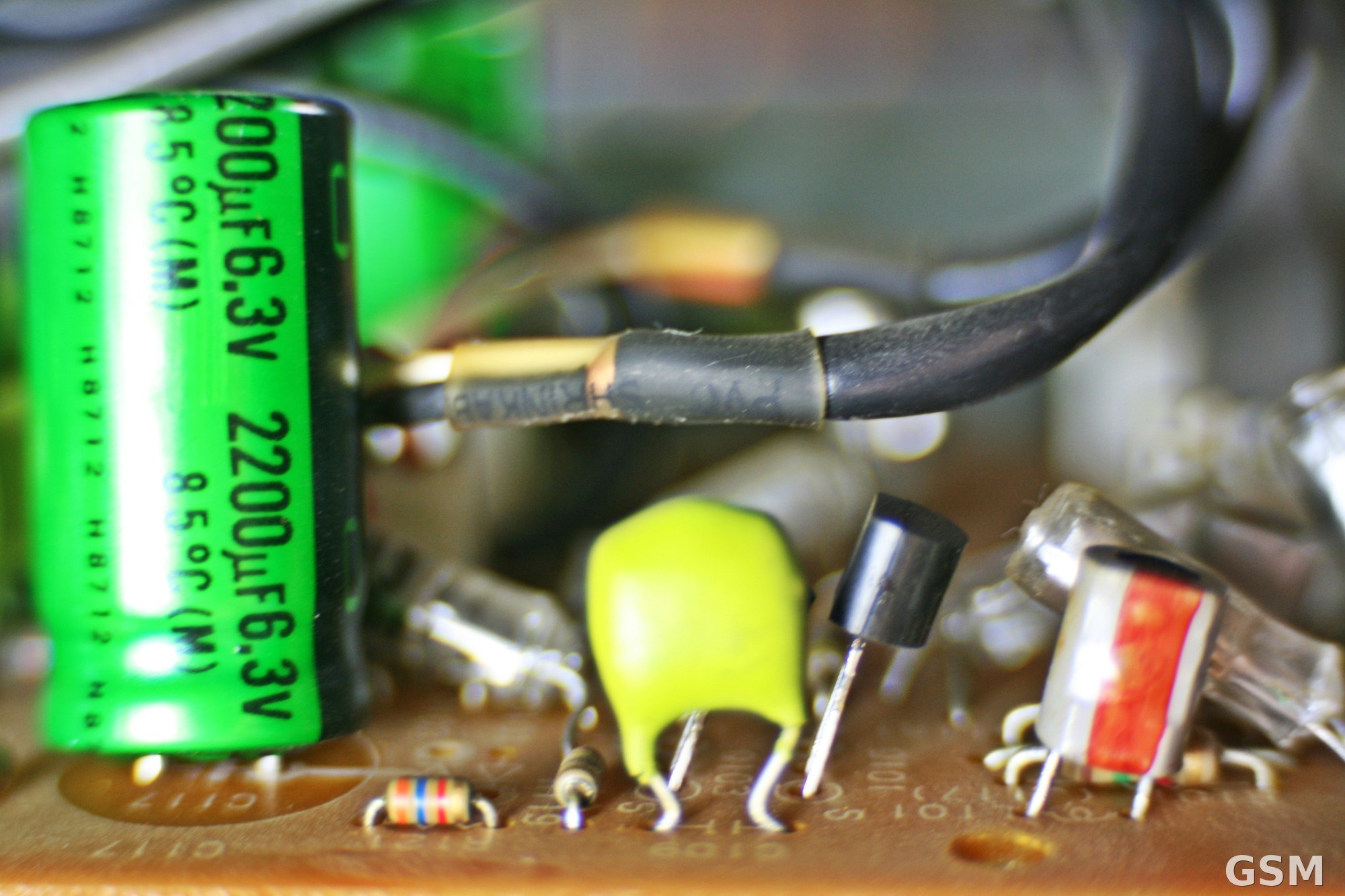
图片来源:图:一块电路板的微距特写。Ingo Dierking,CC BY-SA 4.0,经 Wikimedia Commons。 / Photo: Ingo Dierking, CC BY-SA 4.0, via Wikimedia Commons.
GSM Global · 本篇英文版 English edition of this story