DBV 花生贴片三期新数据:4至7岁儿童应答率46.6%对14.8%,平均依从性96.1%
DBV Technologies 11月12日宣布,其 VIASKIN 花生贴片 3 期 VITESSE 试验的新数据将于美国变态反应、哮喘与免疫学学会(ACAAI)2026 年会凤凰城会议上公布:三项报告从反应严重程度、免疫学变化与日常实用性三方面,支持该贴片在 4 至 7 岁花生过敏儿童中的安全与疗效。
VITESSE 是迄今规模最大的食物过敏免疫治疗试验,共 654 名儿童按 2:1 随机接受含 250 微克花生蛋白的 VIASKIN 花生贴片或安慰剂治疗 12 个月。试验已达主要终点:第 12 个月时,贴片组 46.6% 的儿童达到治疗应答标准,安慰剂组为 14.8%,应答率差 31.8%,95% 置信区间 24.5% 至 39.0%,p 值小于 0.001。
新公布的数据显示,12 个月双盲安慰剂对照食物激发中,贴片组最大症状严重程度显著低于安慰剂组(p=0.004):重度反应发生率为 8.4%,安慰剂组为 12.5%;12.5% 的贴片组受试者无症状或仅有轻度症状,安慰剂组为 1.5%。在基线诱发剂量及以下评估时,52.7% 的贴片组受试者无症状,安慰剂组为 19.2%;中度或重度反应为 14.0% 对 50.0%。免疫学指标上,花生特异性 IgG4 自第 3 个月上升并维持至第 12 个月,花生特异性 IgE 与 Ara h 2 特异性 IgE 显著降低,皮肤点刺试验风团直径显著缩小。
日常使用方面,贴片平均依从性为 96.1%,安慰剂组为 96.5%;83.4% 的受试者认为贴片「非常容易」或「容易」撕下,71.9% 称撕下「不痛」,受试者在治疗期间可照常洗澡、运动与游泳,方案未对日常活动或合并用药设限。DBV 首席医疗官 Pharis Mohideen 表示,这些数据为试验整体阳性结果补充了临床背景,贴片带来的免疫学变化与既往过敏原免疫治疗一致。
VIASKIN 花生贴片采用表皮免疫疗法:通过完整皮肤将微克级活性成分递呈给免疫系统,旨在重新训练免疫系统对过敏原脱敏。DBV 表示,该贴片目前尚未在任何国家获准上市,产品仍处于临床试验阶段。关联:Aravax 花生过敏肽免疫疗法 PVX108 二期试验达主要终点:儿童耐受剂量增幅2.4倍对1.2倍(来源:DBV Technologies)
DBV Peanut Patch Phase 3 Data: 46.6% Response in Children 4-7 vs 14.8% on Placebo, 96.1% Compliance
DBV Technologies announced on November 12 that new data from the Phase 3 VITESSE trial of its VIASKIN Peanut Patch will be presented at the American College of Allergy, Asthma and Immunology (ACAAI) 2026 Annual Scientific Meeting in Phoenix, with three presentations supporting the patch's safety and efficacy in children aged 4 to 7 with peanut allergy across reaction severity, immunologic changes and everyday practicality.
VITESSE is the largest food allergy immunotherapy trial to date, randomizing 654 children 2:1 to the VIASKIN Peanut Patch containing 250 micrograms of peanut protein or placebo for 12 months. The study met its primary endpoint: at month 12, 46.6% of children in the patch arm met treatment responder criteria, versus 14.8% on placebo, a difference in response rates of 31.8%, 95% confidence interval 24.5% to 39.0%, p less than 0.001.
The new data show that at the month 12 double-blind, placebo-controlled food challenge, maximum symptom severity was significantly lower with the patch (p=0.004): severe reactions occurred in 8.4% of patch-treated participants versus 12.5% on placebo, and 12.5% of patch-treated participants had no or mild symptoms versus 1.5% on placebo. When reactions were assessed at or below each participant's baseline eliciting dose, 52.7% of patch-treated participants had no symptoms versus 19.2% on placebo, while moderate or severe reactions occurred in 14.0% versus 50.0%. Immunologically, peanut-specific IgG4 rose by month 3 and stayed elevated through month 12, peanut-specific IgE and Ara h 2-specific IgE were significantly lower at month 12, and skin-prick-test wheal diameter decreased significantly.
On everyday use, mean treatment compliance was 96.1% with the patch and 96.5% with placebo; 83.4% of participants rated patches "very easy" or "easy" to remove and 71.9% rated removal "not painful," and participants continued typical daily activities including bathing, sports and swimming, with no restrictions on daily activities or concomitant medication use required by the protocol. Chief Medical Officer Pharis Mohideen said the data add context to the study's overall positive results, with immunologic changes consistent with other forms of allergen immunotherapy.
The VIASKIN Peanut Patch uses epicutaneous immunotherapy, delivering microgram amounts of an active compound through intact skin to re-educate the immune system to become desensitized to the allergen. DBV said the patch has not been authorized for sale in any country and remains in clinical trials. Related: Aravax Peanut Allergy Therapy PVX108 Meets Phase 2 Primary Endpoint: Tolerated Dose Up 2.4-Fold vs 1.2-Fold in Children (Source: DBV Technologies)
来源:DBV Technologies
发布:GSM·美国(发布链接)
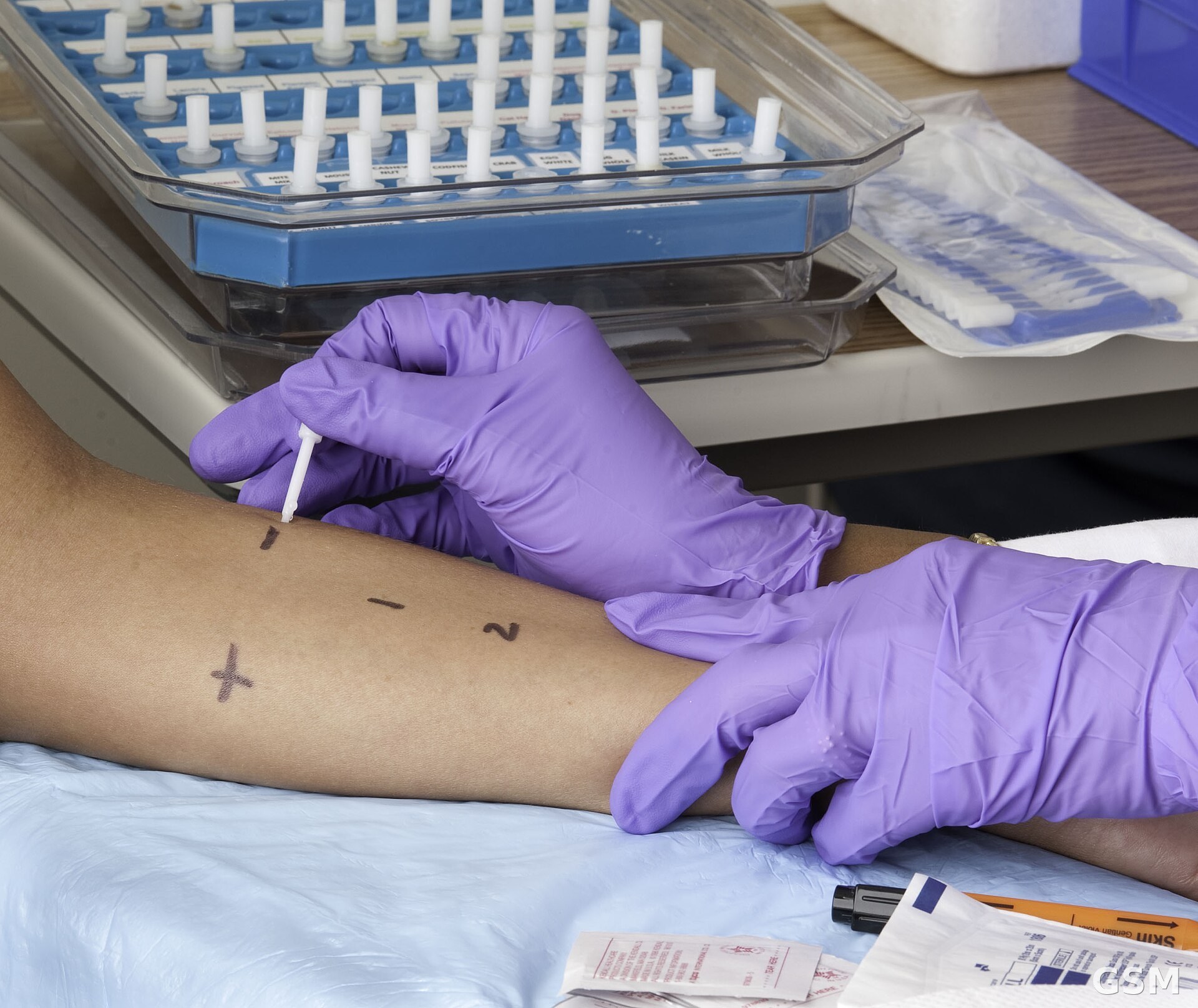
图片来源:图:过敏皮肤点刺试验示意。美国国家卫生研究院(NIH)供图,公共领域。 / Image: Allergy skin prick test. Photo courtesy of the National Institutes of Health (NIH), public domain.
GSM Global · 本篇英文版 English edition of this story