《自然·通讯》论文揭示DNA双链断裂修复机制:DNA结合驱动Ku70/Ku80二聚化,露出隐藏结合位点供APLF桥联断端
英国牛津消息—一项11月3日发表于《自然·通讯》的研究揭示了细胞修复 DNA 双链断裂的一个关键步骤:修复蛋白 Ku70/Ku80 在与 DNA 结合后会发生二聚化,从而露出一个此前隐藏的结合位点,使另一种修复因子 APLF 能够把断裂的两个 DNA 末端桥联起来。论文作者包括 Raman van Wee、Sara De Bragança、Eva M. Martín-Cuevas 等,作者单位包括牛津大学卡弗里纳米科学发现研究所、牛津大学化学系,以及西班牙国家生物技术中心(CNB-CSIC)与西班牙国家癌症研究中心(CNIO),通讯作者为 Fernando Moreno-Herrero 与 Philipp Kukura。
论文摘要指出,经由非同源末端连接修复双链断裂,需要先把 DNA 末端「突触式」地拉近对齐(synapsis)。APLF 正成为一个重要的修复因子,能够在 Ku70/Ku80 异二聚体存在时形成突触桥;但此前文献只报道过 Ku70/Ku80 与 APLF 之间一对一的相互作用,从根本上不足以完成突触对齐,APLF 如何桥联 Ku70/Ku80 异二聚体、以及在没有双链断裂时这种桥联如何被阻止,此前均不清楚。
这项研究给出的答案是 DNA 驱动的二聚化:DNA 结合驱动 Ku70/Ku80 异二聚体彼此配对,进而调节 APLF 对双链断裂的突触桥联。论文于2026年1月20日投稿、10月2日接受、11月3日正式发表,为开放获取文章。
Nature Communications Study Shows DNA Binding Drives Ku70/Ku80 Dimerization, Exposing a Hidden Site That Lets APLF Bridge Broken DNA Ends
OXFORD, United Kingdom — A study published on November 3 in Nature Communications has identified a key step in how cells repair DNA double-strand breaks: after binding DNA, the repair protein Ku70/Ku80 dimerizes, exposing a previously hidden binding site that allows another repair factor, APLF, to bridge the two broken DNA ends. The paper, by Raman van Wee, Sara De Bragança, Eva M. Martín-Cuevas and co-authors from institutions including the University of Oxford's Kavli Institute for Nanoscience Discovery and Department of Chemistry and Spain's Centro Nacional de Biotecnología (CNB-CSIC) and Spanish National Cancer Research Center (CNIO), lists Fernando Moreno-Herrero and Philipp Kukura as corresponding authors.
The abstract notes that repair of double-strand breaks via non-homologous end joining requires the synapsis of DNA ends. APLF is emerging as an important repair factor capable of forming synaptic bridges in the presence of the Ku70/Ku80 heterodimer; however, only a single one-to-one interaction between Ku70/Ku80 and APLF had been reported to date, which is fundamentally insufficient for synapsis, and how APLF-mediated bridging of Ku70/Ku80 heterodimers is prevented in the absence of double-strand breaks had remained unclear.
The study's answer is DNA-driven dimerization: DNA binding drives Ku70/Ku80 heterodimers to pair with each other, regulating the synapsis of double-strand breaks by APLF. The paper was received on January 20, 2026, accepted on October 2, 2026 and published on November 3, 2026, as an open-access article.
—-
来源:《自然·通讯》期刊论文
发布:GSM·美国(发布链接)
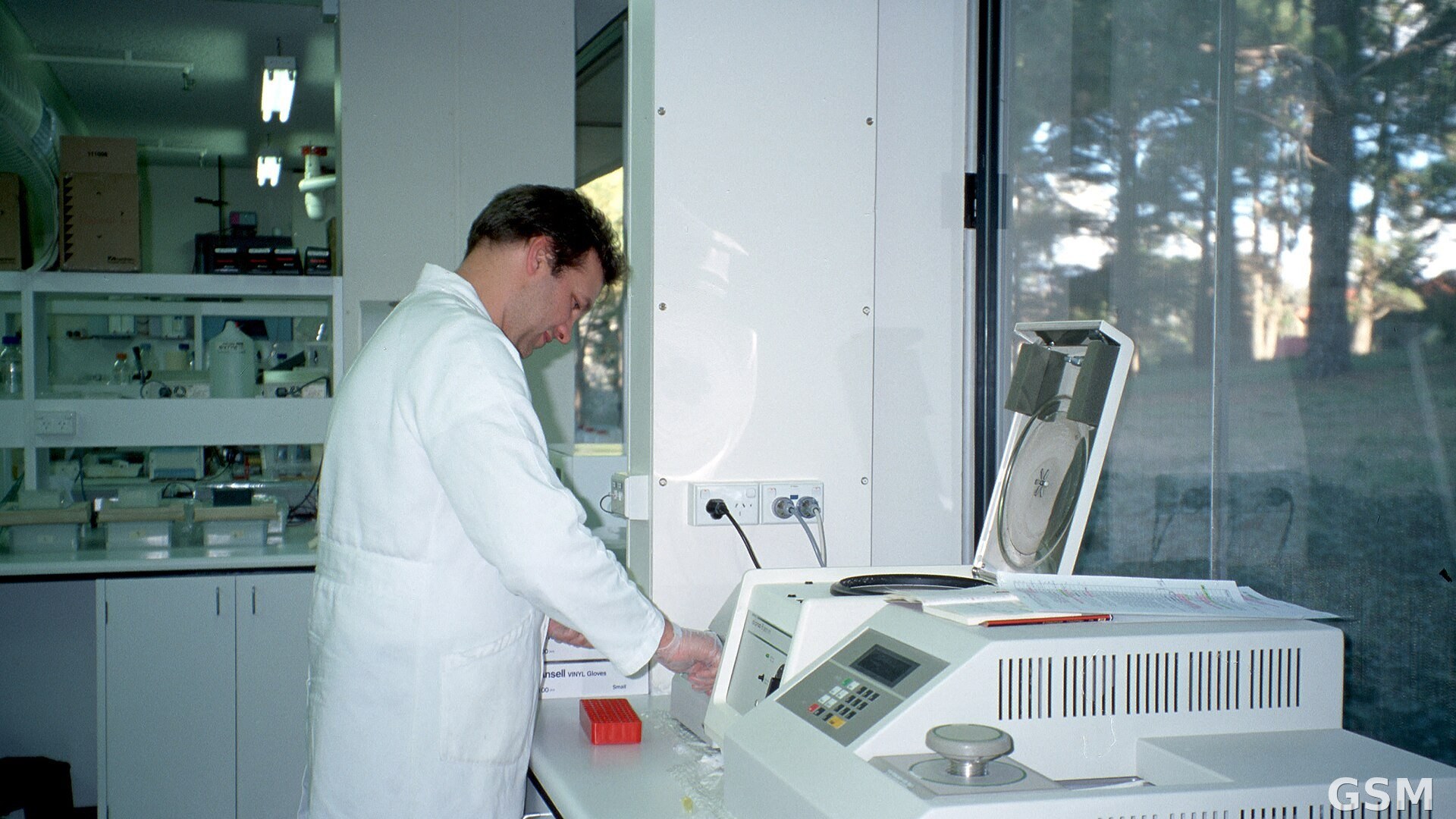
图片来源:研究人员在实验室进行 DNA 样本分析(示意)。(图/美国国家癌症研究所 NCI,Wikimedia Commons,公共领域)| A researcher analyzing DNA samples in a laboratory (illustrative). (Photo: National Cancer Institute, Wikimedia Commons, public domain)
GSM Global · 本篇英文版 English edition of this story