哈勃研究37个邻近矮星系发现「氧去哪了」:星系平均只留住恒星所造氧的约11%,保留比例仅4%至25%
美国马里兰州巴尔的摩消息—研究人员利用美国国家航空航天局哈勃空间望远镜研究了37个邻近矮星系,发现这些星系中实际存在的氧远少于其恒星一生所应造出的氧。相关论文已发表于《天体物理学杂志》,题为《GLOW. II. 低质量星系氧普查》,空间望远镜科学研究所11月2日发布了研究说明。
这批矮星系距离地球在2200万光年以内,每个星系只含数千至数亿颗恒星。研究团队把恒星一生预计产生的氧量,与现存于星系恒星、气体与尘埃中的氧量逐一对照,结果显示:37个星系只留住了所产氧的4%至25%,平均约为11%。氧是氢与氦之后宇宙中最丰富的元素、相对容易探测与测量,团队以氧为示踪元素来追踪恒星所造重元素在星系内、星系际气体与星系际空间中的分布。为完成普查,团队使用了哈勃的归档光学影像来分辨单个恒星、重建恒星形成史,并结合已退役的斯皮策空间望远镜以及地面甚大阵列与澳大利亚望远镜紧凑阵列的数据。
论文的解释是:大质量恒星的能量与超新星爆发驱动的星系风,把氧吹出低质量星系的效率比现有计算机模型预测的更高。项目负责人、罗格斯大学的 Kristen Wingfield McQuinn 表示,追踪氧的产生与去向有助于理解星系演化以及星系如何使星系际介质增丰;犹他大学的 Grace Telford 表示,要把物质推出宿主星系,需要大质量恒星与超新星爆炸的能量。McQuinn 同时担任新近发射的南希·格雷斯·罗曼空间望远镜在空间望远镜科学研究所的科学运行中心负责人,她表示后续希望借助罗曼望远镜在邻近宇宙中找到更暗更小的星系,再用哈勃与韦布望远镜深入研究其恒星。
Hubble Study of 37 Nearby Dwarf Galaxies Finds the Missing Oxygen: Galaxies Keep Only About 11% of the Oxygen Their Stars Made, Retaining Between 4% and 25%
BALTIMORE, Maryland — Researchers using NASA's Hubble Space Telescope studied 37 nearby dwarf galaxies and found that much of the oxygen their stars are estimated to have produced is missing. The work, by Kristen B. W. McQuinn and co-authors, was published in The Astrophysical Journal under the title "GLOW. II. A Census of Oxygen in Low-mass Galaxies," and the Space Telescope Science Institute issued a release on November 2.
The dwarf galaxies lie within 22 million light-years of Earth and contain from a few thousand to hundreds of millions of stars each. Comparing estimates of how much oxygen the galaxies' stars had made over their lifetimes with the amount remaining in the galaxies' stars, gas and dust, the team found the galaxies retained between 4% and 25% of the oxygen, with an average of about 11%. Oxygen, the most abundant element in the universe after hydrogen and helium, is relatively easy to detect and measure, making it a tracer for how elements made by stars are distributed inside stars, in the gas between stars and in the space between galaxies. The team used archival Hubble optical imaging to resolve individual stars and reconstruct star-formation histories, combined with data from NASA's retired Spitzer Space Telescope and the ground-based Very Large Array and Australia Telescope Compact Array.
The study concluded that energy from massive stars and galactic winds unleashed by supernovae are more effective at removing oxygen from low-mass galaxies than current models predict. Grace Telford, an assistant professor at the University of Utah and a co-investigator, said the oxygen must have been ejected, which requires energy from massive stars and supernova explosions to drive material out of the host galaxies and into the space between galaxies. McQuinn, who leads the GLOW project and serves as mission head of the Science Operations Center for NASA's Nancy Grace Roman Space Telescope at the Space Telescope Science Institute, said tracing how much oxygen gets made and how much is distributed inside and outside galaxies helps explain galaxy evolution and how galaxies enrich the intergalactic medium, and that she hopes to use Roman to find even smaller nearby galaxies for follow-up study with Hubble and the James Webb Space Telescope.
—-
来源:欧洲航天局/哈勃(
发布:GSM·美国(发布链接)
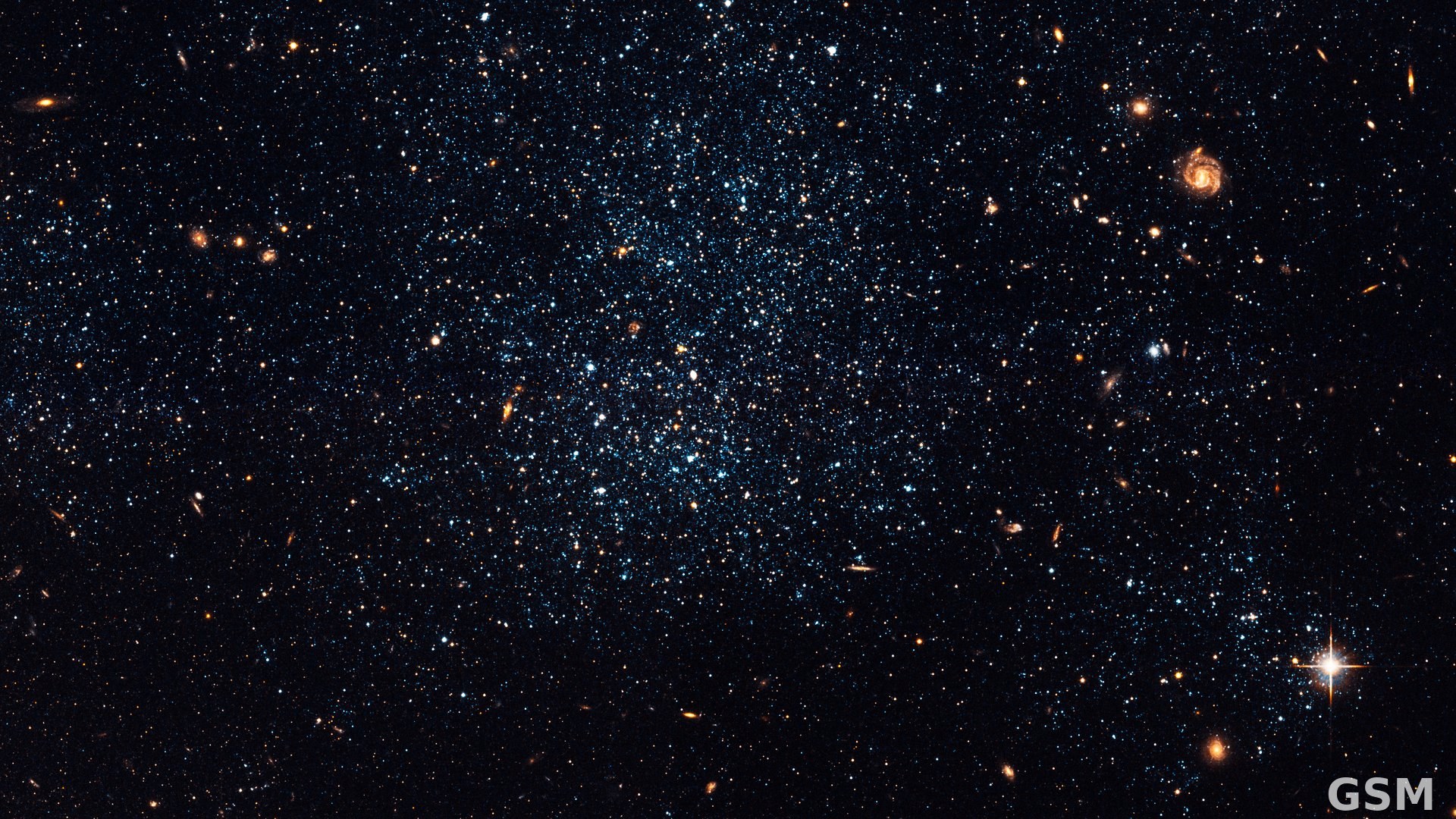
图片来源:哈勃望远镜拍摄的深空星系(资料图)。(Wikimedia Commons/公共领域)|A deep-field galaxy image by Hubble (file photo). (Wikimedia Commons / public domain)
GSM Global · 本篇英文版 English edition of this story