东京大学团队以高密度放射性碳测年揭示熊野海沉积层中的隐藏地震痕迹:40厘米岩芯记录可追溯至约公元1440年
日本东京消息—东京大学研究团队运用一种新的放射性碳分析方法,研究取自日本熊野海的海底沉积物岩芯,在其中发现多处此前未知的地震留下的「隐藏」痕迹。相关论文已发表于《Radiocarbon》期刊,题为《以连续高密度放射性碳测年探测海洋沉积物中不可见的事件层》,作者包括 A. Omura、横山祐典(Yusuke Yokoyama)、S. Hirabayashi 等。
据研究报道,本次研究的沉积物岩芯于2012年在日本中部东南沿海的熊野海槽提取,长40厘米,由细粒黏土质粉砂组成。团队以0.5至1.0厘米的间隔,沿岩芯全长测量总有机碳的放射性碳含量,空间分辨率达到1厘米或更细;岩芯最深处(37至38厘米)的年代测定为约公元1440年。
团队发现,岩芯中多处出现较老的有机碳混入较年轻沉积层之间的现象,并将其解释为海底沉积物曾受严重洪水、风暴或海底地震扰动、移位与再沉积的证据。东京大学大气海洋研究所教授横山祐典表示,团队发现了数个以前看不见的地质层,可能源自南海海槽地震引发的海底滑坡;由于再沉积的沉积物与下方物料相同,其化学与结构特征无法区分,事件层在肉眼、X射线与 CT 影像下均不可见,但通过识别总有机碳年龄沿岩芯的差异、并利用有孔虫测年换算为日历年份,团队得以确定多次事件的发生,并将其中部分事件与13世纪至20世纪的海底地震文字历史记录对应起来。报道称,研究团队还将岩芯中的隐藏事件史与1498年以来有记录的大地震作了对比。
横山祐典表示,这一新技术不仅适用于日本,也适用于其他有地质活动历史、希望获得更多数据以改进预测的地区;他接下来有意把研究范围从深海扩大到熊野海更广海域,以拼凑日本隐藏灾害史的更完整图景,为未来事件做准备。
University of Tokyo Team Uses High-Density Radiocarbon Dating to Reveal Hidden Earthquake Traces in Kumano Sea Sediments; 40-Centimeter Core Reaches Back to Abo
TOKYO, Japan — Researchers at the University of Tokyo have used a new type of radiocarbon analysis to study a sediment core taken from the Kumano Sea off the coast of Japan, revealing multiple hidden traces of previously unknown earthquakes in the Nankai Trough. The work, by A. Omura, Yusuke Yokoyama, S. Hirabayashi and co-authors, was published in the journal Radiocarbon under the title "Sequential high-density radiocarbon dating to detect invisible event layers in marine sediments."
According to the research report, the ocean sediment core, extracted in 2012 from the Kumano Trough off the southeast coast of central Japan, is a 40-centimeter-long cylinder of fine-grained clayey silt. The team took radiocarbon measurements of total organic carbon at 0.5- to 1.0-centimeter intervals along the core, at a resolution of 1 centimeter or less, and dated the oldest part of the core, at a depth of 37–38 centimeters, to approximately A.D. 1440.
The team found instances of older organic carbon mixed between layers of younger sediment, which it interpreted as evidence of seafloor sediment disturbed, shifted and repositioned by severe floods, storms or submarine earthquakes. Professor Yusuke Yokoyama of the university's Atmosphere and Ocean Research Institute said the team found several new geological layers that were not visible before, derived from submarine landslides possibly triggered by earthquakes in the Nankai Trough. Because the redeposited sediments are the same as the materials below, the event layers were indistinguishable in chemical and structural features and invisible to visual observation, X-ray or CT analysis; by identifying differences in total organic carbon ages along the core and converting them to calendar years using ages from forams, the team determined the occurrence of multiple events and correlated some of them with written historical records of submarine earthquakes from the 13th to the 20th century. The report said the team also compared the hidden event history with recorded major earthquakes dating back to 1498.
Yokoyama said the technique is useful not only for Japan but also for other regions with a history of geological activity seeking more data to improve predictions, and that he intends to look more widely across the Kumano Sea and beyond to piece together a broader picture of Japan's hidden history of disaster.
—-
来源:《海洋地质》期刊论文(ScienceDirect
发布:GSM·美国(发布链接)
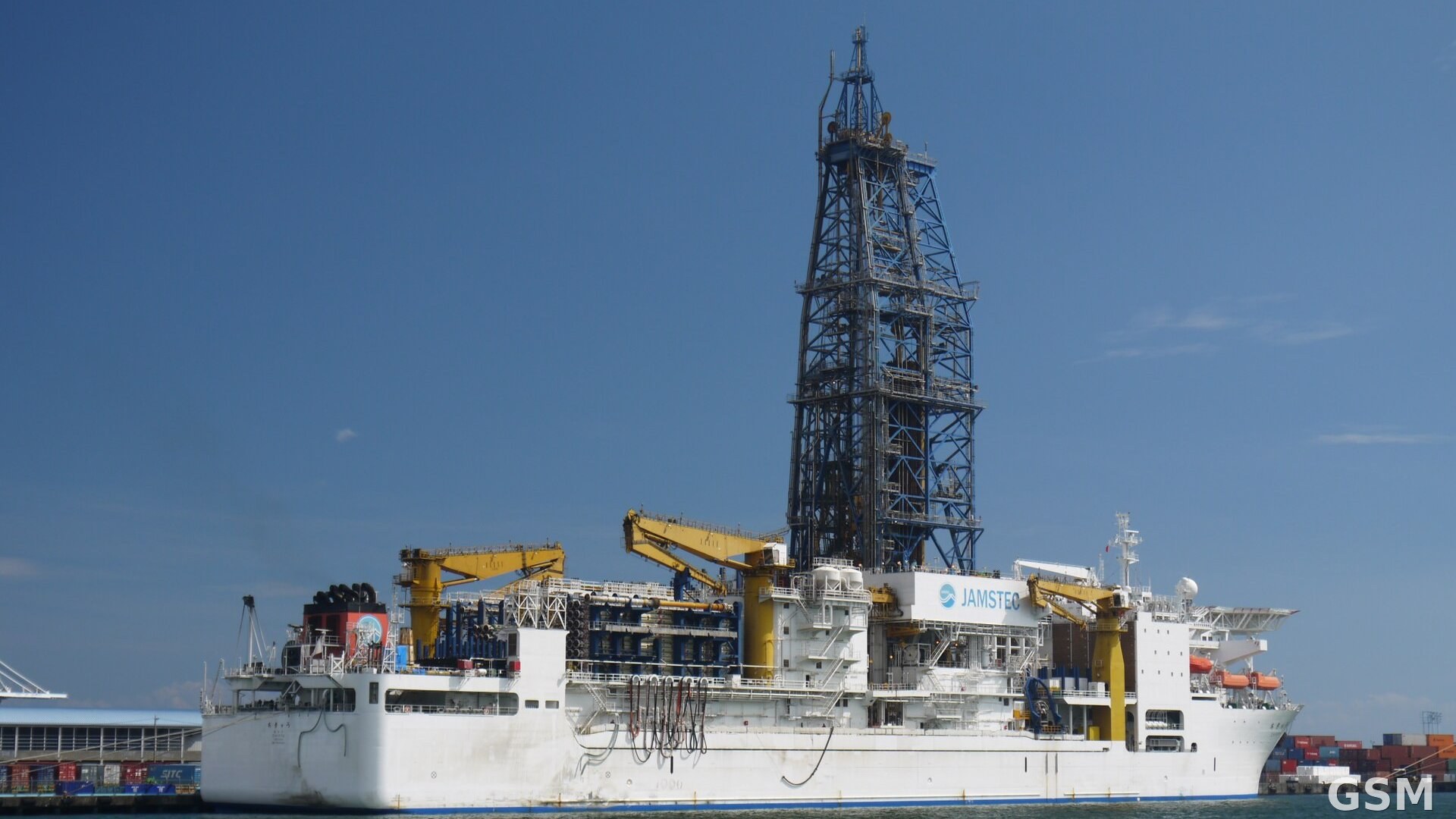
图片来源:国际大洋发现计划(IODP)科考船从海底钻取岩芯(示意)。(图/JAMSTEC·IODP,Wikimedia Commons,CC BY 4.0)| An IODP research vessel retrieving sediment cores from the seafloor (illustrative). (Photo: JAMSTEC/IODP, Wikimedia Commons, CC BY 4.0)
GSM Global · 本篇英文版 English edition of this story