《自然·通讯》论文:岛叶错误信号可支撑自我纠错的颅内脑机接口,前额叶接收来自前岛叶的高频动态
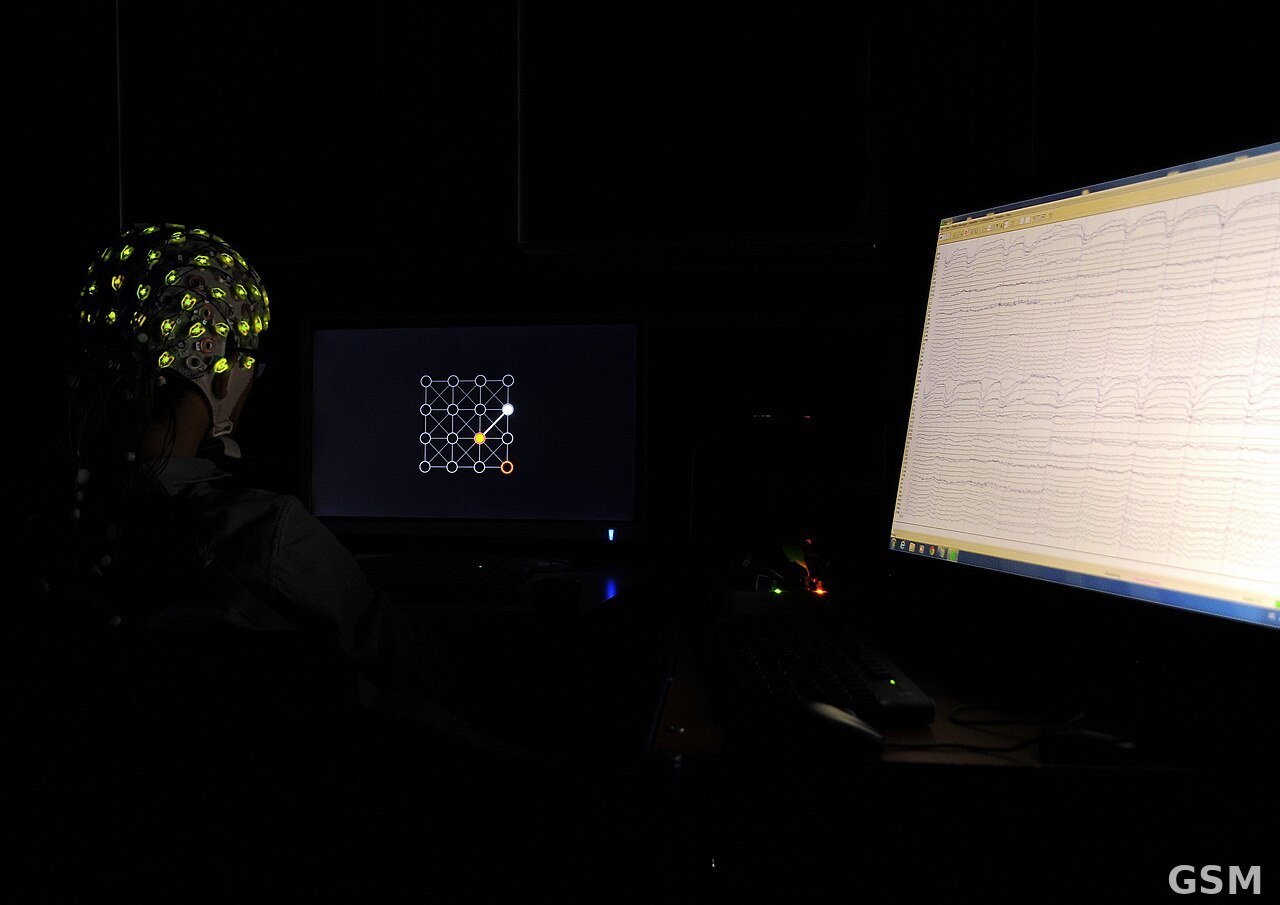
《自然·通讯》11 月 7 日发表马斯特里赫特大学等机构团队的论文:研究人员在癫痫患者身上记录颅内脑电图,构建运动脑机接口,并同步采样分布网络中的错误相关活动,结果显示大脑岛叶的编码方式可用于让接口实时识别自身错误。该研究在临床监测环境下完成,参与者为癫痫监测单元的患者。
论文第一作者 Paul Weger,通讯作者为 Paul Weger 与 Christian Herff,作者单位包括马斯特里赫特大学神经外科与心理健康和神经科学研究所、美国布朗大学工程学院等。作者写道,错误识别是适应性行为的基础;研究发现,当接口未能跟随使用者意图时,前岛叶出现高频群体动态,并向前额叶皮层传播。岛叶对错误处理与运动反馈的反应具有空间组织性,是一个连接行动与结果的异质枢纽。
在具体编码分工上,论文指出,额叶—岛叶记录位点优先编码错误相关活动,而中央顶叶的反应则与代偿性运动信号混杂在一起;作者据此认为前者是实时错误纠正的一个有吸引力的目标。作者总结称,这项工作展示了一个利用岛叶脑活动的人类颅内脑机接口,把认知过程直接整合进设备控制。论文于 2025 年 12 月 6 日收稿、2026 年 9 月 29 日接受、11 月 7 日发表,研究经费来自荷兰 INTENSE 联盟等,作者声明无利益冲突。
Nature Communications Paper: Insular Error Encoding Supports a Self-Correcting Intracranial Brain-Computer Interface, With Signals Propagating From Anterior Insula to Prefrontal Cortex
A paper published in Nature Communications on November 7 by teams including Maastricht University reports that intracranial recordings in epilepsy patients can support a motor brain-computer interface that detects its own errors, using error-related activity sampled across a distributed brain network. The work was carried out in a clinical monitoring setting with patients at an epilepsy monitoring unit.
The paper's first author is Paul Weger, with Paul Weger and Christian Herff as corresponding authors; affiliations include Maastricht University's Department of Neurosurgery and Mental Health and Neuroscience Research Institute and Brown University's School of Engineering. The authors write that error recognition is fundamental to adaptive behavior. Their recordings reveal high-frequency population dynamics emerging in the anterior insula and propagating to the prefrontal cortex as the interface fails to follow the user's intention, and they identify spatially organized insular responses to error processing and movement feedback, describing the insula as a heterogeneous hub linking action and outcome.
On the division of coding, the paper reports that frontoinsular recording sites preferentially encode error-related activity, while centroparietal responses are intermixed with compensatory motor signals, making the former a compelling target for real-time error correction. The authors conclude that the findings demonstrate a human intracranial brain-computer interface harnessing insular brain activity, integrating cognitive processes directly into device control. The paper was received on December 6, 2025, accepted on September 29, 2026 and published on November 7, 2026, with funding from the Dutch INTENSE consortium, among others; the authors declare no competing interests.
来源:《自然·通讯》
发布:GSM·美国(发布链接)
图片来源:图:脑机接口实验。Wikimedia Commons,CC BY 4.0。 / Photo: Brain-computer interface experiment. Wikimedia Commons, CC BY 4.0.
GSM Global · 本篇英文版 English edition of this story