外交部回应中美农产品采购之问:双方要相向而行,坚持互利共赢导向
11月6日,中国外交部发言人郭嘉昆在北京主持例行记者会。路透社记者就中美农产品采购与关税安排提问,郭嘉昆表示,这个问题建议向中方主管部门进一步询问;维护中美经贸关系稳定发展,符合两国和两国人民利益,也有利于全球经济发展,双方要相向而行,坚持互利共赢导向,推动中美经贸关系持续稳定向好发展。
路透社记者的问题源于中国商务部前一日的表态。11月5日,商务部新闻发言人黄玲在例行新闻发布会上回答有关进口美国农产品的提问时表示,中美农产品贸易是双边经贸合作的重要组成部分,中方一直对扩大自美采购农产品持开放态度,但前提是双方达成的「300亿对300亿」对等降税安排落地。
黄玲还表示,扩大两国在农业领域的合作,既可以丰富两国民众的餐桌,也能给两国企业和农民提供稳定的经济收入,为双方带来实实在在的好处。她说,希望美方与中方共同努力,通过共同降低关税、减少非关税壁垒、扩大市场准入等方式,为两国农产品贸易创造更多有利条件。
据路透社报道,今年9月两国元首在华盛顿会晤后,双方提出总额约600亿美元的对等降税一揽子安排,其中包括约170亿美元的美国农产品,规模相当于中国2024年自美进口农产品的水平,但这一安排尚未最终敲定。白宫今年5月曾表示,中方已同意自2026年起每年采购170亿美元美国农产品,2026年的目标按比例调整。路透社记者6日追问的正是:商务部的表态是否意味着,在关税削减落地之前,中方不会启动这笔采购承诺。
据路透社报道,中美两国已设立农业工作组,预计在今年年底前举行会议。
关联:商务部:对美正丙醇双反税再延五年,11月6日起执行,最高税率267.4%
Foreign Ministry Responds on U.S. Farm Purchases: Both Sides Should Meet Each Other Halfway on Mutual Benefit
On November 6, Chinese Foreign Ministry spokesperson Guo Jiakun hosted the regular press conference in Beijing. Asked by a Reuters reporter about China's purchases of U.S. agricultural products and the two sides' tariff arrangement, Guo said the question should be put to the competent Chinese authorities, adding that maintaining the stable development of China-U.S. economic and trade relations serves the interests of both countries and their peoples and benefits global economic growth, and that the two sides should meet each other halfway, uphold the orientation of mutual benefit and win-win results, and push bilateral economic and trade ties toward continued stable and sound development.
The Reuters question stemmed from a statement by China's Ministry of Commerce the previous day. On November 5, commerce ministry spokesperson Huang Ling, answering a question about imports of U.S. farm products at a regular press briefing, said agricultural trade is an important part of China-U.S. economic and trade cooperation, and that China has consistently been open to expanding purchases of agricultural products from the United States, but only on the condition that the two sides implement their agreed "$30 billion-for-$30 billion" reciprocal tariff-reduction arrangement.
Huang added that expanding agricultural cooperation can enrich the dinner tables of both peoples and provide stable income for businesses and farmers in both countries, bringing tangible benefits to both sides. She said China hopes the U.S. will work with it to lower tariffs, reduce non-tariff barriers and expand market access, so as to create more favorable conditions for agricultural trade between the two countries.
According to Reuters, after the two heads of state met in Washington in September, the two sides proposed a package of reciprocal tariff cuts totaling about $60 billion, including roughly $17 billion worth of U.S. farm goods, a scale equivalent to China's farm imports from the U.S. in 2024, though the arrangement has yet to be finalized. The White House said in May that China had agreed to buy $17 billion of U.S. agricultural goods annually starting in 2026, with the 2026 target adjusted on a prorated basis. The Reuters reporter asked on November 6 whether the commerce ministry's statement means China will not begin fulfilling that purchase commitment until the tariff cuts are implemented.
According to Reuters, the two countries have set up an agricultural working group that is expected to meet before the end of this year.
来源:中国外交部
发布:GSM·美国(发布链接)
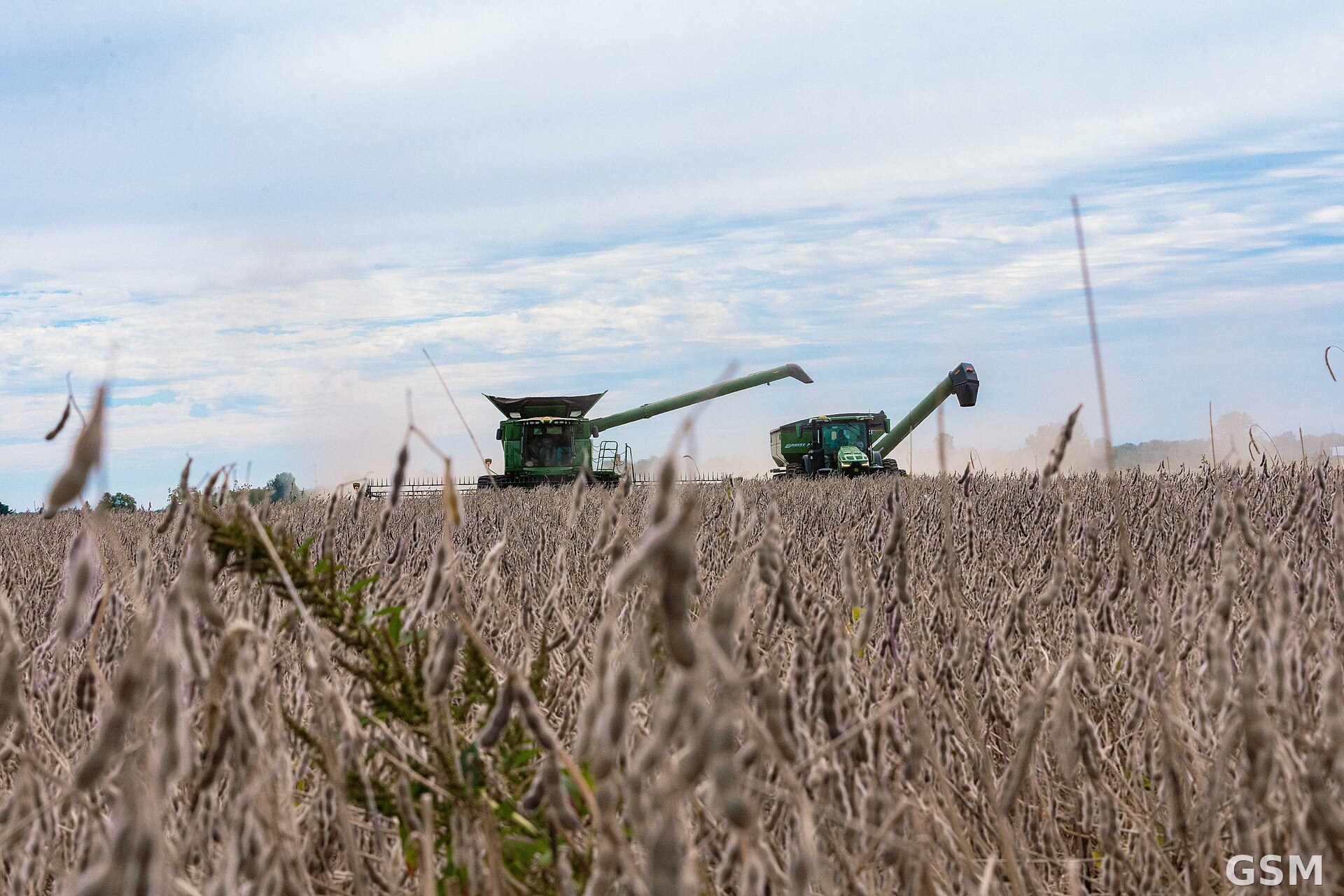
图片来源:图:Indiana 州 Brownsburg 一处农田里的大豆收割作业。中国扩大自美采购农产品,关系到美国农户的销路。美国农业部(USDA)摄,公共领域,经 Wikimedia Commons。 / Photo: Soybean harvest in Brownsburg, Indiana. By the U.S. Department of Agriculture, public domain, via Wikimedia Commons.
GSM Global · 本篇英文版 English edition of this story