旅行者1号完成节电换装、短暂失联后自愈:11月18日将抵达距地球一光日里程碑
美国国家航空航天局(NASA)10月29日公布,飞得最远的人造探测器旅行者1号今年9月完成了代号「Big Bang」的节电换装,10月18日至19日短暂失联后又自行恢复通信;11月18日,它将抵达距地球160.9亿英里(约258.9亿公里)的「一光日」里程碑。
节电换装在9月初完成:工程师关停旅行者1号上的三台设备、换上三台功耗更低的替代设备,六周前刚在它的姊妹探测器旅行者2号上完成同款操作。这六台设备负责让探测器在极寒的深空中保持温度,必须三台同时更换,才能既降功耗、又保证热量分布均匀。
旅行者号靠放射性同位素热电机供电,钚燃料持续衰变,两台探测器每年各损失约4瓦电力。任务1977年发射时载有10台科学仪器,近年来因电力见底已关停其中两台;NASA表示,若不做这次换装,最快2027年夏天就须再关一台仪器,换装后剩余仪器的运行时间将比原先预期更长。
失联发生在10月18日至19日:NASA的深空网络在两次相隔24小时的预定联络中都没有收到旅行者1号的信号,当时它距地球约160亿英里(约240亿公里);信号在24小时后、即10月20日自行重新出现,团队此后一直与它保持通信。
工程师仍在调查失联原因,目前已确认一组推进器当时下线、备用推进器自动接管。这种切换是探测器电脑察觉推进器异常时自动触发的「故障保护」:探测器转入安全稳定的构型、暂停正常运行,等工程师诊断处置。
「这是我们第一次见到探测器做出这样的反应,但任务走到今天,我们也得对意外有心理准备。」旅行者任务经理 Kareem Badaruddin 说,他任职于位于南加州的NASA喷气推进实验室(JPL)。「我们很高兴与旅行者1号恢复联系,也急着弄清到底发生了什么。」
旅行者1号目前以约38,000英里/时(约61,155公里/时)的速度飞行。11月18日抵达一光日距离后,地球发出的无线电信号要24小时才能到达它、它的回传信号再要24小时才能回到地球。
「想跟旅行者号说声你好,你发出消息,然后回家等两天,才会收到回应。」旅行者项目经理 Suzanne Dodd 说。NASA表示,跨过一光日当天探测器本身不会感知到任何变化,这一里程碑的意义在于展示宇宙之浩瀚与这台人类最遥远探测器的持久。
Voyager 1 Completes Power-Saving Swap and Recovers From Brief Signal Loss: One Light-Day From Earth on November 18
NASA said on October 29 that Voyager 1, the most distant human-made object, completed a power-saving swap nicknamed the “Big Bang” in September, recovered on its own from a brief loss of communication on October 18-19, and will reach a milestone of one light-day from Earth on November 18, at a distance of 16.09 billion miles (25.89 billion kilometers).
The swap was completed in early September: engineers turned off three devices on Voyager 1 and substituted three lower-power alternatives, about six weeks after the mission team performed the same swap on Voyager 2. The six devices help keep the spacecraft warm enough to operate in the frigid expanse of space, and only by swapping all three could the team both reduce power use and ensure heat is properly distributed.
The Voyagers are powered by radioisotope thermoelectric generators that convert heat from decaying plutonium into electricity, losing about 4 watts of power each year. The mission launched in 1977 with 10 dedicated science instruments, and in recent years the dwindling supply has forced the team to turn off two of them. Without the Big Bang, NASA said, the mission would have needed to turn off another instrument on Voyager 1 as early as summer 2027; the swap lets the remaining instruments operate longer than previously anticipated.
The signal loss came on October 18 and 19, when NASA's Deep Space Network was unable to detect a radio signal from the probe, then 16 billion miles (24 billion kilometers) from Earth, during two scheduled communications attempts 24 hours apart. The signal reappeared 24 hours later, on October 20, and the team has maintained communication since then.
Engineers are still investigating the cause. They have determined that one group of thrusters went offline and their backups turned on, an automatic fault-protection response programmed to occur when the spacecraft's computers detect something amiss: the probe puts itself in a safe, stable configuration and pauses normal operations while engineers diagnose the issue.
“This is the first time we've seen the spacecraft do something like this, but we are also at a point in the mission where we have to expect the unexpected,” said Kareem Badaruddin, Voyager mission manager at NASA's Jet Propulsion Laboratory in Southern California. “We're relieved to be back in contact with Voyager 1 and are eager to understand what happened.”
Voyager 1 is speeding at 38,000 mph (61,155 kph). Once it passes one light-day, radio waves will take 24 hours to reach it and another 24 hours to carry its reply back to Earth.
“If you want to say 'hello' to Voyager, you send your message and then you go home and you wait two days before you finally get a response,” said Suzanne Dodd, Voyager project manager at JPL. NASA said the spacecraft will not detect any change when it passes the milestone; its significance lies in demonstrating the vastness of the universe and the endurance of humanity's most distant explorer.
来源:GSM·美国(原文链接)
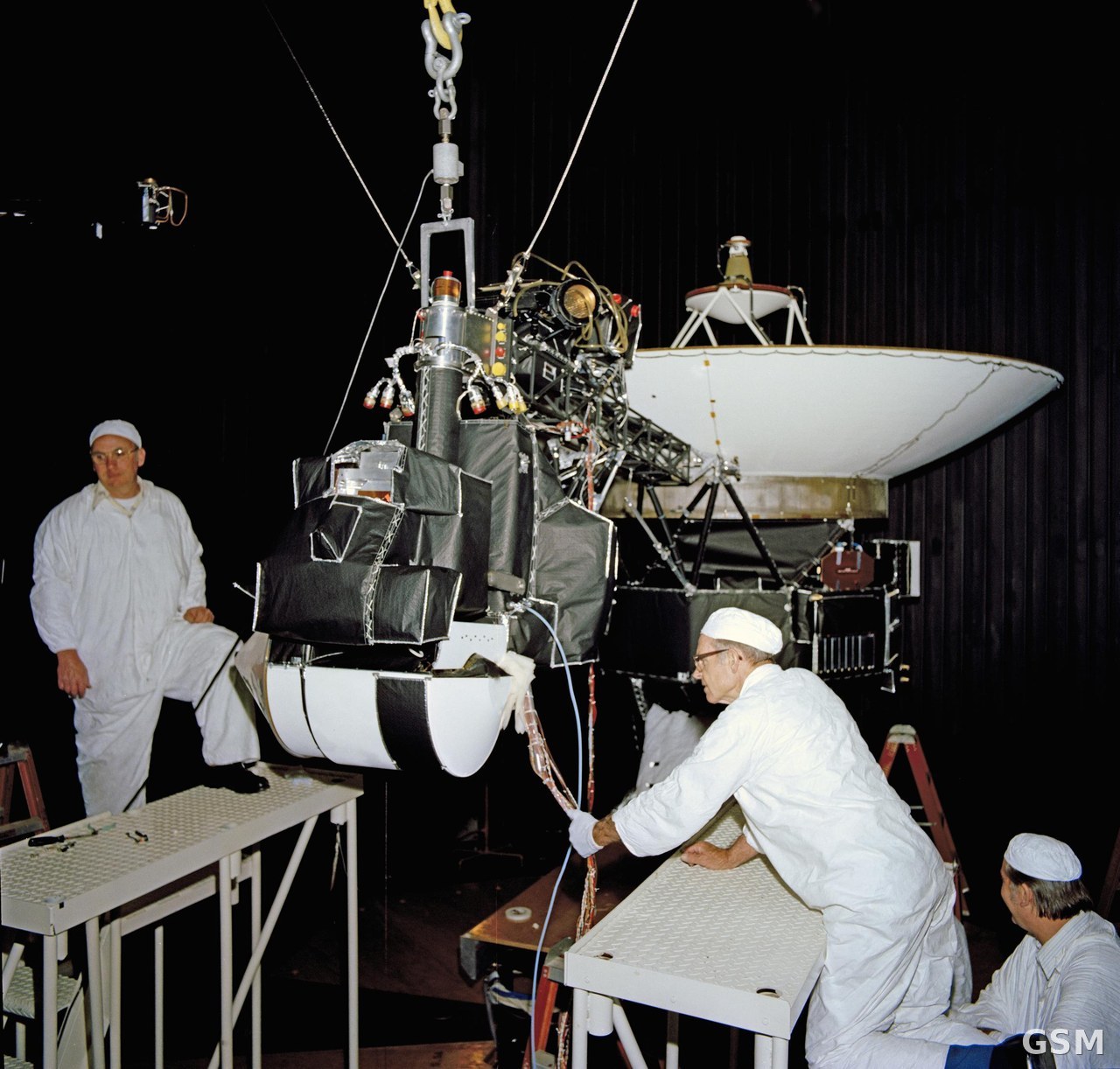
图片来源:图:旅行者号探测器(资料图)。照片:NASA/JPL-Caltech,公共领域。 / The Voyager spacecraft (file photo). Photo: NASA/JPL-Caltech, public domain.