历史上的今天:10月22日,中国红军三大主力在将台堡会师
10月22日这一天,在历史上留下了不少印记。GSM「历史上的今天」栏目每日一篇,按日期回望发生在这一天的全球与中国大事。本期共八条。
1936年:中国红军三大主力在将台堡会师
1936年10月22日,中国工农红军第二方面军总指挥部及红二军团到达宁夏西吉将台堡,与红一方面军胜利会师。此前的10月9日,红一方面军与红四方面军已在甘肃会宁会师。至此,红军第一、第二、第四方面军三大主力全部会合,历时两年的长征胜利结束。1996年,将台堡建成中国工农红军长征将台堡会师纪念碑;2006年,将台堡革命旧址列入中国全国重点文物保护单位。今年是长征胜利90周年。
1978年:中国领导人邓小平访问日本
1978年10月22日至29日,中国领导人邓小平访问日本。据中国官方大事记记载,这是新中国成立后中国国家领导人首次访问日本。这次访问发生在1978年8月中国与日本缔结和平友好条约之后两个多月。同年12月,中国共产党十一届三中全会召开,作出实行改革开放的历史性决策。
1962年:美国总统肯尼迪就古巴导弹危机发表电视讲话
1962年10月22日晚7时,美国总统 John F. Kennedy 向全国发表电视讲话,公开宣布:美国侦察机在古巴发现苏联正在修建进攻性导弹发射场。他说,这些基地的用途「只能是提供针对西半球的核打击能力」。肯尼迪宣布美国海军对古巴实施「隔离」封锁,要求苏联拆除并撤走导弹,并警告从古巴发射的任何导弹都将被视为苏联对美国的攻击。美方10月14日由 U-2 侦察机拍到导弹场照片,肯尼迪10月16日获报。此后13天的对峙被视为美苏两国最接近核战争的时刻,危机最终以苏联撤走导弹告终。
1938年:美国诞生第一张静电复印件
1938年10月22日,在美国纽约皇后区 Astoria 的一间小实验室里,美国发明人 Chester F. Carlson 与助手 Otto Kornei 制成了世界上第一张静电复印图像:在涂有硫磺的锌板上,复制出玻璃片上手写的「10-22-38 ASTORIA」字样。Carlson 把这一工艺称为电子照相术,后来定名为静电复印术(xerography)。多年无人问津之后,这项技术由后来更名为 Xerox 的公司开发,1959年推出的 Xerox 914 成为第一台成功的普通纸自动复印机,办公复印从此普及。
1975年:苏联「金星9号」传回第一张另一颗行星表面的照片
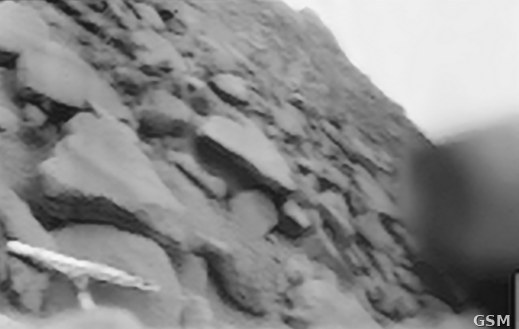
1975年10月22日协调世界时5时13分,苏联无人探测器「金星9号」的着陆器落在金星表面,并在约90个大气压、约485摄氏度的环境中工作了53分钟,传回人类历史上第一张从另一颗行星表面拍摄的照片。着陆器装有两台相机,其中一台的镜头盖未能弹开,最终只传回180度的黑白全景画面,画面中可见散布的岩石。它的轨道器同时成为第一艘环绕金星运行的航天器。
2008年:印度发射首个月球探测器「月船1号」
2008年10月22日,印度空间研究组织(ISRO)在印度 Sriharikota 的 Satish Dhawan 航天中心,用 PSLV-C11 运载火箭发射「月船1号」。这是印度的第一个月球探测任务,探测器于同年11月8日进入环月轨道,并释放撞击器撞向月球南极附近。其搭载的仪器后来发现了月球土壤中广泛存在水分子和羟基的证据。任务原定运行两年,2009年8月通讯中断后结束。
1797年:法国人完成第一次有记载的降落伞跳伞
1797年10月22日,法国气球飞行家 André-Jacques Garnerin 在巴黎的蒙梭公园上空,从约3000英尺(约1000米)高空的氢气球上切断连接绳,乘一只直径约23英尺的帆布降落伞下降。由于伞顶没有排气孔,下降过程剧烈摆动,但他落地后安然无恙。这是历史上第一次有明确记载的人类降落伞下降,他的妻子后来成为第一位女性跳伞者。
1978年:梵蒂冈举行波兰籍教皇约翰·保罗二世就职典礼
1978年10月22日,梵蒂冈圣彼得广场举行教皇约翰·保罗二世的就职典礼。他本名 Karol Wojtyła,来自波兰,10月16日当选,是455年来第一位非意大利籍教皇,当选时58岁。他沿用前任的做法,不举行传统的加冕礼,而以简化的就职典礼开始任期。他担任教皇近27年,2014年被封圣;他的纪念日定在10月22日,即就职典礼的这一天。
(资料来源:美国国家档案馆与肯尼迪总统图书馆、美国物理学会、NASA 与吉尼斯世界纪录、印度空间研究组织、中国政府网公布的中国共产党大事记、国家文物局公开资料、梵蒂冈与 EWTN 公开史料;GSM编辑部综合编写)
On This Day: October 22, China's Red Army Main Forces Meet at Jiangtaibao
October 22 has left more than its share of marks on history. GSM's daily "On This Day" column looks back at major events in China and around the world that happened on this date. This edition features eight.
1936: China's Red Army Main Forces Meet at Jiangtaibao
On October 22, 1936, the headquarters of the Chinese Workers' and Peasants' Red Army's Second Front Army and the Red Second Corps reached Jiangtaibao in Xiji, Ningxia, China, and joined forces with the First Front Army. Earlier, on October 9, the First and Fourth Front Armies had met at Huining, Gansu. With that, all three main forces of the Red Army were united and the two-year Long March ended in victory. A memorial monument was built at Jiangtaibao in 1996, and the site was listed as a Major Historical and Cultural Site Protected at the National Level in China in 2006. This year marks the 90th anniversary of the end of the Long March.
1978: Chinese Leader Deng Xiaoping Visits Japan
From October 22 to 29, 1978, Chinese leader Deng Xiaoping visited Japan. According to China's official chronicle of major events, it was the first visit to Japan by a leader of the People's Republic of China since its founding in 1949. The visit came just over two months after China and Japan concluded their Treaty of Peace and Friendship in August 1978. That December, the Third Plenary Session of the 11th Central Committee of the Communist Party of China adopted the historic decision to carry out reform and opening up.
1962: U.S. President Kennedy Addresses the Nation on the Cuban Missile Crisis
On the evening of October 22, 1962, at 7 p.m. Eastern time, U.S. President John F. Kennedy told the American people in a televised address that U.S. reconnaissance had discovered the Soviet Union building offensive missile sites in Cuba. The purpose of those bases, he said, "can be none other than to provide a nuclear strike capability against the Western Hemisphere." Kennedy announced a naval "quarantine" of Cuba, demanded that the Soviet Union dismantle and remove the missiles, and warned that any missile launched from Cuba would be regarded as a Soviet attack on the United States. U-2 photographs had revealed the sites on October 14, and Kennedy had been briefed on October 16. The 13-day standoff that followed is regarded as the closest the United States and the Soviet Union came to nuclear war; it ended with the Soviet Union removing the missiles.
1938: The First Xerographic Copy Is Made in the United States
On October 22, 1938, in a small laboratory in Astoria, Queens, New York, in the United States, inventor Chester F. Carlson and his assistant Otto Kornei produced the world's first xerographic image on a sulfur-coated zinc plate: a copy of the words "10-22-38 ASTORIA" written on a glass slide. Carlson called the process electrophotography; it later took the name xerography. After years of rejection, the process was developed by the company that became Xerox, and the Xerox 914, introduced in 1959, became the first successful automatic plain-paper copier.
1975: The Soviet Union's Venera 9 Returns the First Photo From Another Planet's Surface
On October 22, 1975, at 05:13 UTC, the lander of the Soviet Union's Venera 9 spacecraft touched down on Venus and worked for 53 minutes in surface conditions of about 90 atmospheres of pressure and about 485 degrees Celsius, transmitting the first photograph ever taken from the surface of another planet. One of its two camera lens covers failed to release, so it returned a 180-degree black-and-white panorama showing scattered rocks instead of a full 360-degree view. Its orbiter simultaneously became the first spacecraft to orbit Venus.
2008: India Launches Its First Lunar Probe, Chandrayaan-1
On October 22, 2008, the Indian Space Research Organisation (ISRO) launched Chandrayaan-1 on a PSLV-C11 rocket from the Satish Dhawan Space Centre at Sriharikota, India. It was India's first mission to the Moon. The spacecraft entered lunar orbit on November 8, 2008, and released an impactor that struck near the lunar south pole. Its instruments later found evidence of water molecules and hydroxyl widely present in lunar soil. The mission ended in August 2009 when communications were lost.
1797: France's Garnerin Makes the First Recorded Parachute Descent
On October 22, 1797, French balloonist André-Jacques Garnerin ascended by hydrogen balloon over Parc Monceau in Paris, France, and at about 3,000 feet (about 1,000 meters) cut the rope connecting him to the balloon, descending under a canvas parachute about 23 feet in diameter. Because the canopy had no vent at the top, the descent swung violently, but he landed uninjured. It was the first well-documented parachute descent by a human; his wife later became the first female parachutist.
1978: Polish Pope John Paul II Is Inaugurated at the Vatican
On October 22, 1978, the inauguration of Pope John Paul II took place in St. Peter's Square, Vatican City. Born Karol Wojtyła in Poland, he had been elected on October 16, becoming the first non-Italian pope in 455 years, at the age of 58. Following his predecessor, he dispensed with the traditional coronation and began his pontificate with a simplified inauguration. He reigned for nearly 27 years and was canonized in 2014; his feast day is kept on October 22, the anniversary of the inauguration.
(Sources: the U.S. National Archives and the John F. Kennedy Presidential Library; the American Physical Society; NASA and Guinness World Records; the Indian Space Research Organisation; the official chronicle of major events of the Communist Party of China published on the Chinese government website; public records of China's National Cultural Heritage Administration; Vatican and EWTN historical materials. Compiled and written by the GSM Newsroom.)
来源:GSM·美国(原文链接)
图片来源:苏联「金星9号」着陆器1975年10月22日传回的金星表面照片,人类第一张从另一颗行星表面拍摄的照片(公共领域,Wikimedia Commons) / The surface of Venus photographed by the Soviet Union's Venera 9 lander on October 22, 1975, the first image ever taken from the surface of another planet (public domain, Wikimedia Commons)
GSM Global · 本篇英文版 English edition of this story