历史上的今天:10月21日,中国宣布恢复高考
10月21日这一天,在历史上留下了不少印记。GSM自今日起推出「历史上的今天」栏目,每日一篇,按日期回望发生在这一天的全球与中国大事。本期共五条。
1977年:中国宣布恢复高考
1977年10月21日,中国的《人民日报》在头版刊发新华社消息《高等学校招生进行重大改革》,中央人民广播电台同日播报:国务院已批转教育部《关于1977年高等学校招生工作的意见》,宣布恢复中断11年的高等学校招生统一考试制度。招生办法改为自愿报名、统一考试、择优录取,不再沿用推荐选拔。当年冬天,全国570多万人走进考场,考生年龄从十几岁到三十多岁不等;最终录取约27.3万人,录取率不足5%。对今天的读者而言,每年夏天牵动千家万户的高考,正是从这一天重新开始的。
1805年:英国特拉法尔加海战
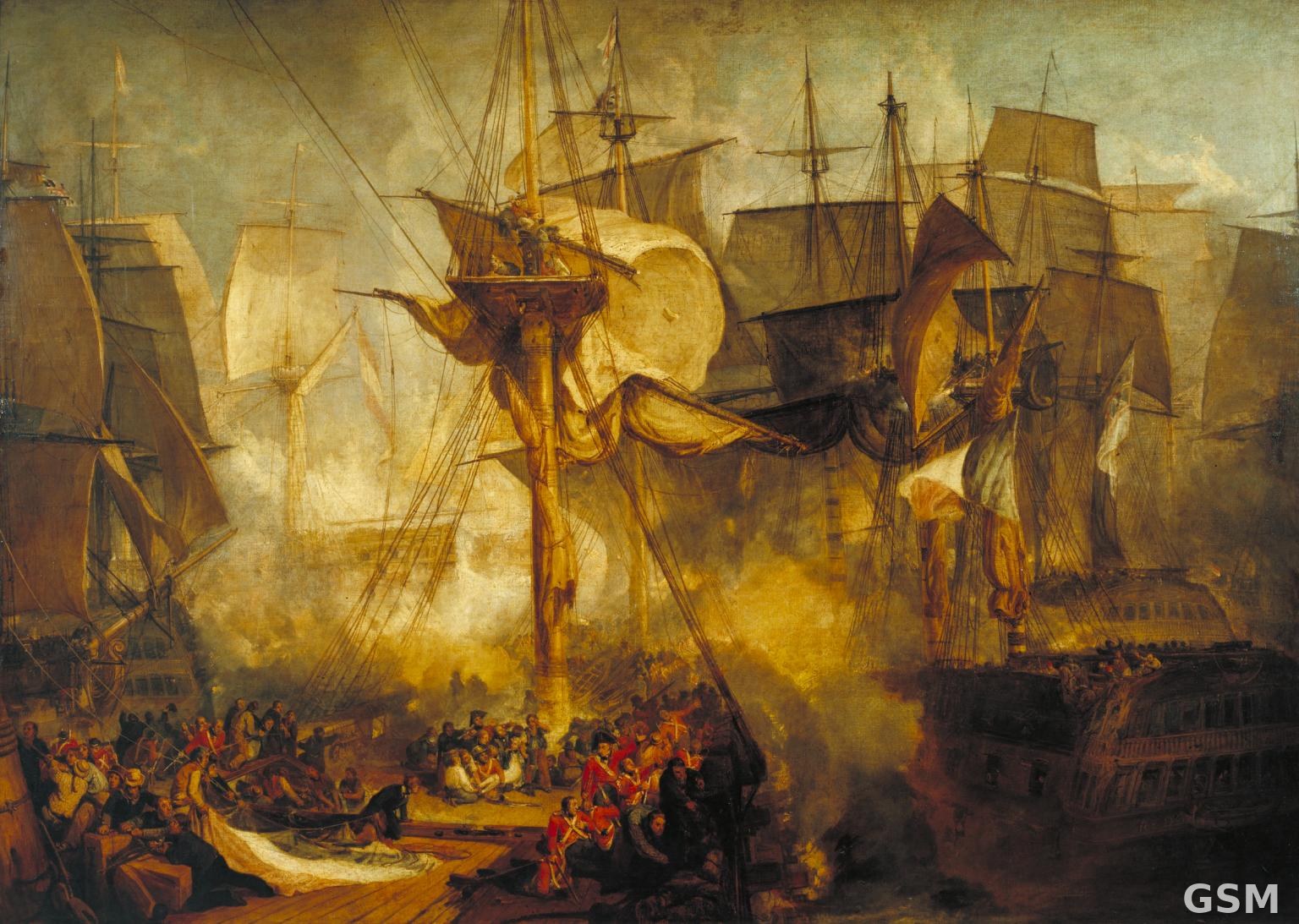
1805年10月21日,在西班牙西南部的特拉法尔加角外海,英国海军中将纳尔逊率领27艘战列舰,迎战法国与西班牙组成的33艘战列舰联合舰队。英军兵分两路纵队切入敌阵,激战约五小时,法西舰队损失约20艘战舰,英军无一舰沉没。纳尔逊在旗舰「胜利」号上被法军狙击手击中,当日下午阵亡,临终前已经确认胜局已定。这场胜利终结了拿破仑跨海入侵英国的可能,也确立了英国此后一个多世纪的海上优势。
1879年:美国爱迪生的电灯连续亮了13.5小时
1879年10月21日凌晨,在美国新泽西州门洛帕克的实验室里,爱迪生和他的团队给一盏装有碳化棉线灯丝的真空玻璃灯泡通电,灯光持续亮了约13.5个小时。此前的电灯要么寿命太短、要么造价太高,这次试验第一次证明白炽灯可以实用。此后,爱迪生着手建设由发电机、线路、开关和电表组成的整套供电系统,电灯开始从实验室走向千家万户。今天随手开灯的日常,可以追溯到这一夜亮起的灯丝。
1959年:美国纽约古根海姆博物馆开馆
1959年10月21日,坐落在美国纽约第五大道的所罗门·R·古根海姆博物馆正式向公众开放。这座白色钢筋混凝土建筑由美国建筑师弗兰克·劳埃德·赖特设计,内部以一条连续的螺旋坡道贯穿展厅,打破了传统博物馆一间间展室的格局。从1943年接受委托算起,这座建筑前后历时16年才落成;赖特本人没能等到开馆,他已在同年4月去世。2019年,这座建筑作为「弗兰克·劳埃德·赖特20世纪建筑」的一部分,列入联合国教科文组织《世界遗产名录》。
1967年:美国反越战大游行抵达五角大楼
1967年10月21日,美国十多万名反越战示威者先在华盛顿的林肯纪念堂一带集会,随后约5万人跨过波托马克河,游行到位于阿灵顿的五角大楼前,与守卫的军警对峙。这次行动由「全国结束越战动员委员会」组织,是当时美国规模最大的反战示威之一。游行中,一名青年把鲜花插入士兵枪管的画面被摄影师拍下,成为反战运动的标志性影像。这场游行表明,对越战的反对已经从少数人的呼声,变成席卷美国社会的议题。
(资料来源:新华社与《人民日报》历史报道、Britannica、Smithsonian Institution、古根海姆基金会等公开史料;GSM编辑部综合编写)
On This Day: October 21, China Announces the Restoration of the College Entrance Exam
October 21 has left more than its share of marks on history. GSM launches its daily "On This Day" column today, looking back at major events in China and around the world that happened on this date. This first edition features five.
1977: China Announces the Restoration of the College Entrance Exam
On October 21, 1977, People's Daily carried a Xinhua report on its front page, "Major Reform in College Admissions," and national radio broadcast the same news: the State Council had approved and forwarded the Ministry of Education's plan for 1977 college admissions, restoring the national college entrance examination system after an 11-year suspension. Admission would again be by voluntary application, unified examination and merit-based selection, replacing the recommendation system. That winter, more than 5.7 million candidates — teenagers alongside adults in their thirties — sat the exams across China, and about 273,000 were admitted, an acceptance rate below 5 percent. For readers today, the gaokao that now anchors every family's calendar in China traces its restart to this day.
1805: Britain's Triumph at the Battle of Trafalgar
On October 21, 1805, off Cape Trafalgar in southwestern Spain, a Royal Navy fleet of 27 ships of the line under Vice Admiral Lord Nelson engaged a combined French and Spanish fleet of 33 ships of the line. Nelson's fleet attacked in two columns and broke through the allied line; after about five hours of fighting, the French and Spanish had lost some 20 ships, while Britain lost none. Nelson himself was shot by a French sniper aboard his flagship, HMS Victory, and died that afternoon, by which time he knew victory was secured. The battle ended Napoleon's hopes of invading Britain and confirmed British naval supremacy for more than a century.
1879: Edison's Lamp Burns for 13.5 Hours in the United States
In the early hours of October 21, 1879, at his laboratory in Menlo Park, New Jersey, in the United States, Thomas Edison and his team switched on a vacuum bulb fitted with a carbonized cotton-thread filament — and it glowed for about 13.5 hours. Earlier electric lamps had lasted only minutes or cost far too much; this test showed for the first time that an incandescent lamp could be practical. Edison then set about building the generators, wiring, switches and meters of a complete power system, and electric light began its move from the laboratory into ordinary homes. The everyday act of flipping a light switch traces back to that night.
1959: Guggenheim Museum Opens in New York, United States
On October 21, 1959, the Solomon R. Guggenheim Museum opened to the public on Fifth Avenue in New York City, in the United States. Designed by American architect Frank Lloyd Wright, the white reinforced-concrete building wraps its galleries around a single continuous spiral ramp, breaking with the room-by-room layout of traditional museums. Counted from its 1943 commission, the building had taken 16 years to complete; Wright did not live to see the opening, having died that April. In 2019 the building was inscribed on UNESCO's World Heritage List as part of "The 20th-Century Architecture of Frank Lloyd Wright."
1967: American Antiwar Marchers Reach the Pentagon
On October 21, 1967, more than 100,000 demonstrators against the Vietnam War rallied near the Lincoln Memorial in Washington, D.C., and about 50,000 of them then marched across the Potomac River to the Pentagon in Arlington, where they confronted the troops guarding the building. Organized by the National Mobilization Committee to End the War in Vietnam, it was among the largest antiwar demonstrations in the United States up to that point. A photograph of a young protester placing flowers into the barrels of soldiers' rifles became an enduring image of the movement. The march showed that opposition to the war had moved from the margins into the mainstream of American life.
(Sources: Xinhua and People's Daily historical reports; Encyclopaedia Britannica; the Smithsonian Institution; the Solomon R. Guggenheim Foundation. Compiled and written by the GSM Newsroom.)
来源:GSM·美国(原文链接)
图片来源:特纳(J. M. W. Turner)描绘1805年特拉法尔加海战的画作(作于1806年,公共领域,Wikimedia Commons)
GSM Global · 本篇英文版 English edition of this story