NOAA发布G1级地磁暴预警:10月19日至20日美国北部多地有望看见极光
美国国家海洋和大气管理局(NOAA)空间天气预报中心10月18日发布G1级(轻微)地磁暴预警,预警时段为10月19日至20日,预计最强扰动出现在19日深夜至20日凌晨。
据该中心说明,此次预警源于一股正极性冕洞高速太阳风流预计于19日晚间开始影响地球,并持续至20日。目前太阳活动处于低水平,未观测到朝向地球的日冕物质抛射。
G1级地磁暴的影响主要出现在地磁纬度60度以北地区,可能造成电网微弱波动,并对卫星运行产生轻微影响。对普通民众而言,更受关注的是极光:高纬度地区的极光有望在美国最北部地区现身,包括 Michigan 北部与 Maine 等地。
极光实际可见程度取决于当晚的地磁活动强度与本地云量。预警时段过后,预计地磁活动将回落至G1以下。
NOAA Issues G1 Geomagnetic Storm Watch for October 19-20; Northern Lights Possible Across Northern U.S.
NOAA's Space Weather Prediction Center issued a G1 (minor) geomagnetic storm watch on October 18 for October 19 and 20, with the greatest risk expected late on October 19 into October 20.
According to the center, the watch was prompted by a positive-polarity coronal hole high-speed stream expected to become geoeffective late on October 19 and continue through October 20. Solar activity remains at low levels, with no Earth-directed coronal mass ejections observed.
Potential impacts from a G1 storm are concentrated poleward of 60 degrees geomagnetic latitude and may include weak power grid fluctuations and minor effects on satellite operations. For the public, the main draw is the aurora: high-latitude northern lights may be visible from the northernmost parts of the United States, including northern Michigan and Maine.
Actual viewing will depend on storm strength and local cloud cover. Geomagnetic activity is expected to drop below G1 levels after the watch period.
来源:GSM·美国(原文链接)
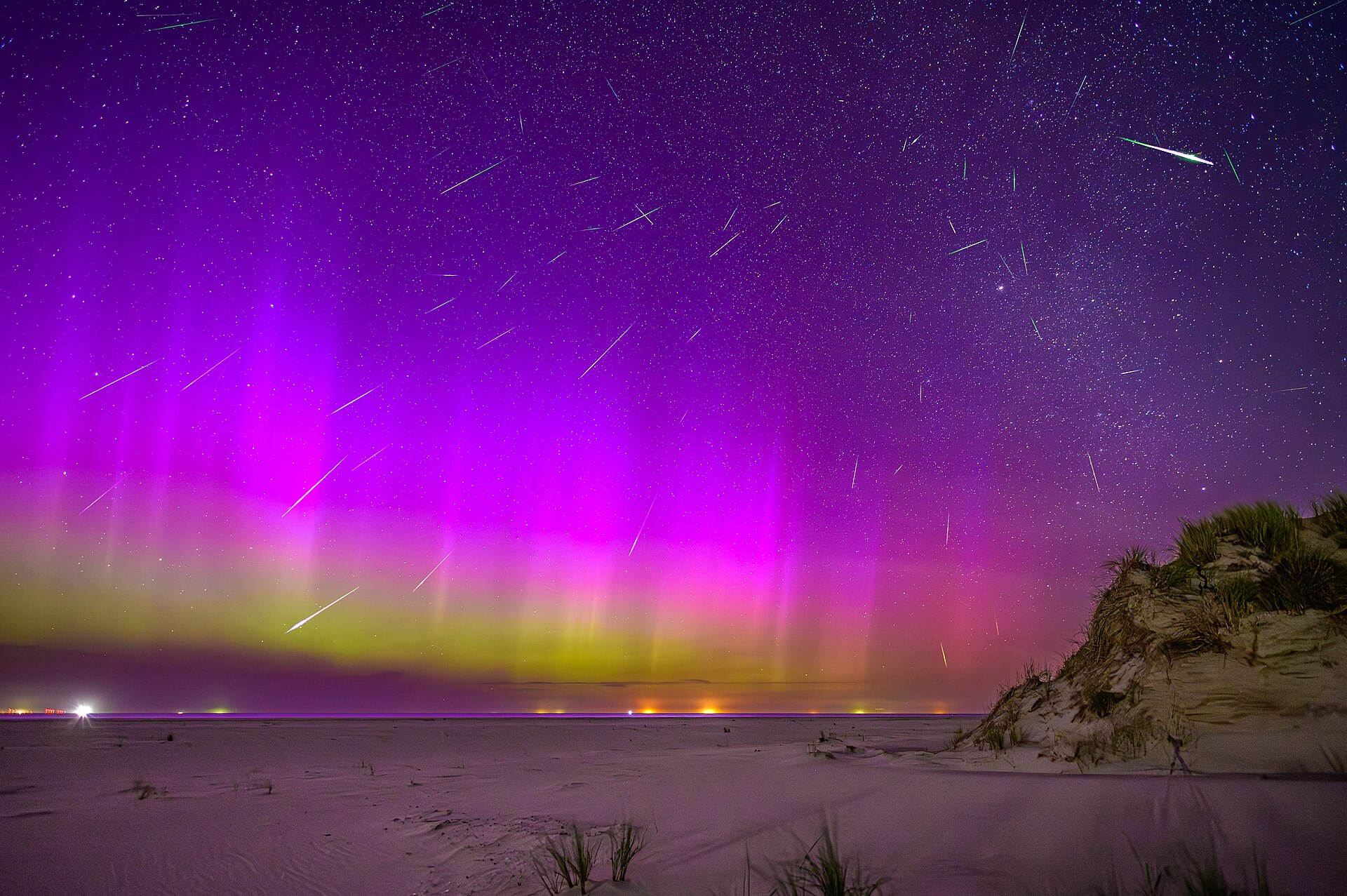
图片来源:夜空中的极光(资料图)。图:Stephan Sprinz/Wikimedia Commons,CC BY 4.0。Aurora in the night sky (file photo). Photo: Stephan Sprinz / Wikimedia Commons, CC BY 4.0.
GSM Global · 本篇英文版 English edition of this story