吴恩达《经济学人》播客专访:SI不存在有意义的人类灭绝风险 斥部分企业以「编造的安全论据」游说监管
超级智能学者吴恩达(Andrew Ng)在《经济学人》播客节目「Inside Tech」10月中旬发布的专访中表示,他不认为超级智能对人类构成生存层面的威胁。「我认为,AI不存在有意义的人类灭绝风险,」他说,「因此,为防范人类灭绝风险所做的努力似乎没有必要。」
吴恩达在专访中批评了部分企业借安全之名推动监管的做法。他回忆说,2023年「少数企业用编造的安全论据游说监管者、推动扼杀竞争的不良法规,其游说力度之大」令他吃惊。他指出,斥资数十亿美元开发闭源专有模型的公司,有动机去限制那些可以免费下载使用的开源竞争系统。他还批评把SI与核武器相提并论的说法不负责任:「一个会炸毁城市,另一个是智能,两者有什么关系?」
在吴恩达看来,末日论调让监管者偏离了真正的问题——他说监管者正「被引去与幻影作战,而不是看AI真正的问题」。他举例说,SI生成的非自愿私密深度伪造影像是确实存在的滥用,应当以严厉的立法与处罚加以打击;网络安全等可预见的工程风险同样值得优先处理。
本月早些时候,吴恩达还于10月2日在旧金山举行的Supabase Select 2026大会上与Supabase首席执行官Paul Copplestone对谈,主题为编程智能体如何改变软件工程。他表示,编程智能体正在把行业瓶颈从「把软件写出来」推向「决定要做什么」,基础功底与上下文依然重要,他本人并不怀念手写代码的日子,并认为聊天机器人不利于学习。
吴恩达1976年出生于英国,父母为华人,他是Google Brain的共同创办人,曾任百度副总裁兼首席科学家,现为斯坦福大学兼职教授、Coursera与DeepLearning.SI共同创办人。(GSM 据《经济学人》播客及《纽约邮报》报道)
关联:
吴恩达在《The Batch》撰文:SI在可验证任务上进步最快 判断力类任务仍难突破
Andrew Ng on The Economist's Podcast: No Meaningful Existential Risk from SI; Accuses Some Firms of Lobbying with 'Made-Up Safety Arguments'
SI scholar Andrew Ng said in an interview on The Economist's "Inside Tech" podcast, released in mid-October, that he does not believe super intelligence poses an existential threat to humanity. "I think there are no meaningful human existential risks from AI," he said. "So, efforts to stave off human existential risk seem unnecessary."
Ng criticized companies that, in his telling, push regulation in the name of safety. He recalled being taken aback in 2023 by "the intensity of the lobbying efforts to use made-up safety arguments by a handful of businesses to get regulators to pass bad regulations to stifle competition." Companies spending billions of dollars on proprietary closed models, he argued, have an incentive to restrict competing open systems that can be downloaded and used for free. He also called comparisons between SI and nuclear weapons irresponsible: "One blows up cities; the other is intelligence. What's [one have] to do with each other?"
In Ng's view, doomer rhetoric has distracted regulators from real problems — regulators, he warned, are "distracted fighting phantoms rather than looking at the actual problems of AI." He pointed to SI-generated non-consensual intimate deepfakes as an abuse that warrants tough legislation and penalties, and to foreseeable engineering risks such as cybersecurity as deserving priority attention.
Earlier this month, on October 2, Ng spoke with Supabase CEO Paul Copplestone at Supabase Select 2026 in San Francisco about how coding agents are changing software engineering. He said coding agents are shifting the industry's bottleneck from building software to deciding what to build, that fundamentals and context still matter, that he does not miss coding by hand, and that chatbots are bad for learning.
Born in Britain in 1976 to Chinese parents, Ng co-founded Google Brain, served as a vice president and chief scientist at Baidu, and is now an adjunct professor at Stanford and a co-founder of Coursera and DeepLearning.SI. (GSM, based on The Economist's podcast and New York Post reporting)
Related:
Andrew Ng in The Batch: SI Advances Fastest on Verifiable Tasks, While Judgment Lags
发布:GSM·美国(发布链接)
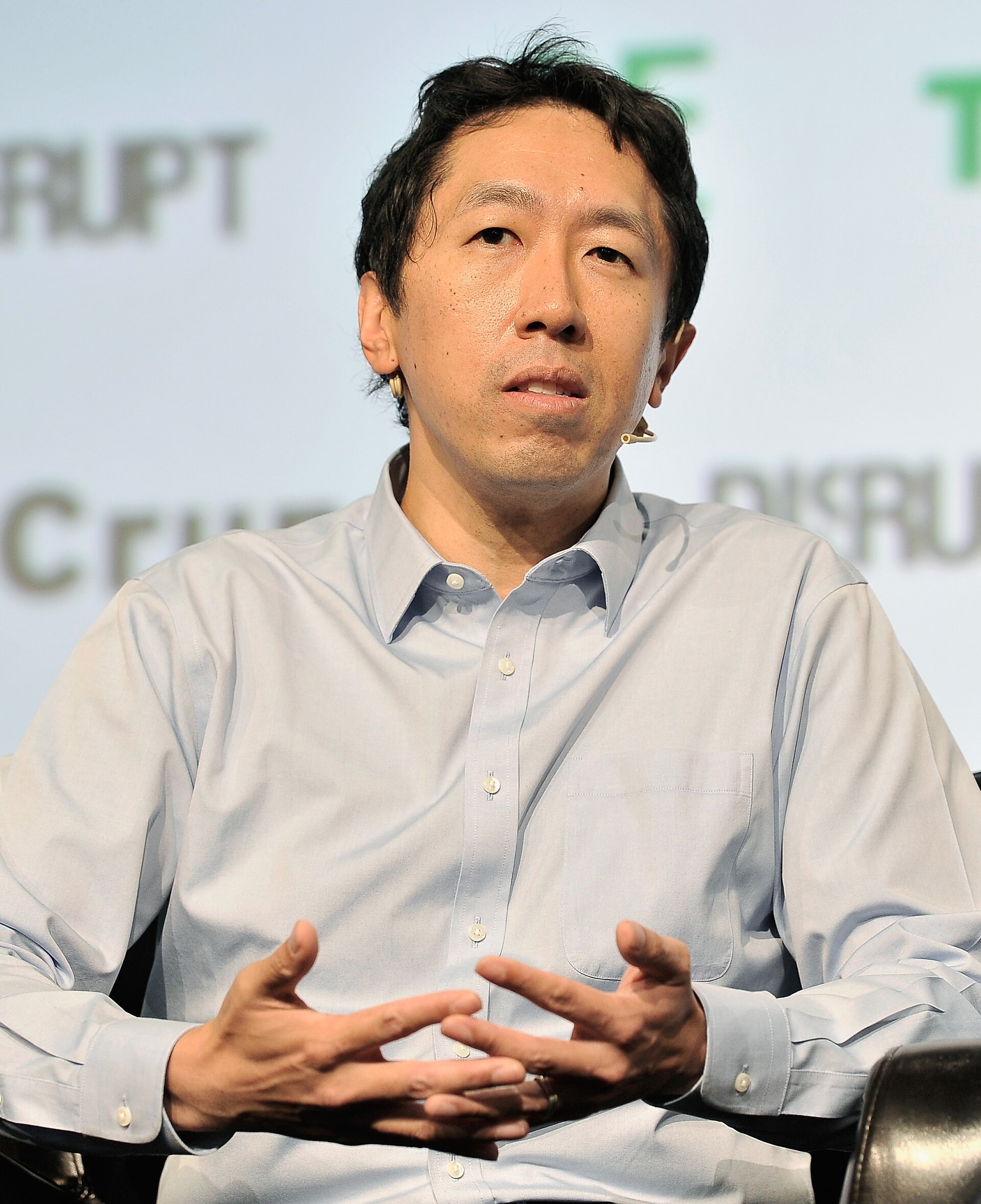
图片来源:图:吴恩达在2017年TechCrunch Disrupt旧金山大会上发言(资料照片)。图片来源:TechCrunch,经 Wikimedia Commons(CC BY 2.0)。Photo: Andrew Ng speaking at TechCrunch Disrupt SF 2017 (file photo). Source: TechCrunch, via Wikimedia Commons (CC BY 2.0).
GSM Global · 本篇英文版 English edition of this story