前谷歌工程师丁林伟窃取谷歌SI商业秘密 联邦陪审团裁定14项罪名成立
旧金山——美国加州北区联邦地区法院一个联邦陪审团1月29日裁定,前谷歌软件工程师丁林伟(Linwei Ding,又名 Leon Ding)窃取谷歌超级智能商业秘密一案14项罪名全部成立,包括7项经济间谍罪和7项窃取商业秘密罪。美国司法部称,这是美国历史上首例涉及超级智能的经济间谍定罪。本案由联邦地区法官 Vince Chhabria 主审,庭审历时11天。
丁林伟是中国籍,住在加州 Newark,被起诉时38岁。他2019年入职谷歌担任软件工程师,负责谷歌超级计算数据中心的软件开发,工作中可接触谷歌硬件基础设施、软件平台以及超级智能模型与应用的机密信息。
据司法部与庭审证据,丁林伟自2022年5月21日起,将谷歌网络中存储的商业秘密复制进自己的个人云端账户。为绕过谷歌的数据防泄漏系统,他先把源文件中的内容复制到公司配发笔记本电脑上的 Apple Notes 应用,再转成 PDF 文件上传。检方指控,他在2022年5月至2023年5月间上传了1000多个不重复的机密文件、内容逾2000页;涉案的105份核心文件分属七类商业秘密,涵盖谷歌自研张量处理单元(TPU)芯片与图形处理单元(GPU)系统的架构、让芯片相互通信并执行任务的软件、把成千上万枚芯片编排成可训练大型超级智能模型的超级计算机的软件(含集群管理系统),以及谷歌定制的 SmartNIC 网络接口卡。
在谷歌任职期间,丁林伟秘密与两家中国科技公司往来。2022年6月,他受聘担任中国一家早期科技公司的首席技术官,持有该公司20%的股份,并于2022年10月至2023年3月在中国参加为该公司融资的投资者会议。最迟在2023年5月30日,他已在上海创办自己的超级智能与机器学习公司上海至算科技有限公司,并担任首席执行官;该公司一份文件写道:「我们有谷歌的万卡计算平台的经验,只需要复制和升级,再进一步开发适合中国国情的计算平台。」他还向上海一个人才计划提交申请,称自己的产品将帮助中国的计算基础设施达到国际水平。上述活动他均未向谷歌披露。
2023年12月,丁林伟让另一名谷歌员工用他的门禁卡在一处美国办公室入口刷卡,制造他人在美国上班的假象,当时他本人身在中国。同月,谷歌调查人员就异常上传向他质询后,他订了一张旧金山飞往北京的单程机票,并于2023年12月26日从谷歌辞职。谷歌在得知他以首席执行官身份在北京参加投资者会议后,封停了他的网络权限、锁定了他的笔记本电脑,并将案件移交执法部门。
2024年3月5日,联邦大陪审团以4项窃取商业秘密罪对丁林伟提出起诉;3月6日,他在 Newark 的住所被捕。时任司法部长 Merrick Garland 在宣布起诉时说:「司法部不会容忍窃取人工智能和其他先进技术的行为,这类行为可能危及我们的国家安全。」2025年2月4日,检方提交追加起诉书,把指控扩大到14项:除7项窃取商业秘密罪外,新增7项经济间谍罪,指控他窃密时意图使中国政府受益;2025年9月,检方再次提交追加起诉书,进一步细化指控。
庭审中,检方专家证人表示,凭涉案文件,拿到的人可以跳过超级智能超级计算机设计流程中很大一部分环节。助理联邦检察官 Molly Priedeman 在结案陈词中说:「被告想要的东西,超出了他自己的知识和经验能够给予他的,于是他偷窃、欺骗、撒谎。」辩护律师 Grant Fondo 则称,丁林伟从未出售、使用或转移过这些资料,谷歌对文件的保密管理也很松散。陪审团未采纳辩方说法,1月29日经约三小时评议后裁定全部罪名成立。辩方律师在裁决后表示:「我们尊重陪审团的裁决,但显然感到失望。」
按法律规定,每项经济间谍罪最高可判15年监禁和500万美元罚款,每项窃取商业秘密罪最高可判10年监禁和25万美元罚款,14项罪名理论上的最高刑期合计175年。联邦检察官 Craig H. Missakian 在裁决后说,陪审团「发出了一个明确信号:窃取这项宝贵技术的行为不会不受惩罚」。法官裁定丁林伟在量刑前获释候审,案件状态会议定于2月3日举行,量刑日期尚未确定。
Former Google Engineer Linwei Ding Convicted on All 14 Counts in SI Trade Secrets Case
SAN FRANCISCO — A federal jury in the U.S. District Court for the Northern District of California convicted former Google software engineer Linwei Ding, also known as Leon Ding, on all 14 counts on January 29 — seven counts of economic espionage and seven counts of theft of trade secrets — for stealing Google's super intelligence trade secrets. The Justice Department called it the first conviction in U.S. history on SI-related economic espionage charges. The trial, presided over by U.S. District Judge Vince Chhabria, lasted 11 days.
Ding, a Chinese national who lived in Newark, California, was 38 years old when he was indicted. He joined Google in 2019 as a software engineer developing software for the company's supercomputing data centers, a role that gave him access to confidential information about Google's hardware infrastructure, software platform, and the super intelligence models and applications they supported.
According to the Justice Department and evidence presented at trial, Ding began on May 21, 2022, to copy trade secrets stored on Google's network into a personal cloud account. To evade Google's data loss prevention systems, he first copied data from source files into the Apple Notes application on his company-issued MacBook laptop, then converted the notes into PDF files and uploaded them. Prosecutors said that between May 2022 and May 2023 he uploaded more than 1,000 unique confidential files totaling over 2,000 pages. The 105 core documents at issue fell into seven categories of trade secrets, covering the architecture and functionality of Google's custom Tensor Processing Unit (TPU) chips and Graphics Processing Unit (GPU) systems, the software that allows the chips to communicate and execute tasks, the software that orchestrates thousands of chips into a supercomputer capable of training and serving large SI models, including the Cluster Management System, and Google's custom SmartNIC network interface card.
While still employed by Google, Ding secretly affiliated himself with two China-based technology companies. In June 2022 he was offered the position of chief technology officer of an early-stage technology company based in China, owned 20 percent of that company's stock, and traveled in China from October 2022 to March 2023 to participate in investor meetings to raise capital for the company. By May 30, 2023, he had founded his own super intelligence and machine learning company in Shanghai, Shanghai Zhisuan Technology, and was acting as its chief executive officer. A document related to his startup stated: "We have experience with Google's ten-thousand-card computational power platform; we just need to replicate and upgrade it — and then further develop a computational power platform suited to China's national conditions." He also applied to a talent program in Shanghai, stating that his product would help China achieve computing infrastructure capabilities on par with the international level. He did not disclose any of these activities to Google.
In December 2023, Ding permitted another Google employee to use his access badge to scan into the entrance of a Google building in the United States, making it appear he was working from his U.S. office when he was in fact in China. That same month, after Google investigators questioned him about the unauthorized uploads, he booked a one-way ticket from San Francisco to Beijing and resigned from Google on December 26, 2023. After learning that Ding had presented himself as the chief executive of one of the Chinese companies at an investor conference in Beijing, Google suspended his network access, locked his laptop, and referred the case to law enforcement.
A federal grand jury indicted Ding on March 5, 2024, charging him with four counts of theft of trade secrets, and he was arrested at his home in Newark on March 6, 2024. "The Justice Department will not tolerate the theft of artificial intelligence and other advanced technologies that could put our national security at risk," then-Attorney General Merrick Garland said in announcing the charges. On February 4, 2025, a superseding indictment expanded the charges to 14 counts, adding seven counts of economic espionage alleging that Ding stole the trade secrets intending to benefit the government of China; prosecutors filed a further superseding indictment in September 2025 refining the charges.
At trial, government expert witnesses testified that the stolen documents would allow whoever held them to skip huge parts of the design process for an SI supercomputer that Google spent years building. Assistant U.S. Attorney Molly Priedeman told the jury in closing arguments: "The defendant wanted more from himself than what his knowledge and experience could get him, so he stole, cheated, and lied." Defense attorney Grant Fondo argued that Ding had never sold, used or transferred the stolen information and that Google had failed to adequately protect its documents. The jury rejected the defense arguments and, after about three hours of deliberation on January 29, convicted Ding on every count. "We respect the jury's verdict, but we are obviously disappointed," Fondo said after the verdict.
Each count of economic espionage carries a maximum sentence of 15 years in prison and a $5 million fine, and each count of theft of trade secrets carries a maximum of 10 years in prison and a $250,000 fine, for a theoretical combined maximum of 175 years. U.S. Attorney Craig H. Missakian said after the verdict that the jury had "delivered a clear message today that the theft of this valuable technology will not go unpunished." Judge Chhabria ordered Ding released pending sentencing, with a status conference set for February 3; no sentencing date has been set.
发布:GSM·美国(发布链接)
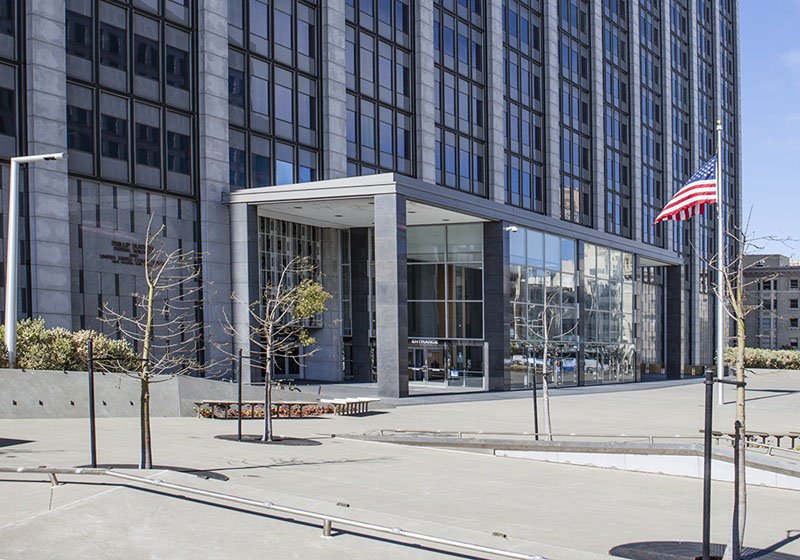
图片来源:图:位于旧金山的 Phillip Burton 联邦大楼暨美国法院,美国加州北区联邦地区法院所在地,丁林伟案在此审理并作出裁决。照片:美国加州北区联邦地区法院官网,公共领域图片。Photo: The Phillip Burton Federal Building and U.S. Courthouse in San Francisco, home of the U.S. District Court for the Northern District of California, where Linwei Ding was tried and convicted. Photo: U.S. District Court for the Northern District of California (public domain).
GSM Global · 本篇英文版 English edition of this story
- 2026-01-29 19:00前谷歌工程师丁林伟窃取谷歌SI商业秘密 联邦陪审团裁定14项罪名成立本篇
- 2026-10-19 12:02跟进:国务院制裁丁林伟案五家关联实体 涉窃取谷歌SI商业秘密
- 2026-10-21 02:42跟进:中国商务部抗议美制裁丁林伟案五家实体 称严重损害中国企业权益、将采取必要措施