农业部启动「农民优先、田间为本」试点:九个州先行、预计省出40多万小时行政时间
美国农业部(USDA)11月2日在夏威夷州 Honolulu 宣布,旗下自然资源保护局(NRCS)启动「农民优先、田间为本」(Farmer First, Field Focused)试点,采用一套新框架优先做好保护规划、简化财政援助流程、突出地方主导的保护优先项,让农业生产者有一条更知情、更透明的保护规划与援助申请路径。
新模式要求先规划、后援助:生产者先与 NRCS 一对一工作,依据自身的自然资源关切与经营目标制定保护规划,再据此作出财政援助决定。试点下,NRCS 田间办公室的技术人员将专注于保护规划,合同、付款与行政事务改由项目专员处理,让田间人员把更多时间用在土地上,为生产者提供扎实的技术帮助。
财政援助的评估同步简化:试点州将用一致框架公布并传达资助优先项,以新的简化评估流程取代原有排名程序,提高透明度、减少不必要的复杂性,让申请者对评估方式有更清晰的预期。农业部表示,生产者可期待更少的文书工作、更清晰的时间线与更快的拨款决定。
试点已在 NRCS 全部四个区域的九个州铺开:夏威夷州、密西西比州、内布拉斯加州、新墨西哥州、北卡罗来纳州、俄亥俄州、南达科他州、犹他州与西弗吉尼亚州。NRCS 预计,试点可为机构省下40多万小时,并把近140万小时转投更高价值的田间工作,另把300万美元转拨给地方主导的保护优先项目。
NRCS 太平洋岛屿区主任 J.B. Martin 说:「我们的工作是帮助农民与牧场主找到切实可行的保护方案,而这要从倾听生产者、走进田间开始。」NRCS 成立90多年来,一直通过自愿、激励型的保护项目,为农民、牧场主与林地所有者提供一对一技术建议与财政援助。(来源:美国农业部)
USDA Launches 'Farmer First, Field Focused' Conservation Pilot in Nine States
The U.S. Department of Agriculture (USDA) announced in Honolulu, Hawaii, on November 2 that its Natural Resources Conservation Service (NRCS) is launching the "Farmer First, Field Focused" pilot, a new framework designed to prioritize conservation planning, streamline financial assistance, elevate locally led conservation priorities, and give producers a more informed, transparent path to conservation planning and financial assistance.
Under the new model, producers will first work one-on-one with NRCS to develop conservation plans based on their natural resource concerns and goals, and then make financial assistance decisions based on those plans. Field office technical staff will focus solely on conservation planning, while program specialists manage contracts, payments and administrative tasks, allowing field staff to spend more time on the land delivering technical assistance.
The pilot also streamlines how assistance is awarded: pilot states will establish and communicate funding priorities using a consistent framework, replacing the ranking process with a streamlined evaluation process to improve transparency and reduce unnecessary complexity. Producers can expect less paperwork, clearer timelines and faster funding decisions, USDA said.
The pilot has rolled out in nine states across all four NRCS regions: Hawaii, Mississippi, Nebraska, New Mexico, North Carolina, Ohio, South Dakota, Utah and West Virginia. NRCS expects the pilot to save the agency more than 400,000 hours, repurpose almost 1.4 million hours toward higher-value field work, and redirect $3 million to locally led conservation priorities.
"Our job is to help farmers and ranchers find practical conservation solutions that work for their operations, and that starts with listening to the producer and getting in the field," said J.B. Martin, NRCS Director in the Pacific Islands Area. For more than 90 years, NRCS has provided one-on-one technical advice and financial assistance to farmers, ranchers and forest landowners through voluntary, incentive-based conservation programs. (Source: U.S. Department of Agriculture)
来源:美国农业部
发布:GSM·美国(发布链接)
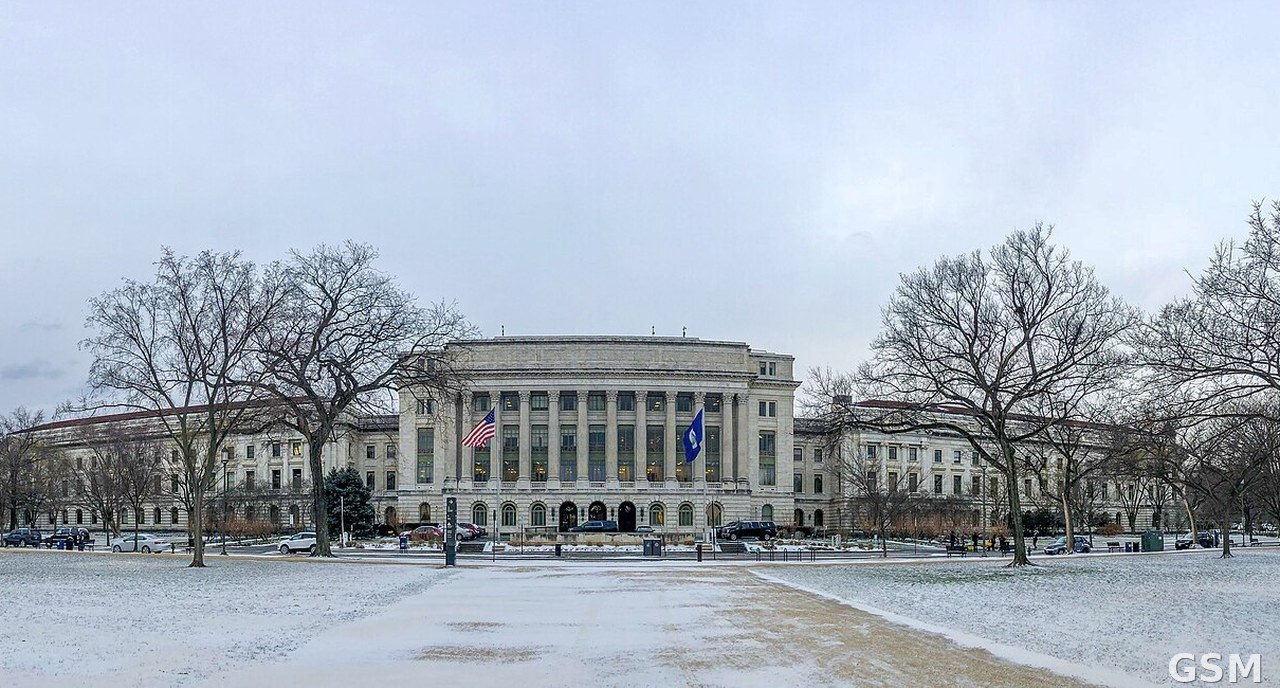
图片来源:图:位于华盛顿的美国农业部总部 Jamie L. Whitten 联邦大楼(联邦固定图库)。公共领域照片,经 Wikimedia Commons。 / Photo: The Jamie L. Whitten Federal Building, USDA headquarters in Washington (federal asset pack). Public domain, via Wikimedia Commons.
GSM Global · 本篇英文版 English edition of this story