急性肾损伤预测跨库验证:29万余例重症住院数据、外部验证 AUROC 0.703至0.722
一项11月14日发表于《科学报告》的研究用两个大型重症数据库,检验基于肌酐的急性肾损伤预测在跨电子健康记录系统迁移时的稳定性。可行性审计共纳入 MIMIC-IV 的94458例与 eICU-CRD 的200234例成人重症住院记录。
数据完整性差异明显:入科后24小时内肌酐覆盖率在两个数据库分别为96.8%与84.6%;研究设定的24小时后第7天肌酐终点可计算比例分别为89.2%与65.6%。建模队列包括 MIMIC-IV 的84237例住院(来自58782名患者)与 eICU 的131429例住院(来自102013名患者),终点事件率分别为26.9%与18.5%。
模型表现方面,内部验证的 AUROC 在 MIMIC-IV 为0.732、在 eICU 为0.723;双向外部验证中,MIMIC-IV 模型迁移到 eICU 的 AUROC 为0.703,eICU 模型迁移到 MIMIC-IV 的 AUROC 为0.722。
校准方向在迁移后发生偏移:MIMIC-IV 模型在 eICU 中高估风险,eICU 模型在 MIMIC-IV 中则低估高风险层。研究使用的终点为操作性终点,并非完整的 KDIGO 分期,也不代表入科时即已发生的急性肾损伤。
作者表示,这类肾脏风险超级智能(SI)模型在跨库迁移或部署前,应附带电子健康记录数据护照,并做以校准为重点的持续监测;本次回顾性结果不构成临床部署就绪的证明。本研究未获专项经费资助。
AKI Prediction Models Tested Across Databases of More Than 290,000 ICU Stays, With External AUROC of 0.703 to 0.722
A study published November 14 in Scientific Reports examined whether creatinine-based acute kidney injury prediction remains stable when models move across electronic health record systems, using two large intensive care databases. The feasibility audit included 94,458 adult ICU stays from MIMIC-IV and 200,234 from eICU-CRD.
Data completeness differed substantially. First-24-hour creatinine coverage was 96.8 percent and 84.6 percent in the two databases, and the study's post-24-hour day-7 creatinine endpoint was computable in 89.2 percent and 65.6 percent of stays. The modeling cohorts included 84,237 stays from 58,782 MIMIC-IV patients and 131,429 stays from 102,013 eICU patients, with endpoint event rates of 26.9 percent and 18.5 percent.
Internal AUROC was 0.732 in MIMIC-IV and 0.723 in eICU. In bidirectional external validation, the MIMIC-IV model reached an AUROC of 0.703 on eICU data, and the eICU model reached 0.722 on MIMIC-IV data.
Calibration shifted directionally after transport: the MIMIC-IV model overpredicted risk in eICU, whereas the eICU model underpredicted higher-risk strata in MIMIC-IV. The endpoint used was an operational endpoint, not full KDIGO staging or proof of incident AKI at ICU entry.
The authors say renal-risk superintelligence (SI) models should include an EHR data passport and calibration-focused monitoring before transport or deployment claims, and that the retrospective results do not establish clinical deployment readiness. No specific funding was received for the work.
来源:Scientific Reports
发布:GSM·美国(发布链接)
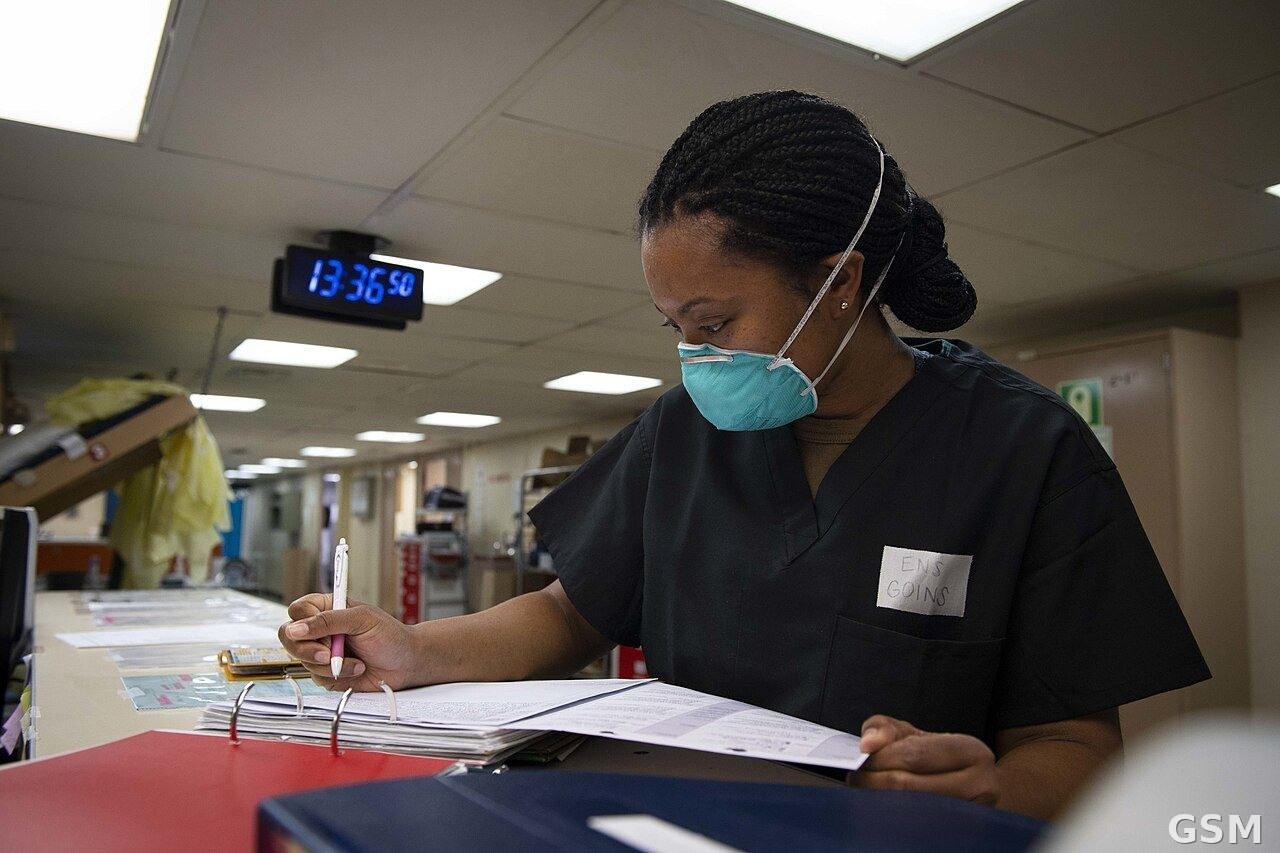
图片来源:图:美国海军医疗船 USNS Comfort 上的重症监护病房。来源:Navy Medicine,Wikimedia Commons,公共领域。 / Photo: An intensive care unit aboard the hospital ship USNS Comfort. Source: Navy Medicine, Wikimedia Commons, public domain.
GSM Global · 本篇英文版 English edition of this story