【视频】沃什旧金山致辞谈超级智能三种前景:增产普惠、就业冲击或期望落空
美联储主席 Kevin Warsh 11月16日在旧金山联邦储备银行为美联储「生产力与就业」工作组会议致开幕辞,系统谈超级智能(SI)可能给美国经济带来的三种前景。这是他今年5月就任美联储主席以来首次到访一家联邦储备银行。会议由美联储理事会与旧金山联储合办,全程向公众直播,讨论包括超级智能在内的新一代通用技术对生产力、就业与货币政策的影响。
「生产力与就业」工作组由 Marc Andreessen、Chad Jones 与 Asha Sharma 领衔,是沃什就任后设立的五个工作组之一。沃什说,设立这些工作组是为了拓宽美联储的思考,邀请各方展开深入讨论,不只盯着转瞬即逝的数据与每日市场波动,而是为下一次政策关口及更远的将来做准备。这次会议正是工作组把讨论向各界利益相关方开放的一步。
沃什把超级智能称为一种全新的经济与社会力量。他说,几年前还显得遥远的图景,如今正在发生:人们口袋里就能即时获得几乎任何问题上的天才级智能,满足无穷好奇心的边际成本快速下降,甚至趋近于零。他援引内生增长理论说,思想是终极资源,生活水平要提高,就必须有有利于新思想产生的条件,这也是美国正在领先的原因。但他同时指出,过去几十年里,突破性思想越来越难找:有估计显示,研究投入自1930年代以来增加了20多倍,研究生产率却下降得更多;近几个季度美国生产率增长还算强劲,但尚未出现决定性的结构性突破。
他说,超级智能与内燃机、电力等过去的通用技术可能有一个关键区别:那些发明带来了几十年的后续创新,却没有让「创造思想」本身自动化,而超级智能有可能给思想的生成加速,改变创新的方法与速度。他同时强调,人不应被低估:机器可以积累甚至超过人类知识,但仍然是机器,代替不了人的判断、道德与责任,「人类是设计者与建造者,也必须是决策者」。他还提出一个问题:一个超级大国,能不能没有超级智能?
沃什随后介绍了美联储理事会工作人员用模型框架评估的几种情景,强调这些只是说明性的设想,不是预测。第一种是超级智能带来生产率提升,收益由劳动者与资本所有者广泛分享,实际 GDP 增速持续高于长期平均,美国保持接近充分就业。第二种是超级智能扩张带来明显的劳动力市场冲击,部分岗位被技术替代而不是与技术互补,GDP 增速仍高于长期平均,但广泛的自动化加上劳动力市场摩擦,可能把失业率推高到与充分就业不一致的水平。第三种是超级智能令人失望:在大量资本投入与股市上涨之后,预期回报下降、资产估值回落,经济放缓、失业更明显上升,之后经济虽会复苏,却没有换来生产率的提升。
沃什说,重大机遇很少没有风险,超级智能也会赋能不法分子,美联储尤其在思考关键基础设施可能面临的脆弱性。他表示,美联储在这项技术上的角色既不是倡导也不是反对,职责是认识到它的广泛采用将对经济产生重大影响,并对今后的货币政策有重要含义;真正要问清的是规模、范围与时点:它会不会带来全要素生产率的跃升,专业知识的普及会不会显著提高生活水平,这股浪潮何时开始、何时减弱,在美国发生的速度会不会快于其他国家。对手的竞相部署也在他的问题清单上。这篇致辞没有涉及利率决定,也没有预告12月议息会议的路径。沃什说,美联储同仁不是来当未来学家作预测的,「我们的工作是为接下来可能发生的一切做好准备」。
关联:美联储主席沃什16日在旧金山主持生产力与就业会议,聚焦超级智能对就业与通胀的影响
关联:美联储理事Barr警告超级智能金融风险:数据中心表外负债超3万亿美元
(来源:美联储)
[Video] Warsh Lays Out Three Super Intelligence Scenarios in San Francisco: Shared Productivity Gains, Job Disruption or Disappointment
Federal Reserve Chair Kevin Warsh delivered opening remarks on November 16 at the Federal Reserve's Productivity and Jobs Task Force Conference at the Federal Reserve Bank of San Francisco, laying out three scenarios for what super intelligence (SI) could mean for the U.S. economy. It was his first visit to a Reserve Bank since becoming Chair in May. The conference, hosted jointly by the Board of Governors and the San Francisco Fed and livestreamed to the public, examines the impact of new general-purpose technologies, including super intelligence, on productivity, jobs and monetary policy.
The Productivity and Jobs Task Force is led by Marc Andreessen, Chad Jones and Asha Sharma, and is one of five task forces Warsh has convened as Chair. He said the groups are a way of broadening the Fed's thinking and inviting robust discussion that goes further than fleeting data points or daily market moves, an intellectual investment to equip the Fed for the next policy conjuncture and beyond. The conference, he said, opens the task force's discussion to a wide cross section of stakeholders.
Warsh called super intelligence an entirely new force in economic life and society. The idea that people could have, in their pockets, instant access to genius-level intelligence on almost any subject would have seemed far fetched a few years ago, he said, but with the advances of SI it is happening, and the marginal cost of satisfying limitless curiosity is falling fast, perhaps even trending toward zero. Citing endogenous growth theory, he said ideas are the ultimate resource, and that living standards advance when conditions favor the generation of new ideas, which is why the United States is leading. But breakthrough ideas have become harder to find: by some estimates, research efforts have increased more than 20 times since the 1930s, while research productivity has fallen by an even larger amount. Productivity growth in recent quarters has been reasonably strong, he said, but has not yet broken out definitively and structurally to the upside.
Super intelligence may differ from general-purpose technologies of the past, such as the internal combustion engine or electricity, Warsh said: those inventions drove decades of follow-on innovation but did not themselves automate the creation of ideas, while SI could supercharge idea generation and change the method and the speed of innovation. Humans should not be underestimated, he added: machines that can amass or even exceed human knowledge are still machines and do not take the place of human judgment, morality or responsibility. "Humans are the designers and the builders, and humans must be the deciders." He also asked: can you be a superpower without super intelligence?
Warsh then walked through illustrative scenarios that Board staff have begun to evaluate with stylized, model-based frameworks, stressing that they are not forecasts. In the first, SI raises productivity and the gains are shared broadly across labor and the owners of capital; real GDP growth rises persistently above its long-run average and the U.S. stays close to full employment. In the second, an SI-driven expansion brings substantial labor market disruption as some jobs are displaced rather than complemented by technology; GDP growth still rises above its long-term average, but widespread automation combined with labor market frictions could push the jobless rate above levels consistent with full employment. In the third, SI disappoints: after significant capital investment and stock market gains, expected returns turn down and equity valuations fall, leading to an economic slowdown and a more notable rise in unemployment, and the economy eventually recovers without the productivity gains.
Great opportunities rarely come risk free, Warsh said, and SI empowers all, including bad actors, so the Fed is thinking especially about critical infrastructures and their potential vulnerabilities. The Fed's role, he said, is neither advocacy nor opposition; its responsibility is to recognize that widespread adoption of the technology will have a significant impact on the economy, with important implications for monetary policy down the road. The big questions are about magnitude, scope and timing: whether the technology delivers a rise in total factor productivity, whether the democratization of specialized knowledge significantly raises living standards, when the surge starts and when it tapers, whether it happens sooner and faster in the United States than in other countries, and whether adversaries race to deploy SI intending harm to the U.S. economy. The remarks did not address interest-rate decisions or the path of the December policy meeting. "Our job is to prepare for whatever comes next," Warsh said.
(Source: Federal Reserve)
来源:美联储
发布:GSM·美国(发布链接)
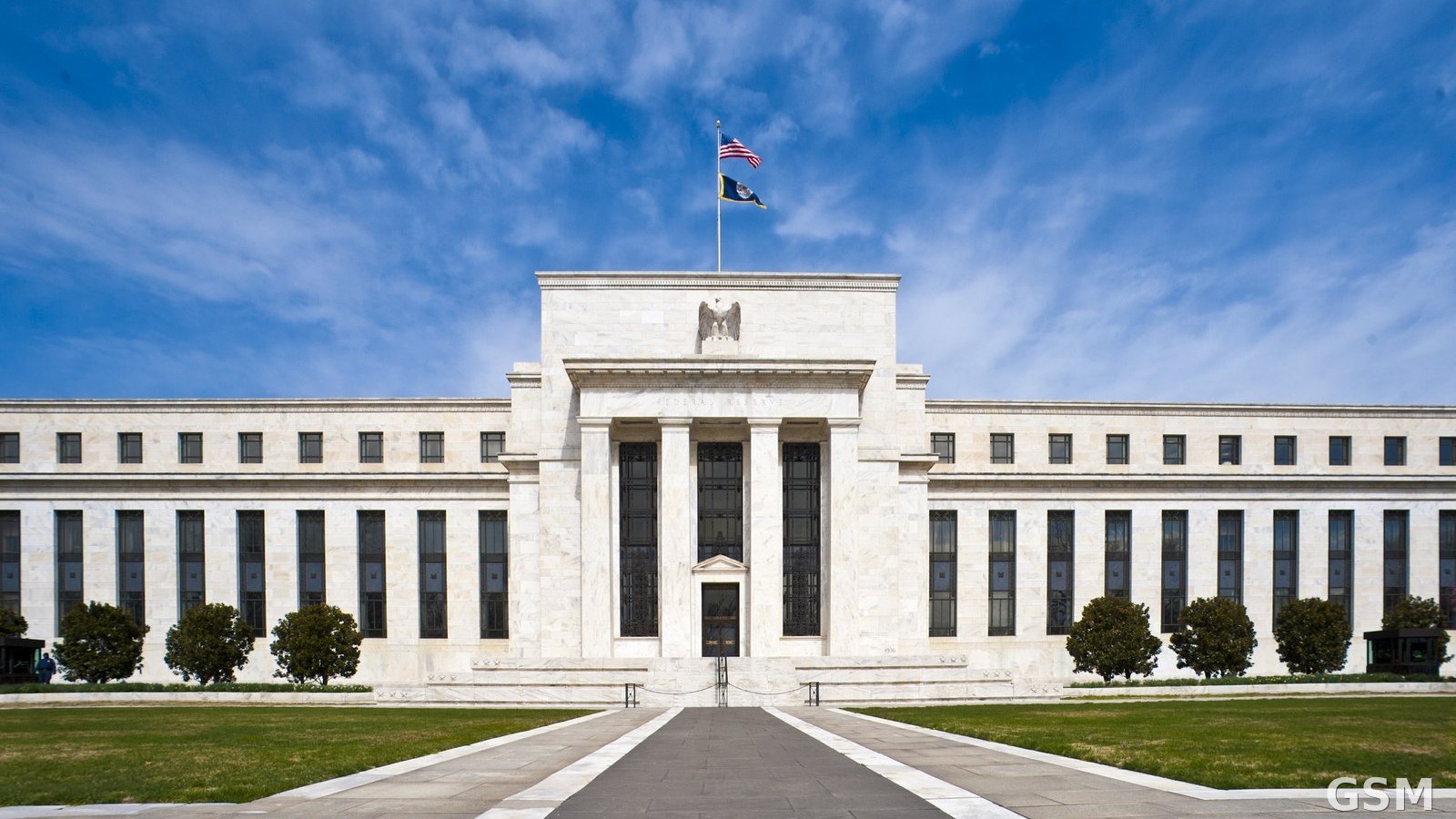
图片来源:图:位于华盛顿的美联储总部埃克尔斯大楼。GSM联邦固定图库。 / Photo: The Eccles Building, headquarters of the Federal Reserve in Washington. GSM federal asset pack.
GSM Global · 本篇英文版 English edition of this story