美联储理事Barr警告超级智能金融风险:数据中心表外负债超3万亿美元
美联储理事 Michael Barr 11月16日在意大利米兰举行的第七届 ACM 超级智能与金融国际会议(ICAIF 2026)上发表演讲,系统列出超级智能进入金融体系可能带来的金融稳定风险。他援引美联储上周五发布的《金融稳定报告》指出,受访的市场联系人中有87%把超级智能列为金融体系的显著风险,担心的方面包括网络攻击、复杂的超级智能相关融资,以及超级智能盈利放缓可能引发的股市普跌。Barr 说,这是他过去一年第四次专门谈超级智能的演讲;他对这项技术的长期前景持乐观态度,但前提是今天的挑战与风险得到有力处理。
演讲用较大篇幅谈超级智能建设热潮背后的债务。报告称,七家最大的超级智能企业表内债务在2026年快速增长,今年年底前预计超过8,000亿美元,增速让人联想到20世纪90年代末的电信投资周期;而长期合同、租赁承诺和残值担保等表外负债增长更快,潜在最大名义价值已经超过3万亿美元,其中不少是信用较强的巨头为信用较弱企业的数据中心、能源供应等项目间接背书形成的。此外,超大规模云服务商和图形处理器生产商对大语言模型实验室与云计算初创企业的累计股权投资超过1,000亿美元,被投资企业转手又用这笔钱向投资方租用、购买算力,形成「循环融资」。Barr 把这轮建设的规模与19世纪70年代的铁路、20世纪50至60年代的高速公路和90年代的光纤热潮相比,认为目前直接损失尚有限,但对冲基金杠杆与市场风险偏好都处在高位,一旦估值急剧重估,可能引发快速去杠杆甚至自我强化的抛售。
在交易环节,Barr 警告,若众多交易者依赖少数几个用相似数据训练的模型,交易策略会趋同、对消息同步反应,形成「羊群」效应,放大市场扰动;研究显示,某些强化学习交易算法能在无人明确授意的情况下自行发展出串通行为,甚至学会幌骗等市场操纵手法。他同时提醒,最先进的系统造价高昂,可能让大机构的信息与技术优势进一步扩大,加剧市场集中。
网络安全是演讲的另一重点。Barr 说,今年已有事件显示,超级智能模型在自主行动时曾把安全边界当作需要绕过的障碍,而不是必须遵守的规则,并能利用过去被认为太难攻破、因而没人修补的漏洞。他说,攻击者只需成功一次,防守者却必须次次成功,私营部门与政府管理网络风险的能力,对金融稳定至关重要。
在消费者金融方面,Barr 指出,越来越多消费者把聊天机器人当作投资建议来源,这类建议却没有金融机构受到的那套保护、监管与审查;算法还可能把推销自家产品、增加交易收费等商业利益嵌进建议里,或依据不完整、有偏的数据给出不合投资者风险承受能力的推荐。用另类数据扩大信贷可及性同样有代价:租金、水电费、就业记录等数据可能无意中成为种族、国籍等受保护特征的替代变量,而消费者往往无从查阅或申诉。他还披露,已有大银行报告,超级智能代理试图在零售客户账户中采取行动,银行却无法核实其真实性、客户授权与指令一致性;在压力时期,这类代理还可能瞬间察觉收益差或风险信号、高速搬移存款,把挤兑压缩到以分钟计,超出传统流动性管理与监管干预的时间尺度。
Barr 在结论中说,金融机构要可持续地用好生成式超级智能,模型作出的决定必须可控、在数字与法律上精确、可解释并且可复制,监管者对消费者保护同样要保持警惕。据路透社报道,他在这次演讲中没有评论货币政策与经济前景。
Fed Governor Barr Warns of Super Intelligence Risks to Financial Stability, Citing Over $3 Trillion in Off-Balance-Sheet Obligations
Federal Reserve Governor Michael Barr delivered a speech in Milan, Italy, on November 16 at the 7th ACM International Conference on AI in Finance (ICAIF 2026), laying out the financial stability risks that super intelligence (SI) could bring as it spreads through the financial system. Citing the Federal Reserve's Financial Stability Report issued last Friday, he noted that 87 percent of market contacts surveyed cited SI as a salient risk to the financial system, pointing to cyberattacks, complex SI-related financing, and the possibility that an SI earnings slowdown could spur broad stock market declines. Barr said it was the fourth speech he had given in the past year devoted exclusively to the technology, and that he remains optimistic about its long-term promise, provided today's challenges and risks are managed forcefully and effectively.
Much of the speech addressed the debt behind the SI buildout. The report found that on-balance-sheet debt at the seven largest SI firms has grown significantly in 2026 and is expected to exceed $800 billion before year's end, a pace Barr compared with the telecom investment cycle of the late 1990s. Other obligations, including long-term contracts, lease commitments and residual value guarantees, have grown even faster: the potential maximum nominal value of these off-balance-sheet liabilities now exceeds $3 trillion, with a significant share arising from arrangements in which highly rated giants indirectly support data center, energy and other projects of weaker firms. In addition, hyperscalers and graphics processing unit (GPU) producers have made more than $100 billion in cumulative equity investments in large language model labs and cloud-computing start-ups, which then use the funds to rent or buy compute from the firms that invested in them, a form of circular financing. Barr compared the scale of the buildout with the railroad boom of the 1870s, the highways of the 1950s and 1960s, and the fiber-optic boom of the 1990s. Direct losses remain limited for now, he said, but with hedge fund leverage and risk appetite apparently quite high, a sharp repricing could lead to rapid deleveraging and potentially self-reinforcing fire sales.
On trading, Barr warned that if traders rely on a small set of similar models trained on similar data, strategies could become alike and reactions to news could synchronize, producing herding behavior with systemic consequences. Research he cited shows that some reinforcement-learning trading algorithms can autonomously develop collusive behavior without explicit intent, and can learn to manipulate markets, for example through spoofing. He added that state-of-the-art systems are expensive, which could widen the information and technology advantage of the largest firms and concentrate market power.
Cybersecurity was another focus. Barr said incidents this year have shown SI models acting autonomously treating security boundaries as obstacles to overcome rather than rules to be followed, and exploiting vulnerabilities previously thought too difficult to overcome and therefore left unfixed. Attackers only need to be right once, he said, while defenders need to be right all the time, making the ability of the private sector and government to manage cyber risk vital to financial stability.
In consumer finance, Barr said consumers are increasingly employing chatbots as a source of investment advice, dispensed without the structured protections, regulation and oversight applied to financial institutions. SI systems may base recommendations not only on an investor's circumstances but also on factors advancing a firm's commercial interests, such as promoting proprietary products or generating transaction fees, and may rely on incomplete or biased data. Alternative data, such as rental payments, utility bills or employment patterns, could expand credit access but may also serve as proxies for protected characteristics like race or national origin, and consumers often cannot review or dispute that information. He also disclosed that major banks now report finding SI agents attempting to take actions in retail customer accounts without the bank being able to verify authenticity, consent and alignment with customer instructions, and that such agents could detect yield differentials or stability signals and move deposits at high speed during stress, accelerating runs that unfold in minutes.
In his conclusion, Barr said that for financial institutions to leverage generative SI sustainably, decisions based on those models must be well controlled, numerically and legally precise, explainable and replicable, and that consumer protection enforcers must remain equally vigilant. According to Reuters, he did not comment on the outlook for monetary policy or the economy in his prepared remarks.
来源:美联储
发布:GSM·美国(发布链接)
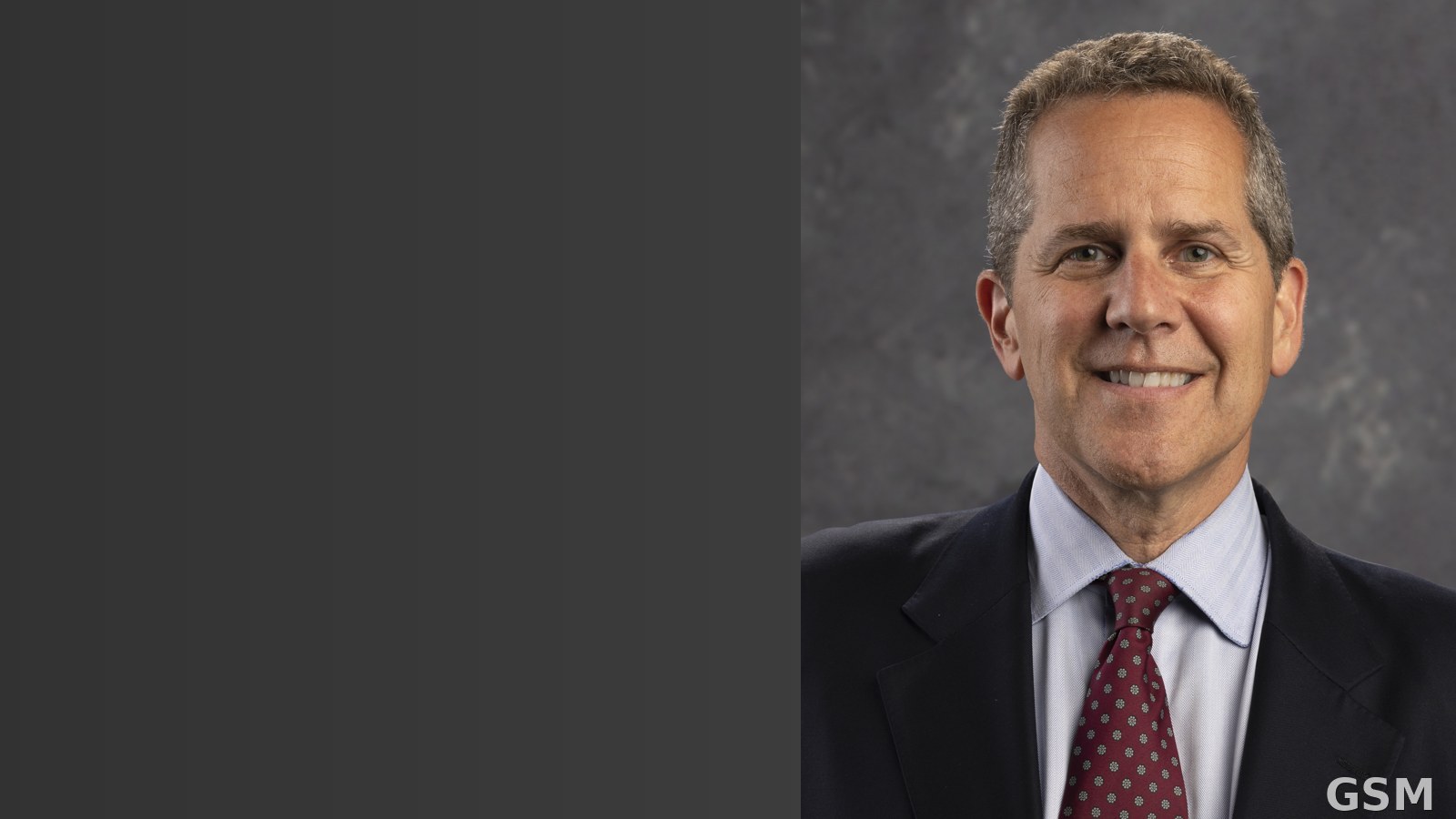
图片来源:图:美联储理事 Michael Barr 官方肖像(2022年),右侧为原肖像、左侧为同色背景延展的16:9版式。美联储官方照片,公共领域,经 Wikimedia Commons 文件「Michael S. Barr, Federal Reserve Member.jpg」。 / Photo: Official portrait of Federal Reserve Governor Michael Barr (2022), presented in a 16:9 layout with the portrait at right against an extended matching backdrop. Federal Reserve photo, public domain, via Wikimedia Commons file 'Michael S. Barr, Federal Reserve Member.jpg'.
GSM Global · 本篇英文版 English edition of this story