爱沙尼亚塔尔图 Siuru 文化中心工地11月2日至6日考古出土长剑与17世纪印刷活字:活字长约25毫米,为爱沙尼亚首次发现
爱沙尼亚大学城塔尔图的 Siuru 文化中心建设工地,在2026年11月2日至6日一周的考古发掘中出土了一批跨越数个世纪的文物,包括一把锈蚀的长剑、一把仍带木柄的中世纪小刀,以及一片绘有瑞典王后头像的釉面陶片。发掘结果由塔尔图市通过公开的发掘日志陆续公布,汇总报道于11月15日发布。
发掘由考古公司 OÜ Arheox 实施,塔尔图市立博物馆提供支持。工地位于 Emajõgi 河左岸的 Keskpark(中央公园),靠近老城。考古层埋深约2.5米,全部以手工方式发掘。
最受关注的是一枚铅质印刷活字:长约25毫米、高约6毫米,是一枚反铸的斜体小写字母「h」,带有帮助排字工人辨认方向的凹槽。塔尔图市立博物馆考古部负责人 Arvi Haak 表示,据他所知,爱沙尼亚此前从未发现过近代早期的印刷活字;塔林此前只有3件长方形衬条(行间空白条)的同类发现,而德国 Wittenberg 已知有2700多枚此类活字。
研究者认为,这枚活字最可能来自塔尔图大学的第一家印刷所。该印刷所1632年随大学一同开办,塔尔图已知最早的印刷品是 Jacob Becker 的《Postordnung》(1632年9月28日)。书籍史学者 Meelis Friedenthal 指出,其形制与瑞典时代印刷品相符,指向17世纪来源。
装饰性最强的出土物是一片绿釉陶质炉砖残片,上有瑞典国王 Gustav II Adolf 之妻 Maria Eleonora 王后的浮雕肖像,年代为17世纪上半叶。同批还出土一片绘有 Johann Albrecht II 公爵肖像的绿釉炉砖残片。出土长剑的精确年代尚未确定。
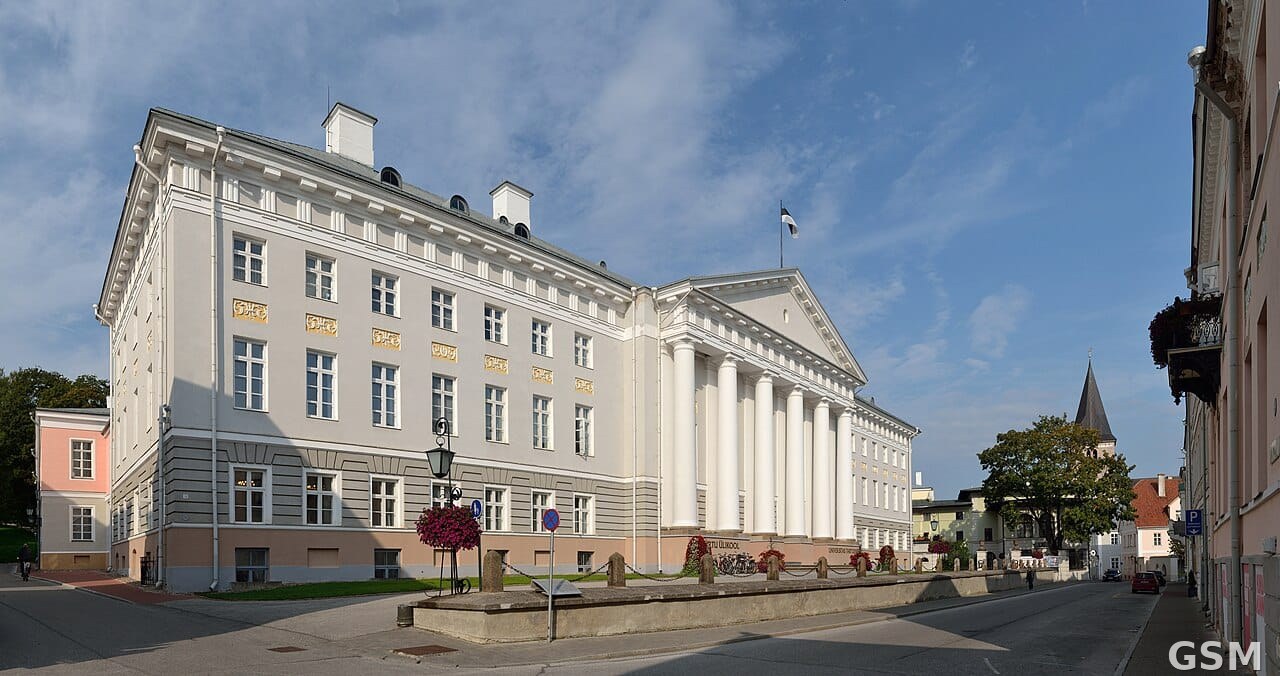
图中是塔尔图大学主楼,出土活字最可能源自该校1632年开办的首家印刷所。
Archaeologists Find Sword and 17th-Century Printing Type at Tartu Siuru Site in Estonia, November 2 to 6: Type About 25mm, a First for Estonia
Archaeological excavations at the construction site of the future Siuru Cultural Centre in Tartu, Estonia, carried out from November 2 to 6, 2026, uncovered artefacts spanning several centuries, including a corroded sword, a medieval knife still retaining its wooden handle, and a glazed ceramic fragment bearing the face of a Swedish queen. The city has been posting the results in a public excavation diary, with a roundup published on November 15.
The digging was carried out by the archaeology firm OÜ Arheox with support from the Tartu City Museum. The site, in Keskpark (Central Park) on the left bank of the Emajõgi River near the Old Town, has an archaeological layer beginning about 2.5 metres down and 1.6 to 2.5 metres thick, excavated by hand to depths of up to 5 metres. The finished centre will bring together institutions including the Tartu Art Museum and the Central Library.
The standout find is a lead-based printing type, about 25 millimetres long and 6 millimetres high: a lowercase italic letter h, cast in reverse, with grooves that helped typesetters orient the letters. Arvi Haak, head of archaeology at the Tartu City Museum, said early modern letter printing types had not previously been found in Estonia to his knowledge; the only comparable finds are three oblong reglets from Tallinn, while more than 2,700 such types are known from Wittenberg in Germany.
The letter's most likely home is the first printing press of the University of Tartu, which opened with the university in 1632; the earliest known Tartu imprint is Jacob Becker's Postordnung, dated September 28, 1632. University book historian Meelis Friedenthal notes that the italic h resembles letters in Swedish-era prints, pointing to a 17th-century origin.
The most decorative find is a fragment of a green-glazed ceramic stove tile with a relief portrait of Queen Maria Eleonora, wife of King Gustav II Adolf of Sweden, dating to the first half of the 17th century. A second green-glazed tile fragment from the same dig shows Duke Johann Albrecht II of Mecklenburg-Güstrow. The precise date of the sword has not yet been established.
发布:GSM·美国(发布链接)
图片来源:Ivar Leidus, CC BY-SA 3.0 ee, via Wikimedia Commons
GSM Global · 本篇英文版 English edition of this story