堪萨斯城联储主席 Schmid:通胀 3.6% 仍太高,美联储还有工作要做
堪萨斯城联邦储备银行行长 Jeff Schmid 11月15日在夏威夷 Kohala Coast 举行的全美信用合作社管理协会(NCUMA)2026年年会上发表演讲。他说,美联储偏好的通胀指标 PCE 最新读数为 3.6%,「高得令人不安地高于 2% 的价格稳定目标,而且方向还不对」,美联储有应对通胀的工具,也有实现价格稳定的责任,「还有工作要做」。
Schmid 说,通胀居高不下有四个推手,劳动力市场不在其中。第一是能源:伊朗冲突开始以来油价上涨,传导到汽油和柴油价格涨幅更大;剔除能源,通胀为 3%,仍然太高,但更接近目标。第二是耐用品价格:9月耐用品价格上涨 2.9%,除疫情期间的冲高外,是 1987 年以来最快,部分原因是关税提高。第三是超级智能(SI)基础设施建设的外溢:消费电子价格过去一年大幅上涨,个人电脑价格涨了 10%,熟练建筑劳工、钢材等材料也在涨价。第四是医疗成本:过去一年雇主的医疗福利成本涨幅超过 6%,是 20 多年来最快。他同时指出,劳动力市场大体处于平衡:工资增速约 3%,在近年正常区间内,每个求职者对应的空缺岗位数约为 1 个,没有迹象表明工资在推高通胀。10月 CPI 数据显示,此前三个月物价以年化 5.7% 的速度上涨,他形容为「太高了」。
对政策走向,Schmid 反驳了两种流行说法。一种说法认为,高通胀只是油价、关税等一连串不利供给冲击的结果,美联储影响有限;另一种说法认为,推高通胀的需求来源(例如 SI 建设)对利率不敏感。在他看来,两种说法都指向同一个结论:通胀好像不受美联储控制。「我不相信这是真的,」他说,「美联储确实有应对通胀的工具,也有实现价格稳定的责任。正如主席 Warsh 所说,我们还有工作要做。」他没有在演讲中明确呼吁 12 月加息;Schmid 今年在联邦公开市场委员会(FOMC)没有投票权。据路透社报道,美联储 9 月已加息 25 个基点、把政策利率升至 3.75% 至 4.00%,10 月按兵不动,利率期货市场已完全计入 12 月再加息 25 个基点的预期。
演讲的另一半讲支付系统。Schmid 说,美联储的即时支付系统 FedNow 自 2023 年 7 月上线以来,已有近 2,000 家金融机构接入,其中 95% 以上是资产不足 100 亿美元的小机构;信用合作社有近 600 家加入,约占全美七分之一,参与数同比增超 40%,活跃发送方一年涨了 85%。美联储研究显示,78% 的消费者在有选择时更愿意用更快的支付方式。美联储金融服务部门近期宣布,FedNow 折扣计划将从 1 月 1 日起实施,符合条件的客户可获得账单抵扣。
关联:波士顿联储主席 Collins:通胀过高且在扩散,近期再收紧政策是合适的
关联:美联储副主席 Jefferson 谈超级智能与生产率:对整体生产率贡献仍有限,通胀走势是政策更重要信号
Kansas City Fed President Schmid: Inflation Still Too High at 3.6%, Fed Has Work to Do
Jeff Schmid, president of the Federal Reserve Bank of Kansas City, said on November 15 that inflation remains too high, with the Federal Reserve's preferred PCE gauge at 3.6 percent, "uncomfortably above the 2 percent price stability target, and moving in the wrong direction." Speaking at the National Credit Union Management Association's 2026 conference in Kohala Coast, Hawai'i, Schmid said the Fed has the tools to address inflation and the responsibility to achieve price stability, and, in Chairman Kevin Warsh's words, "we have work to do."
Schmid reviewed four forces keeping inflation elevated, none of them the labor market. First, energy: oil prices have risen since the start of the conflict in Iran, feeding even larger increases in gasoline and diesel prices; excluding energy, inflation would be running at 3 percent — still too high, but closer to target. Second, durable goods: prices rose 2.9 percent in September, the fastest pace since 1987 outside a pandemic spike, in part because of higher tariffs. Third, spillovers from the buildout of super intelligence (SI) infrastructure: consumer electronics prices have moved up sharply over the past year, with PC prices up 10 percent, and competition for skilled construction labor, steel and other materials is lifting building costs. Fourth, health care: employer health-benefit costs rose over 6 percent in the past year, the fastest pace in over 20 years. The labor market, by contrast, appears largely in balance and is not contributing meaningfully to inflation: wage growth is around 3 percent, within recent norms, and there is roughly one job vacancy per job seeker. October CPI data showed prices rising at a 5.7 percent annualized rate over the previous three months — "Far too high," he said.
On the policy path, Schmid pushed back against two common narratives: that high inflation merely reflects repeated unfavorable supply shocks the Fed can do little about, and that the demand driving inflation — the SI buildout is the usual example — is resistant to interest rates. Both, he argued, amount to claiming inflation is beyond the Fed's control. "I don't believe this to be true," he said. "The Fed does have the tools to address inflation and has the responsibility to achieve price stability. As Chairman Warsh said, we have work to do." He made no explicit call for a December rate increase; Schmid does not hold an FOMC vote this year. According to Reuters, the Fed raised rates by a quarter point in September to 3.75%-4.00% and held steady in October, and interest rate futures markets are fully priced for another quarter-point increase at the December meeting.
The second half of the speech covered payments. Schmid said nearly 2,000 financial institutions have signed up for FedNow, the Fed's instant payments service, since it launched in July 2023, and over 95 percent are smaller institutions with under $10 billion in assets. Among credit unions, almost 600 have signed up — roughly one in seven nationwide — with participation up more than 40 percent year over year and the number of active senders up 85 percent. Federal Reserve research shows 78 percent of consumers prefer faster payments when given the option. Federal Reserve Financial Services has announced a FedNow discount program beginning January 1, offering statement credits to customers who meet certain criteria.
Related: 波士顿联储主席 Collins:通胀过高且在扩散,近期再收紧政策是合适的
Related: 美联储副主席 Jefferson 谈超级智能与生产率:对整体生产率贡献仍有限,通胀走势是政策更重要信号
来源:堪萨斯城联邦储备银行
发布:GSM·美国(发布链接)
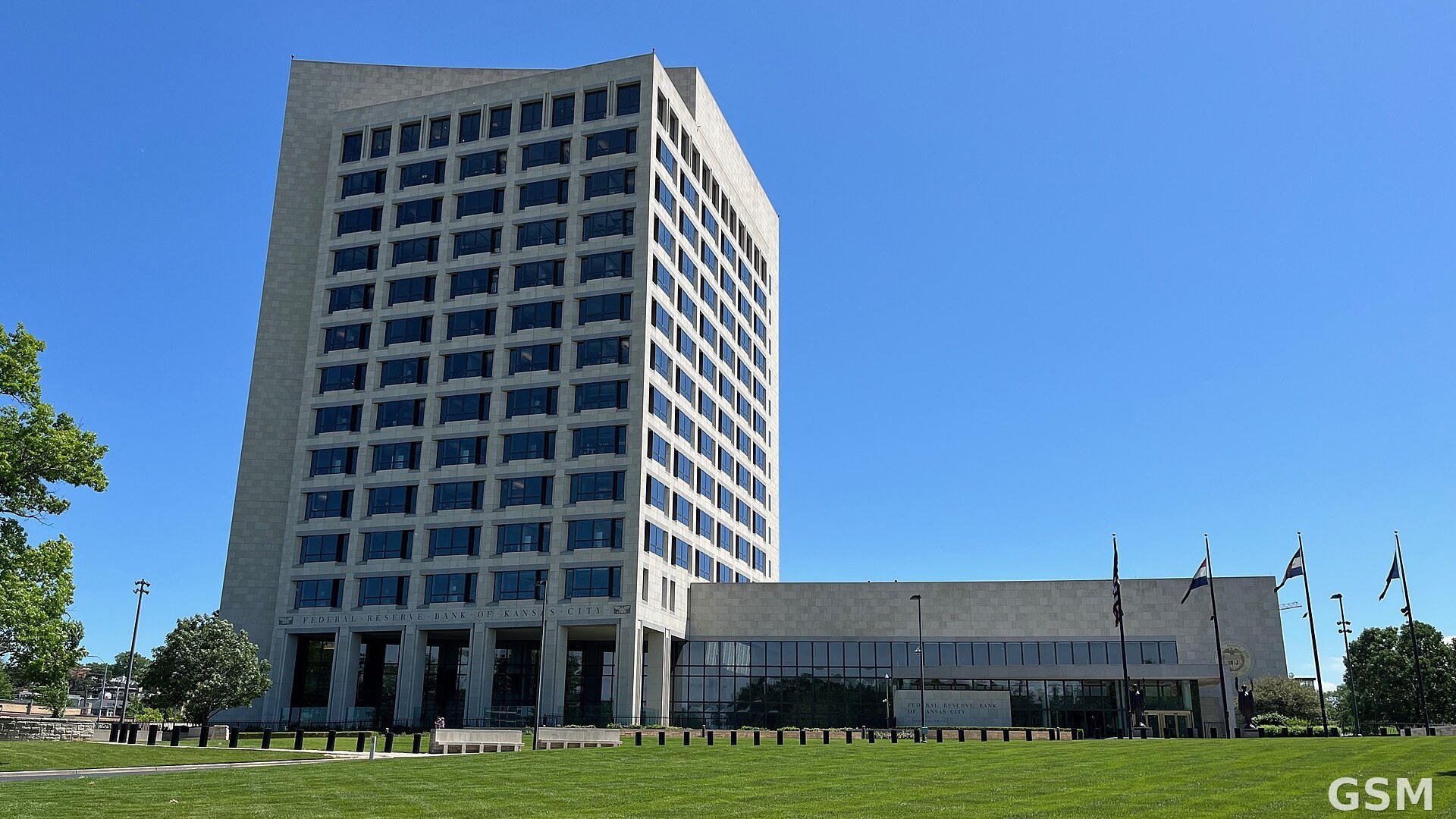
图片来源:图:堪萨斯城联邦储备银行总部大楼,位于 Kansas City 的 1 Memorial Drive。Antony-22 摄,CC BY-SA 4.0,经 Wikimedia Commons,本站裁为16:9。 / Photo: The headquarters of the Federal Reserve Bank of Kansas City at 1 Memorial Drive in Kansas City. By Antony-22, CC BY-SA 4.0, via Wikimedia Commons; cropped to 16:9 by GSM.
GSM Global · 本篇英文版 English edition of this story