NASA 远红外望远镜 PRIMA 推进下一阶段:BAE Systems 供航天器平台并负责总装测试,目标2033年发射
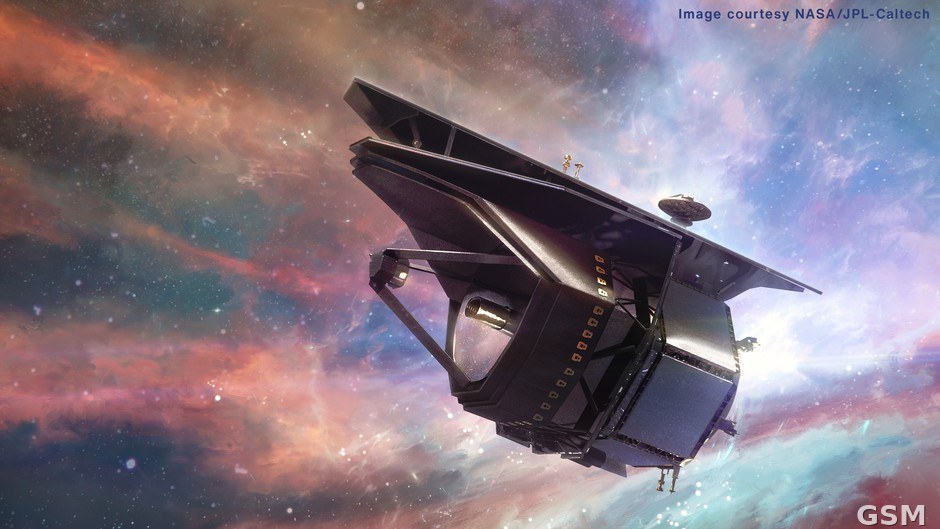
BAE Systems 11月13日宣布,由美国航天局(NASA)喷气推进实验室(JPL)牵头的 PRIMA 团队已被 NASA 选入下一阶段研发。PRIMA 全称「天体物理远红外探测任务」(PRobe far-Infrared Mission for Astrophysics),是 NASA 新设「探测者级探索者」(Probe Explorers)任务类别中的第一个项目。
PRIMA 将搭载一台1.8米口径的远红外空间望远镜。远红外光能穿透遮挡视线的宇宙尘埃,科学家希望借此研究被尘埃深藏的天体,并追溯行星、恒星与黑洞的形成,以及地球上水的来源。欧洲空间局的 Herschel 天文台2013年耗尽冷却剂退役后,远红外波段一直没有大型空间望远镜覆盖。
按分工,BAE Systems 将提供 Evolve+ 航天器平台,主导整个天文台的总装、集成与测试,并担任运营与地面系统负责人;任务由 JPL 负责管理。法国、意大利、加拿大、韩国、日本与英国等国的机构也参与这项任务。
PRIMA 目前处于 B 阶段研发(初步设计阶段)。任务还须通过 NASA 的确认审查,审查通过后才能继续推进;现定目标是2033年发射,执行为期五年的观测任务。项目成本上限为12亿美元,不含发射费用。
(来源:BAE Systems)
NASA's Far-Infrared Telescope PRIMA Advances: BAE Systems to Supply Spacecraft Bus and Lead Assembly and Testing, Targeting a 2033 Launch
BAE Systems announced on November 13 that the Jet Propulsion Laboratory (JPL)-led PRIMA team has been selected by NASA for the next phase of development. PRIMA, the PRobe far-Infrared Mission for Astrophysics, is the first mission in NASA's new Probe Explorers class of astrophysics missions.
PRIMA will carry a 1.8-meter far-infrared space telescope. Far-infrared light can penetrate the cosmic dust that hides many objects from view, and scientists plan to use it to study dust-obscured regions and trace the formation of planets, stars and black holes, and even how water on Earth came to be. No large space telescope has covered the far-infrared since the European Space Agency's Herschel observatory ran out of coolant in 2013.
Under the arrangement, BAE Systems will provide its Evolve+ spacecraft bus, lead the observatory's assembly, integration and testing, and serve as operations and ground systems lead, while JPL manages the mission. Institutions in France, Italy, Canada, South Korea, Japan and the United Kingdom are also taking part.
PRIMA is now in Phase B development, its preliminary design phase. The mission must still pass a NASA confirmation review before it can proceed further. The current target is a 2033 launch for a five-year mission, with the project cost capped at $1.2 billion, excluding launch.
(Source: BAE Systems)
来源:BAE Systems
发布:GSM·美国(发布链接)
图片来源:图:NASA 远红外天文台 PRIMA 航天器概念图。图片:NASA/喷气推进实验室-加州理工学院(NASA/JPL-Caltech),公共领域。 / Image: Artist's concept of NASA's PRIMA spacecraft (PIA26355). Image by NASA/JPL-Caltech, public domain.
GSM Global · 本篇英文版 English edition of this story