3469名成人体检数据:体重指数未超标但腰高比偏高者脂肪肝检出率23.0%、双低组6.2%
一项11月14日发表于《科学报告》的研究回顾分析了3469名在县级医院参加常规体检的成年人数据,评估腰高比对脂肪肝的表型识别价值。研究对象来自中国广西扶绥县人民医院(Fusui County People's Hospital)的体检记录,脂肪肝以超声检出为准。
全体受检者中,超声检出脂肪肝者为839人,占24.2%。在体重指数低于24千克每平方米的1933人中,腰高比达到或超过0.5者占该层人数的11.0%,却占该层脂肪肝病例的31.4%。
这一表型组的脂肪肝检出率为23.0%;相比之下,体重指数与腰高比双低组的检出率为6.2%。调整年龄、性别与甘油三酯-葡萄糖指数后,低体重指数、高腰高比表型的患病率比为2.63(95%置信区间1.90至3.63)。
在个体层面区分能力上,把甘油三酯-葡萄糖指数加入体重指数后,交叉验证的 ROC 曲线下面积由0.837升至0.865;再加入腰高比后升至0.867,配对差值仅为0.00163(95%置信区间负0.00009至0.00337),精确率-召回率曲线下面积与 Brier 分数均无明确改善。
作者指出,腰高比能识别出体重指数未超标人群中的高检出率表型,但其在体重指数加甘油三酯-葡萄糖指数之外的增量区分有限;这批单中心横断面数据不支持把腰高比单独作为转诊肝脏超声的筛查阈值。研究未获外部经费资助。
In 3,469 Adults, Fatty Liver Prevalence Was 23.0% in the Low-BMI, High Waist-to-Height Group Versus 6.2% in the Low-Low Group
A study published November 14 in Scientific Reports retrospectively analysed 3,469 adults who attended routine health examinations at Fusui County People's Hospital, evaluating the phenotyping value of the waist-to-height ratio (WHtR) for fatty liver, which was detected by ultrasound.
Ultrasound-detected fatty liver was present in 839 participants, or 24.2 percent. Among the 1,933 participants with a body mass index below 24 kg/m2, those with a WHtR of 0.5 or above represented 11.0 percent of the BMI stratum but accounted for 31.4 percent of its fatty liver cases.
The prevalence of ultrasound-detected fatty liver was 23.0 percent in this group, compared with 6.2 percent among participants with both low BMI and low WHtR. After adjustment for age, sex and the triglyceride-glucose (TyG) index, the prevalence ratio for the low-BMI, high-WHtR phenotype was 2.63 (95% CI 1.90-3.63).
On individual-level discrimination, adding TyG to BMI increased the cross-validated ROC AUC from 0.837 to 0.865. Adding WHtR to BMI plus TyG increased the AUC to 0.867, a paired difference of 0.00163 (95% CI -0.00009 to 0.00337), with no clear improvement in precision-recall AUC or Brier score.
The authors conclude that WHtR identified a high-prevalence phenotype among adults below the BMI overweight threshold, but yielded little further discrimination beyond BMI plus TyG, and that these single-centre cross-sectional data do not support using WHtR alone as a screening threshold to guide liver ultrasound referrals. The study received no external funding.
来源:Scientific Reports
发布:GSM·美国(发布链接)
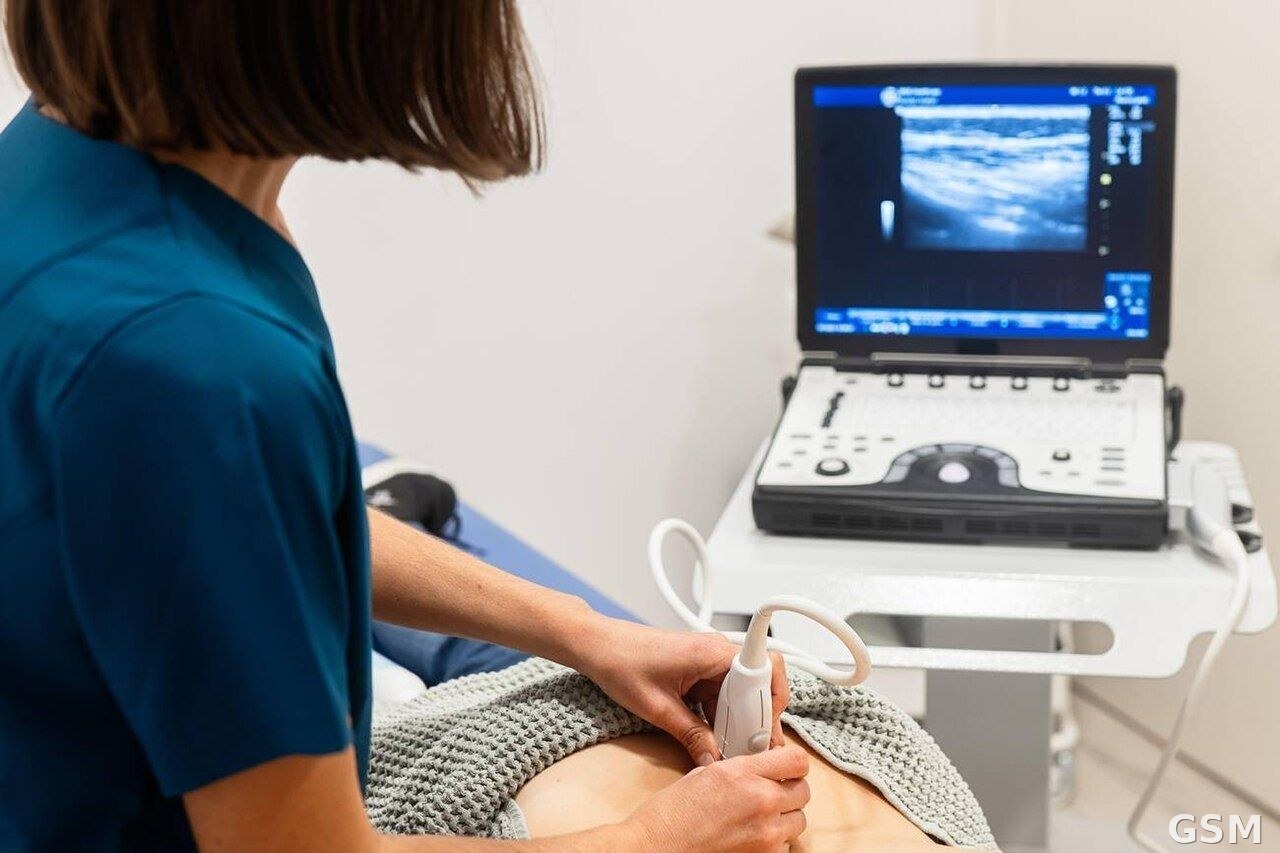
图片来源:图:医务人员为受检者做腹部超声检查。来源:Goleisureintl,Wikimedia Commons,CC BY 4.0。 / Photo: A health worker performing an abdominal ultrasound examination. Source: Goleisureintl, Wikimedia Commons, CC BY 4.0.
GSM Global · 本篇英文版 English edition of this story