没有土地减排,1.5 摄氏度目标将无法实现:波茨坦研究所自然可持续研究量化能源与土地的取舍
波茨坦气候影响研究所一项发表于自然可持续期刊的研究,首次量化了温室气体减排两大行动领域之间的相互关系与目标冲突:淘汰化石燃料,以及在农田、森林与湿地等自然土地上采取的措施。研究第一作者为利昂·默福特。
土地类气候保护包括种植生物质用于生物燃料或碳移除、保护生态系统、恢复森林、土壤、湿地与泥炭地作为碳汇,以及减少农业甲烷与氧化亚氮排放。
研究团队用整合经济、能源系统、土地利用与气候的模型计算了多种情景。一个关键结论是:若土地类温室气体减排没有显著贡献,在经历暂时超标后于 2100 年把全球升温限制在 1.5 摄氏度的目标将无法实现。
研究以把升温限制在 1.7 摄氏度、并以全球碳价作为能源转型工具为例:若完全不实施土地类气候保护,碳价到 2040 年须升至每吨二氧化碳 400 美元,2025 年至 2100 年的消费损失为 3.5%。若土地类措施全部用尽,同一目标可以每吨 130 美元的碳价与 1.3% 的消费损失实现。
但研究同时指出,届时 2050 年用于气候保护生物质种植的土地需求将在 6600 万公顷至 3 亿公顷以上之间。作为参照,法国国土面积为 6300 万公顷,阿根廷为 2.78 亿公顷。
研究团队最终建议审慎的政策组合:以残余物能源利用为主、辅以有限的种植生物质,对甲烷与氧化亚氮设价格上限,并全面保护全球森林。按模型计算,该组合下 1.7 摄氏度目标可以 2040 年每吨 180 美元的碳价与 1.5% 的消费损失实现。论文数字对象标识符为 10.1038/s41893-026-01977-7。
Without Land-Based Cuts the 1.5 Degree Target Fails: Potsdam Study in Nature Sustainability Quantifies Energy and Land Trade-Offs
A study from the Potsdam Institute for Climate Impact Research, published in Nature Sustainability, quantifies for the first time the interrelationships and competing objectives of two major areas of greenhouse gas reduction: phasing out fossil fuels and measures on natural land such as farmland, forests and wetlands. Leon Merfort is lead author.
Land-based climate protection includes cultivating biomass for biofuels or carbon removal, protecting ecosystems, restoring forests, soils, wetlands and peatlands as carbon sinks, and reducing methane and nitrous oxide emissions in agriculture.
Using a model integrating the economy, the energy system, land use and climate, the team calculated scenarios with varying land-sector measures. One key finding is that without a significant contribution from land-based reductions, limiting global heating to 1.5 degrees Celsius by 2100 after a temporary overshoot can no longer be achieved.
For an illustrative target of 1.7 degrees with a global carbon price as the energy transition tool, the price would have to rise to 400 dollars per metric ton of carbon dioxide by 2040 if no land-based measures are implemented, with consumption losses of 3.5 percent between 2025 and 2100. With every possible land measure taken, the same target is reachable at 130 dollars per ton and a 1.3 percent consumption loss.
The study also notes that land required for climate-protection biomass in 2050 would then range from 66 million hectares to just over 300 million hectares. For scale, France covers 63 million hectares and Argentina 278 million hectares.
The team recommends a cautious policy mix: energy recovery using residual materials, a limited amount of cultivated biomass, capped pricing for methane and nitrous oxide, and comprehensive global forest conservation. Under that mix, the model reaches the 1.7 degree target at a 2040 carbon price of 180 dollars and a 1.5 percent consumption loss. The paper carries digital object identifier 10.1038/s41893-026-01977-7.
发布:GSM·美国(发布链接)
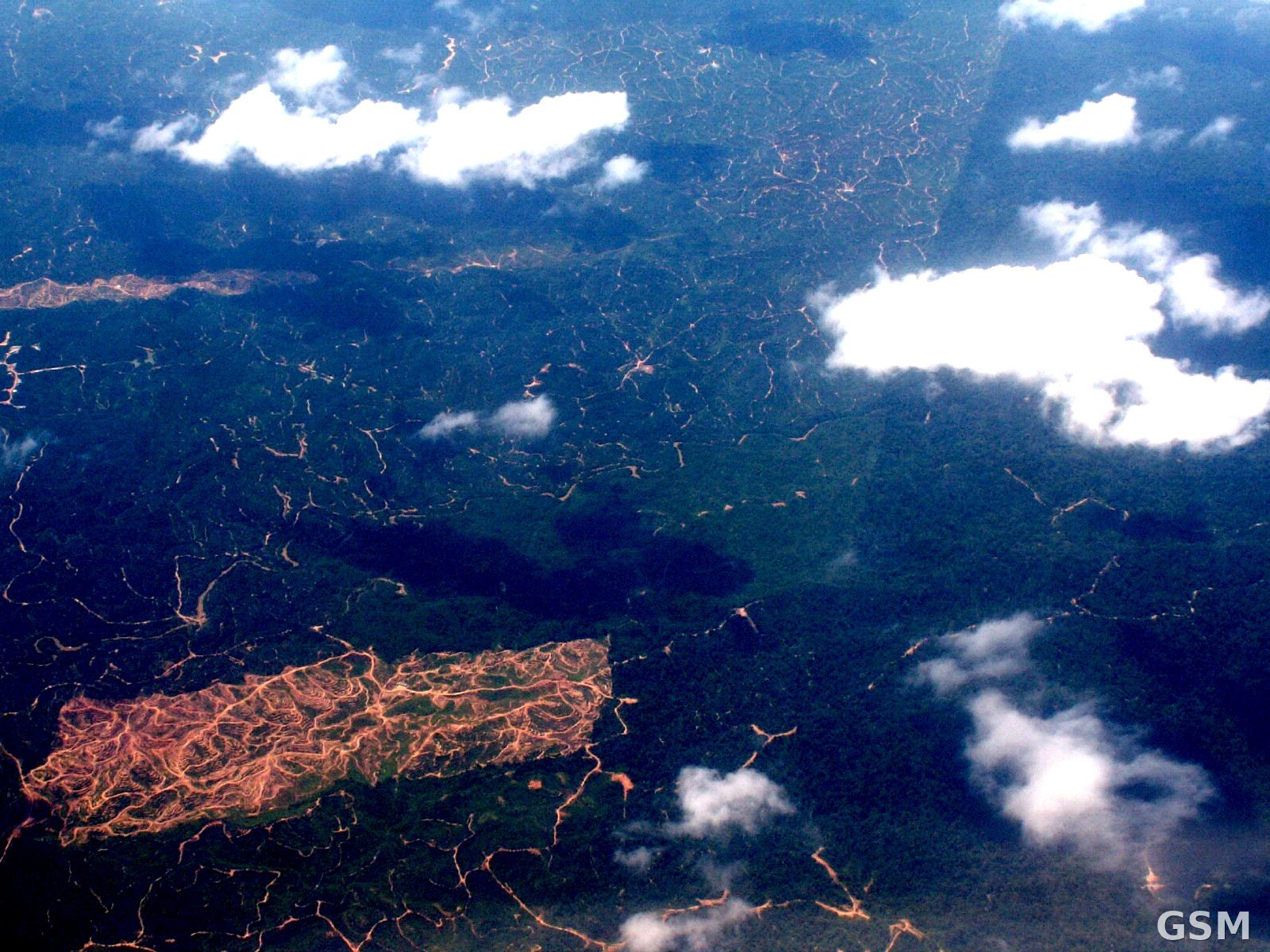
图片来源:图:航拍下一片为种植园新清理出的土地。T. R. Shankar Raman 摄,CC BY-SA 4.0,经 Wikimedia Commons / Photo: Oil Palm clearing aerial Borneo. By T. R. Shankar Raman, CC BY-SA 4.0, via Wikimedia Commons
GSM Global · 本篇英文版 English edition of this story