《自然》论文:PhyC与VRN1两基因组合支撑大麦一年两熟,505个品种八十年育种史显示1990年代后逾60%秋播品种携带该组合
一项发表于《自然》期刊的研究,查清了大麦何以能适配一年两熟的种植制度:关键在于光受体基因 PhyC 的一个变体与春化基因 VRN1 特定变体的组合。研究由中国农业科学院杨平(Ping Yang)领衔的团队与德国 IPK 莱布尼茨研究所研究人员合作完成,Phys.org 于11月9日作了报道。
在华中与华东部分地区,农户秋季播种大麦、晚春收获,其后接种水稻等夏季作物,大麦必须按时成熟,早收还能避开生长季末的高温与降雨。团队把跨越八十年的历史数据与田间试验、分子遗传学研究结合,分析了505个具代表性的中国大麦品种与27个引进参考品系的遗传数据,重建了1940年代以来中国大麦品种遗传构成的变化。团队鉴定出,PhyC 基因的一个变体是关键分子组分之一:PhyC 编码调控开花时间的光受体,其蛋白中单个氨基酸替换可加速抽穗与成熟;分析显示该变体起源于东亚大麦种质,在现代育种中扩散开来。
但早熟并非总是有利:该 PhyC 变体若与春大麦型的 VRN1 变体组合,会减少生物量并损害产量相关性状;关键在于它与冬大麦型的 VRN1 变体组合—后者参与对长期低温的响应,在所研究的田间条件下,这一组合使植株发育提前而不降低籽粒产量。两个基因在同一条染色体上位置相近、可一同遗传,其组合频率在中国秋播品种中自1960年代起上升,1990年代以后所检现代秋播品种中逾60%携带该组合。团队还用碱基编辑技术在大小麦中重现了这一天然变异,确认其导致发育提前;在水稻中同一变异却使开花推迟,团队称这可能源于长日照植物与短日照植物对光信号响应机制的差异。IPK 的 Martin Mascher 表示,研究显示有利的双基因变体组合如何在数十年间在中国大麦育种中确立;Nils Stein 表示,作物的适应取决于基因的组合而非单个基因。作者同时指出,该基因组合在其它品种与种植区的表现仍需更多田间试验验证。
Nature Study: A PhyC–VRN1 Gene Pairing Underlies Barley Double Cropping; Across 505 Varieties and 80 Years of Breeding, Over 60% of Autumn-Sown Varieties Since
A study published in Nature has identified the genetic basis that lets barley fit a double-cropping calendar: a variant of the light-receptor gene PhyC combined with a particular variant of the vernalization gene VRN1. The work was led by Ping Yang at the Chinese Academy of Agricultural Sciences, working with researchers at the IPK Leibniz Institute in Germany, and was reported by Phys.org on November 9.
In parts of central and eastern China, farmers sow barley in autumn and harvest it in late spring, followed by a summer crop such as rice; the barley must mature in time, and an early harvest also helps it avoid heat and rain toward the end of the growing season. Combining historical data spanning eight decades with field trials and molecular genetic studies, the team examined genetic data from 505 representative Chinese barley varieties and 27 introduced reference lines, tracing how the genetic makeup of Chinese barley varieties has changed since the 1940s. The team identified a variant of the PHYTOCHROME C (PhyC) gene as a key molecular component: PhyC encodes a light receptor that regulates flowering time, and a single amino acid substitution in the protein accelerates ear emergence and maturity. The analyses indicate the variant originated in East Asian barley germplasm and became more widespread during modern breeding.
Early maturity is not necessarily advantageous, however: combined with a spring-barley variant of the flowering regulator VRN1, the early-maturing PhyC variant can reduce biomass and impair yield-related traits. The crucial factor is its combination with a winter-barley VRN1 variant, which is involved in the response to prolonged cold; under the field conditions investigated, that combination enables earlier development without reducing grain yield. The two genes lie close together on the same chromosome and can be inherited together, and the combination's frequency in Chinese autumn-sown varieties has increased since the 1960s; since the 1990s, more than 60% of the modern Chinese autumn-sown varieties examined have carried it. Using base editing, the team recreated the naturally occurring change in barley and wheat and confirmed it causes earlier development; in rice, the same change had the opposite effect, delaying flowering, which the team attributed to differences in day-length response mechanisms between long-day and short-day plants. Martin Mascher of the IPK Leibniz Institute said the findings show how a favorable combination of two gene variants became established in Chinese barley breeding over several decades, and Nils Stein said adapting crops depends not only on individual genes but on how they are combined. The authors noted that further field trials are needed to establish whether the combination performs well in other varieties and growing regions.
—-
来源:《自然》期刊论文(研究团队
发布:GSM·美国(发布链接)
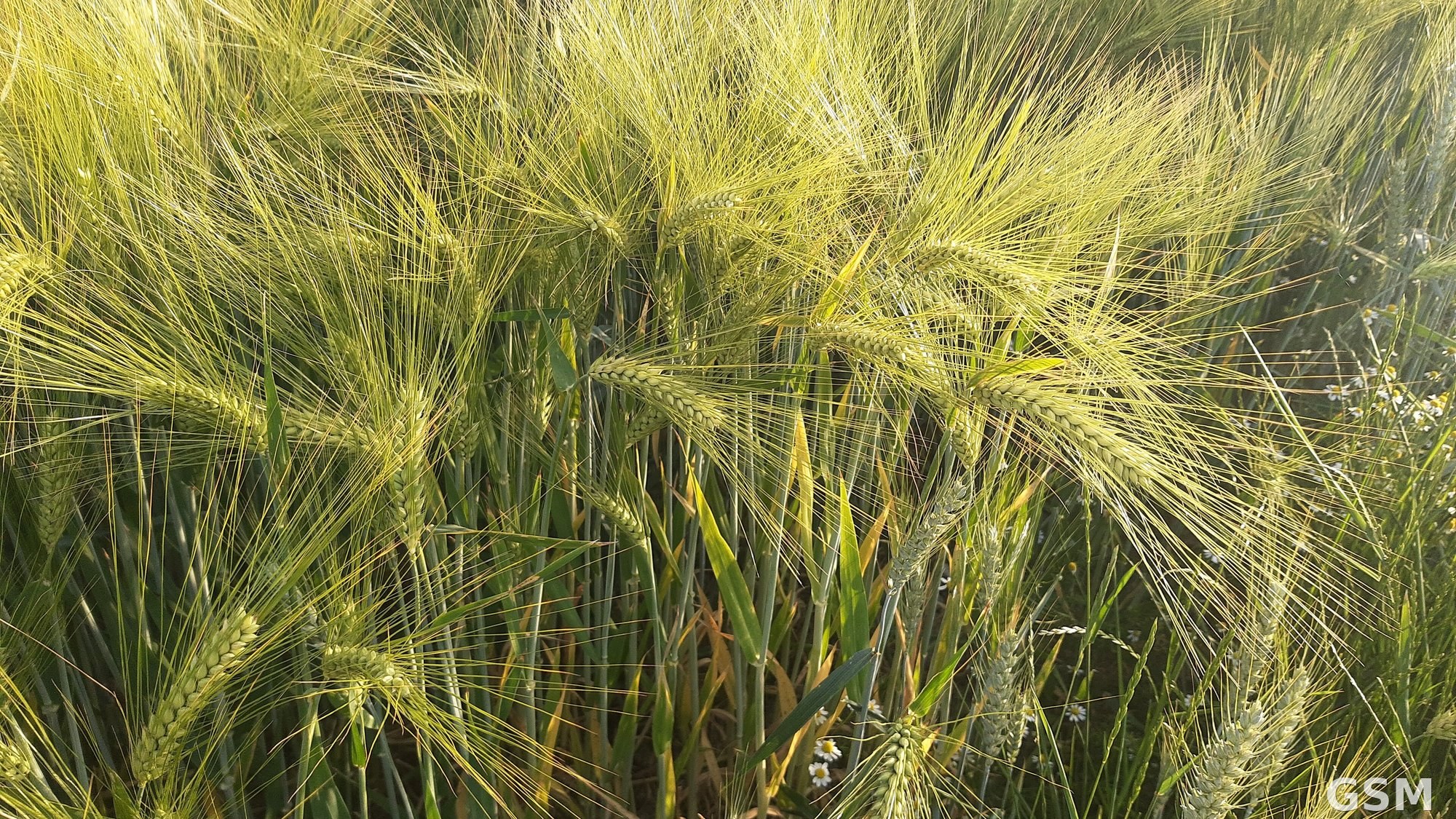
图片来源:大麦田特写(资料图)。(Wikimedia Commons/CC0)|A barley field close-up (file photo). (Wikimedia Commons / CC0)
GSM Global · 本篇英文版 English edition of this story