联合国难民署新报告:近9000万流离失所者面临严重气候威胁,仅约一成气候资金抵达脆弱国家
瑞士日内瓦消息,联合国难民署 11 月 6 日发布新报告《无处可逃 III:气候危机前线的流离失所者之声》称,全球近 9000 万被迫流离失所者生活在高度暴露于干旱、洪水与极端高温等气候灾害的国家,约占全球流离失所者总数的四分之三。报告在即将在土耳其安塔利亚举行的联合国气候变化大会(COP31,11 月 9 日至 20 日)前夕发布,呼吁各国政府与气候融资机构增加对脆弱群体的适应资金。
报告指出,冲突、流离失所与气候变化的重叠已成常态:阿富汗与孟加拉国等国被列为受气候风险影响最严重的国家之一。难民署行动事务助理高级专员安东·莱斯·加西亚说:“脆弱与受流离失所影响地区的气候适应是生死攸关的事”,“我们需要气候融资抵达需求最迫切的社区”。
报告警告,气候变化正使流离失所者难以持续返乡:2026 年上半年,超过三分之二返回家园的难民回到了高度暴露于气候灾害的国家,面临再次流离失所的风险。在叙利亚,近 400 万流离失所者近期返乡,正面临日益严重的水资源短缺与不稳定的降雨,5 月幼发拉底河沿岸洪水损毁房屋、导致数千人流离失所。报告还以一名苏丹难民为例:她 2023 年 6 月逃离法希尔冲突,抵达乍得东部法尔查纳难民定居点,有时一周找不到安全饮用水,随着附近季节性河床干涸、气温升高,她须走越来越远的路取水。
展望方面,报告称,到 2050 年,撒哈拉以南非洲三分之一的难民定居点每年可能面临至少 100 天的危险高温,威胁健康与生计;埃塞俄比亚部分定居点(包括赫拉韦恩)危险高温每年可能持续 200 天以上,增加中暑与过早死亡的风险。难民署还警告,预报中的超强厄尔尼诺现象可能加剧多国难民收容国的气候风险并引发进一步流离失所:东非严重洪水到今年年底可能使索马里、肯尼亚、南苏丹与乌干达多达 300 万人流离失所。
资金缺口是报告的核心呼吁:仅约 10% 的气候资金抵达脆弱或受冲突影响国家。联合国另一份报告本周三指出,富裕国家提供的气候适应资金远低于发展中国家每年所需的 3050 亿美元。
UNHCR: Nearly 90 Million Displaced People Face Severe Climate Threats as Adaptation Funding Falls Short
GENEVA, Switzerland — Nearly 90 million forcibly displaced people are living in countries increasingly exposed to climate-related droughts, floods and extreme heat, the UN refugee agency said on Friday, warning ahead of the COP31 climate summit that more funding is needed to help vulnerable communities adapt. The report, "No Escape III: Displaced Voices from the Frontlines of the Climate Crisis," was released on November 6 ahead of the UN Climate Change Conference in Antalya, Turkey, which runs from November 9 to 20. Nearly three-quarters of the world's forcibly displaced people live in countries exposed to severe climate-related risks, according to the report.
The findings show the overlap between conflict, displacement and climate change. Afghanistan and Bangladesh are among the countries named as most severely exposed. "Climate adaptation in fragile and displacement-affected areas is a matter of survival," said Anton Leis Garcia, UNHCR's assistant high commissioner for operations. "We need climate financing to reach the communities where the needs are greatest," he said.
The report warned that climate change is making it harder for displaced people to return home sustainably. In the first half of 2026, more than two-thirds of refugee returns were to countries highly exposed to climate hazards, placing them at risk of renewed displacement. In Syria, where nearly 4 million displaced people have recently returned, people face worsening water scarcity and erratic rainfall, while flooding along the Euphrates River in May damaged homes and displaced thousands of people, the report said. The report highlighted the experience of a Sudanese refugee who fled conflict in al-Fashir in June 2023 to the Farchana refugee settlement in eastern Chad; she sometimes goes a week without finding safe water and must walk increasingly long distances for alternative sources as nearby seasonal riverbeds dry up amid intensifying heat.
Looking ahead, the report said that across sub-Saharan Africa, one in three refugee settlements could experience at least 100 days of dangerous heat each year by 2050, threatening health and livelihoods. In some settlements in Ethiopia, including Helaweyn, dangerous heat could persist for more than 200 days a year, increasing the risks of heatstroke and premature death. UNHCR also warned that a forecast supersized El Niño could worsen climate-related risks in many refugee-hosting countries and trigger further displacement. In East Africa, severe flooding could displace up to 3 million people in Somalia, Kenya, South Sudan and Uganda by the end of this year, UNHCR said.
Funding is at the heart of the report's appeal: only about 10 percent of climate finance reaches fragile or conflict-affected countries. On Wednesday, a separate UN report found rich countries were falling well short of the $305 billion needed each year to help developing nations adapt to climate change.
来源:联合国难民署
发布:GSM·美国(发布链接)
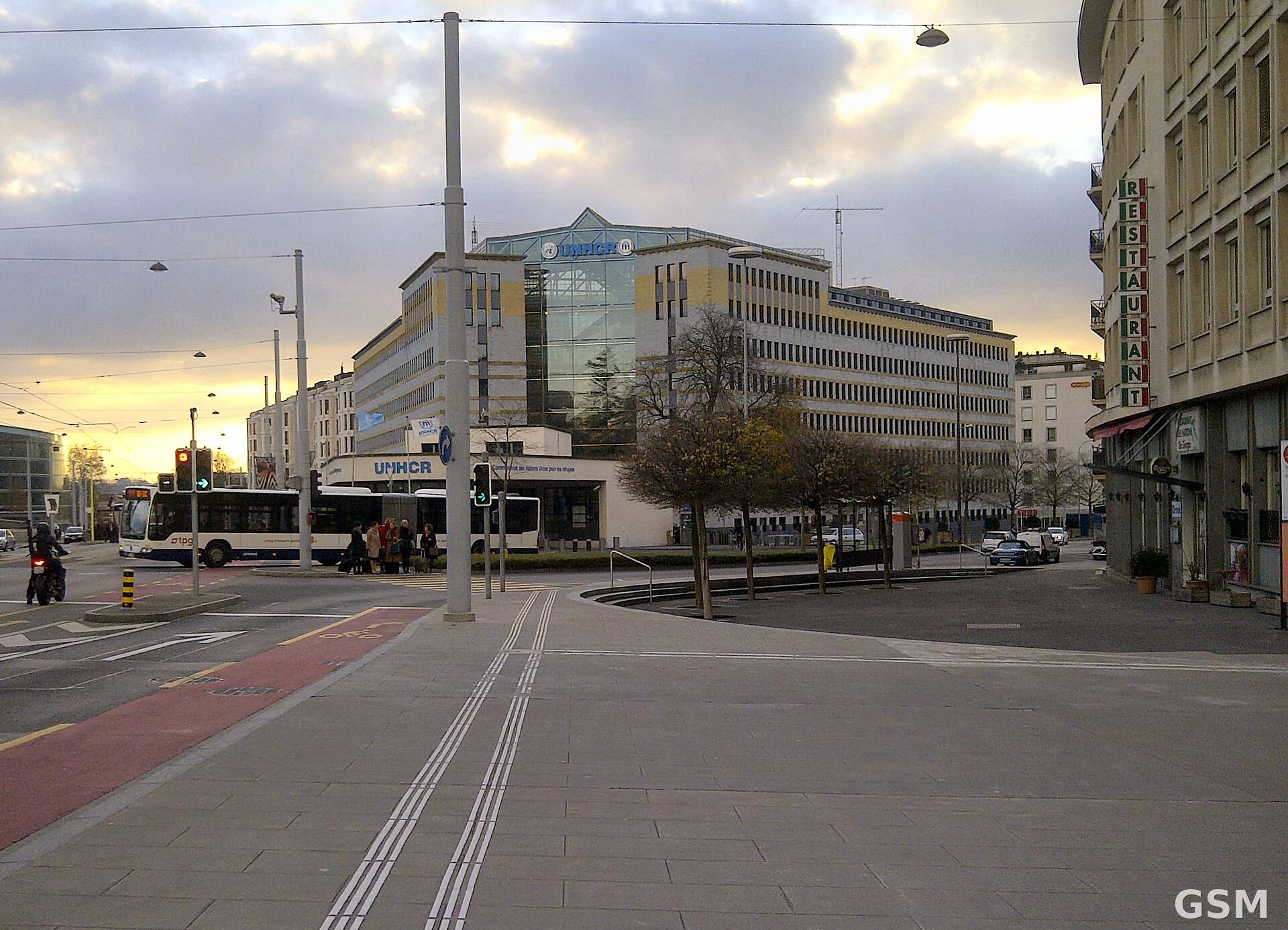
图片来源:图:联合国难民署位于瑞士日内瓦的总部。图片来源:Wikimedia Commons,CC BY-SA 3.0。 / Photo: UNHCR headquarters in Geneva, Switzerland. Photo: Wikimedia Commons, CC BY-SA 3.0.
GSM Global · 本篇英文版 English edition of this story