2026年南极臭氧洞为48年第七大:NOAA与NASA发布年度测量结果
美国国家海洋和大气管理局(NOAA)与美国国家航空航天局(NASA)2026年11月4日发布2026年南极臭氧洞年度测量结果:受异常强劲的极地涡旋推动,今年的臭氧洞按季节平均面积计为48年卫星监测史上第七大;两家机构的科学家同时表示,臭氧层整体仍在走向本世纪后期恢复的轨道上。
在9月7日至10月13日的臭氧损耗高峰季,臭氧洞平均面积约为960万平方英里(2,500万平方公里),是美国国土面积的两倍多。臭氧洞在9月18日达到今年最大面积1,050万平方英里(2,710万平方公里),约为2000年9月9日史上最大纪录的90%。
NASA戈达德太空飞行中心臭氧研究团队资深科学家 Paul Newman 表示,近年臭氧洞在季节内形成的时间越来越晚,说明臭氧层正在愈合,但今年异常强大的极地涡旋延长了南极上空的臭氧损耗期,使臭氧洞长到近十年来未见的规模。他说,如果大气中消耗臭氧的化学物质仍停留在2000年前后的峰值水平,今年的臭氧洞还会再大100万至200万平方英里。
NOAA化学科学实验室研究科学家 Amy Butler 解释,今年8月至9月间,通常会自下层大气上涌、打破极地涡旋的行星尺度天气系统格外弱,极地涡旋最强的风带因此比往年离南极点更远数个纬度,为臭氧损耗创造了更大范围的理想低温条件。
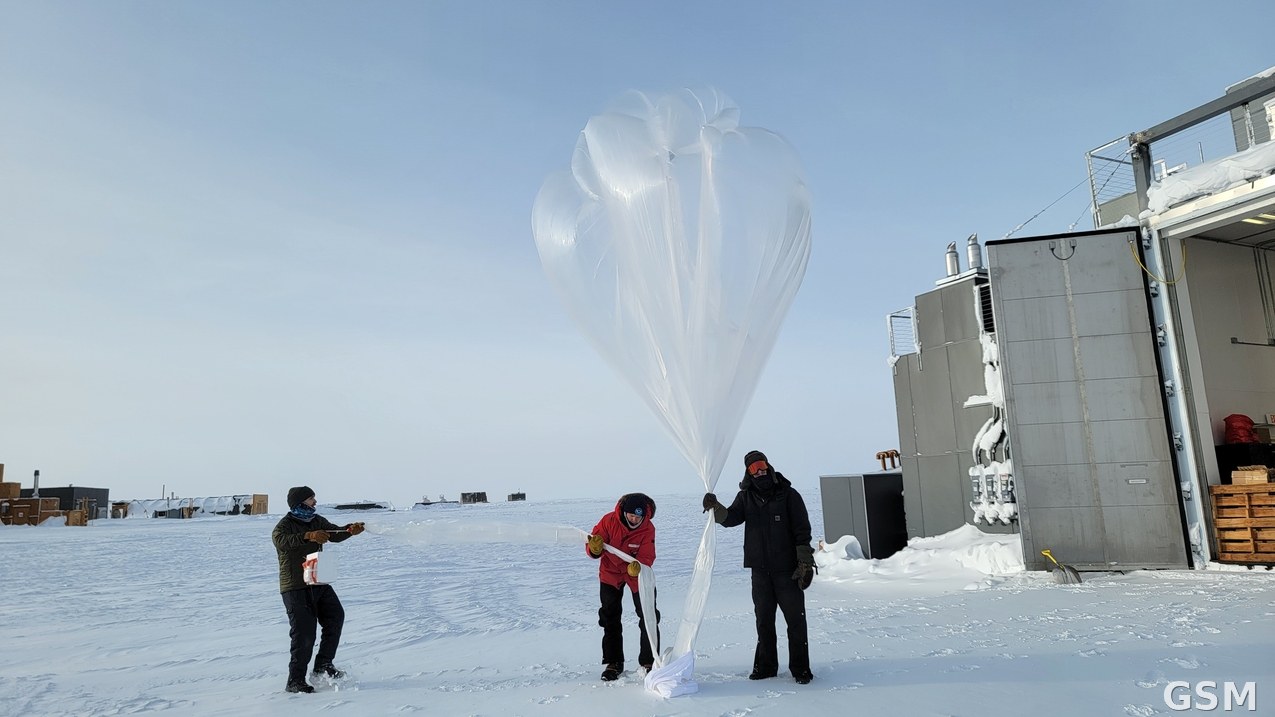
测量方面,NOAA科学家在南极点大气基线观测站放飞探空气球,并使用多布森臭氧分光光度计测得,南极点正上方的臭氧浓度在10月17日降至今年最低值105个多布森单位;史上最低纪录是2006年10月的92个多布森单位。NASA的Aura卫星、NOAA-20与NOAA-21卫星以及NOAA与NASA联合运行的Suomi NPP卫星也参与了今年的监测。
两家机构表示,1987年《蒙特利尔议定书》确立的管控仍在推动平流层臭氧长期恢复。NOAA全球监测实验室资深科学家 Stephen Montzka 说,南极平流层中源自消耗臭氧物质的氯含量,已较1980年代峰值水平下降约三分之一。科学家估计,随着旧设备与填埋场中残存的这类化合物逐步分解,臭氧洞将在2070年代恢复。
(来源:美国国家海洋和大气管理局)
Antarctic Ozone Hole Ranks Seventh-Largest in 48 Years in 2026: NOAA and NASA Release Annual Measurements
The National Oceanic and Atmospheric Administration (NOAA) and the National Aeronautics and Space Administration (NASA) on November 4, 2026, released their annual measurements of the 2026 Antarctic ozone hole: fueled by an unusually powerful polar vortex, this year's hole ranked as the seventh-largest in 48 years of monitoring by seasonal mean area, while scientists at both agencies said the ozone layer remains on track to recover later this century.
During the peak ozone depletion season from September 7 to October 13, 2026, the hole covered an average of about 9.6 million square miles (25 million square kilometers), more than twice the area of the United States. The hole reached its greatest extent of the year on September 18, at 10.5 million square miles (27.1 million square kilometers), about 90 percent as large as the largest ozone hole ever observed, on September 9, 2000.
Paul Newman, a senior scientist at the University of Maryland and longtime leader of NASA's ozone research team at the agency's Goddard Space Flight Center, said the annual ozone hole has been forming later in the season in recent years, a sign the ozone layer is healing, but that an unusually powerful polar vortex extended ozone depletion this season and allowed the hole to grow to proportions not seen in a decade. He said this year's hole would have been 1 million to 2 million square miles larger if ozone-depleting substances were as prevalent in the atmosphere today as they were at their year-2000 peak.
Amy Butler, a research scientist at the NOAA Chemical Sciences Laboratory, said planetary-scale weather systems that typically well up from the lower atmosphere and break up the polar vortex were especially weak in August and September, keeping the strongest polar vortex winds several degrees of latitude further from the South Pole and creating a larger area of conditions ideal for ozone depletion.
For the measurements, NOAA scientists deploying balloon-borne instruments from the South Pole Baseline Atmospheric Observatory, and using a Dobson ozone spectrophotometer, found ozone concentrations directly overhead reached their lowest value of the year, 105 Dobson units, on October 17; the lowest value ever recorded over the South Pole was 92 Dobson units in October 2006. Instruments aboard NASA's Aura satellite, the NOAA-20 and NOAA-21 satellites, and the Suomi National Polar-orbiting Partnership satellite, jointly operated by NASA and NOAA, also contributed to the annual monitoring.
The two agencies said controls established by the Montreal Protocol in 1987 continue to drive long-term recovery of stratospheric ozone. Stephen Montzka, a senior scientist at NOAA's Global Monitoring Laboratory, said chlorine levels in the Antarctic stratosphere derived from ozone-depleting substances have declined by about a third relative to levels reached in the 1980s. Scientists estimate the ozone hole will recover by the 2070s as the older compounds continue to break down.
(Source: National Oceanic and Atmospheric Administration)
来源:美国国家海洋和大气管理局
发布:GSM·美国(发布链接)
图片来源:图:科研人员在南极的南极点大气基线观测站放飞臭氧探测气球(2026年10月18日),NOAA与NASA的年度臭氧洞测量正使用这类气球仪器。照片:美国国家海洋和大气管理局(NOAA),公共领域。 / Photo: Researchers launch an ozone-sounding balloon at the South Pole Baseline Atmospheric Observatory in Antarctica on October 18, 2026; balloon-borne instruments of this kind are used in the NOAA and NASA annual ozone hole measurements. Photo by the National Oceanic and Atmospheric Administration (NOAA), public domain.
GSM Global · 本篇英文版 English edition of this story