航天局选定三家公司开发Ka波段卫星中继:合同上限合计约10.7亿美元
美国国家航空航天局(NASA)11月4日宣布,已选定三家公司开发Ka波段太空中继能力概念,合同上限合计约10.66亿美元。新中继服务要能与目前在轨运行的航天器直接兼容,让现有任务在不改动星上设备的情况下继续获得通信服务。
三家入选公司及各自合同上限为:Astranis Space Technologies Corp. 2.643亿美元、Global Enterprise Solutions Inc. 3.404亿美元、Viasat Inc. 4.609亿美元。合同通过「NextSTEP-3」广泛机构公告附录E授出,为固定总价合同,航天局可按合同上限追加资金,把工作从最初的概念开发与风险降低推进到在轨飞行演示。
首期执行期为2026年11月4日至2027年5月3日,另有定价期权可把工作延续到2029年。航天局希望通过这项采购获得涵盖太空、地面、发射、运行与集成环节的端到端解决方案,并作为商业市场上的多家客户之一使用这些服务。
这项工作由航天局空间通信与导航计划(SCaN)下属的通信服务项目推动,服务于航天局逐步退役跟踪与数据中继卫星(TDRS)星群、未来任务改用商业服务的决定。航天局表示,部分在轨任务无法切实改装飞行硬件、也无法转用不兼容的商业服务,因此仍需要Ka波段服务来支持。(来源:美国国家航空航天局)
NASA Selects Three Companies for Ka-Band Satellite Relay Work Worth Up to $1.07 Billion Combined
NASA announced on November 4 that it has selected three companies to develop Ka-band space relay capability concepts compatible with missions currently in space, ensuring service continuity for existing spacecraft without requiring modifications to their onboard systems. The awards carry a combined maximum potential value of about $1.066 billion.
The awardees and their maximum values, inclusive of all future options, are Astranis Space Technologies Corp. at $264.3 million, Global Enterprise Solutions Inc. at $340.4 million, and Viasat Inc. at $460.9 million. The firm-fixed-price contracts were awarded under Appendix E of the Next Space Technologies for Exploration Partnerships-3 (NextSTEP-3) Broad Agency Announcement, and give NASA the option to provide additional funding up to the award limit to advance the work from initial concept development and risk reduction to an in-orbit flight demonstration.
The initial period of performance runs from November 4, 2026 through May 3, 2027, with additional priced options to continue work through 2029. Through this work, NASA aims to acquire end-to-end solutions that include space, ground, launch, operations, and integration elements, as one of many customers in the commercial marketplace.
The work is facilitated through the Communications Services Project of NASA's Space Communications and Navigation (SCaN) program, and supports the agency's decision to gradually retire its Tracking and Data Relay Satellite (TDRS) fleet and adopt commercial services for future missions. NASA said Ka-band services are needed to support select in-orbit missions that cannot feasibly modify flight hardware or transition to non-compatible commercial services. (Source: NASA)
来源:美国国家航空航天局
发布:GSM·美国(发布链接)
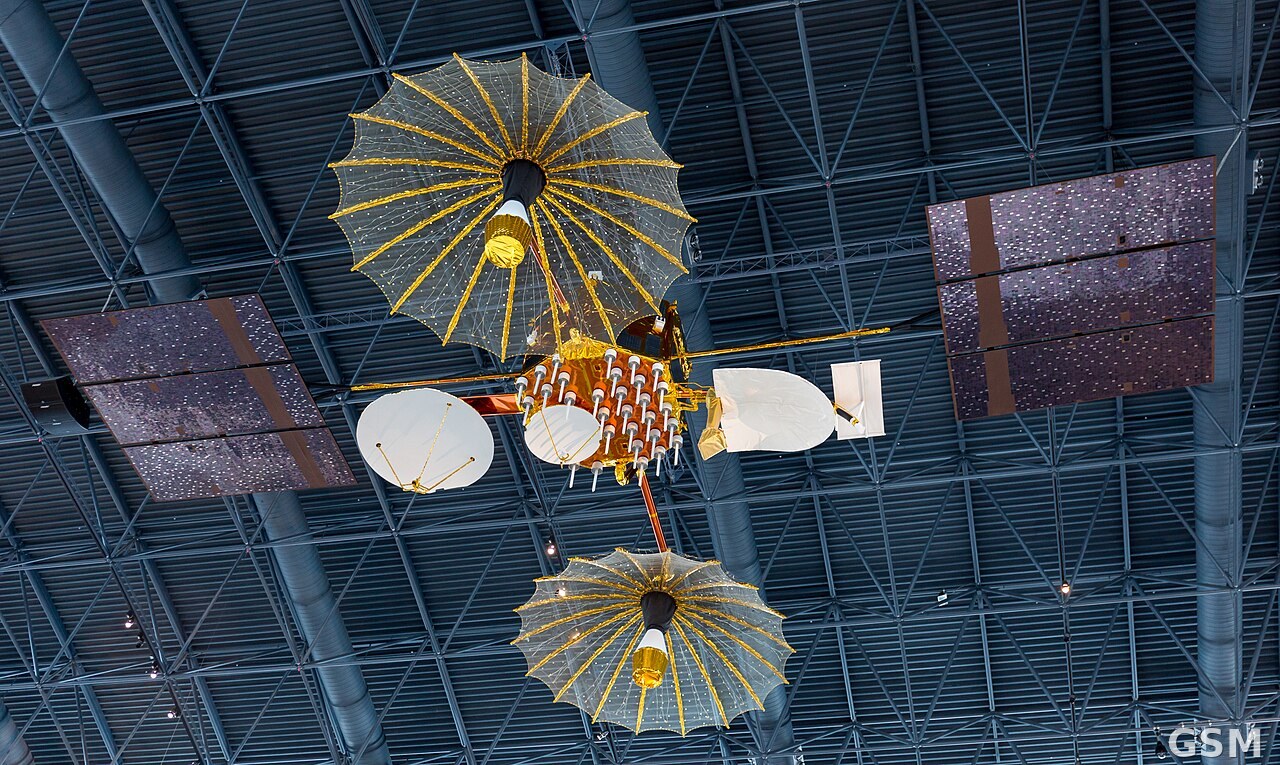
图片来源:图:跟踪与数据中继卫星(TDRS)模型,摄于国家航空航天博物馆 Udvar-Hazy 中心。Wikimedia Commons,CC0。 / Photo: A Tracking and Data Relay Satellite (TDRS) model at the National Air and Space Museum's Udvar-Hazy Center. Wikimedia Commons, CC0.
GSM Global · 本篇英文版 English edition of this story