国家残疾委员会:医学院校应把残障临床课程设为必修,弥合残障人士就医差距
美国国家残疾委员会(National Council on Disability,NCD)11月3日在华盛顿发布政策简报,呼吁把残障临床护理课程列为全美医学院、护理学院及其他医疗专业院校的必修课,以弥合残障人士长期面临的就医差距。
这份题为《公共卫生之失:医疗专业人员缺乏残障临床护理与能力培训》(A Public Health Failure)的简报指出,由于医护人员在校期间几乎没有接受过如何诊治残障患者的系统培训,残障患者在就医中普遍遭遇诊断过度检查与检查不足并存的问题,部分人甚至被直接拒之门外。
在为撰写简报征集信息的过程中,NCD 收到大量残障人士及其家属的亲历讲述。一位本身是护士的母亲说,她为患有严重智力障碍的儿子找急诊或急救医生时屡屡碰壁;另一位发育障碍患者在一周内被同一位医生三次拒诊,最终不得不接受紧急胆囊手术。NCD 表示,这些事例说明,残障诊治能力不足不仅会带来对患者的偏见行为,更会造成严重的健康后果。
简报源于 NCD 2022 年制定的《终结残障人士健康差距框架》,该框架提出五项核心建议,其中之一就是要求所有医疗专业院校开设全面的残障临床护理课程。新简报进一步向卫生与公众服务部(HHS)、各州立法者以及医学认证协会提出了具体建议。
NCD 代理主席 Neil Romano 说:“残障人士不应该在走进诊室时还要担心,眼前的医生是否准备好为他们看病。长期以来,我们的医疗体系允许医疗专业人员在完全没有学过如何诊治数以百万计残障美国人的情况下完成培训。这是公共卫生之失,也是我们有能力纠正的错误。残障临床护理与能力培训必须成为医学教育的标准组成部分,而不是事后补课。”
NCD 委员 Theo Braddy 说:“残障人士并不罕见。我们是遍布全国每个社区的患者,理应得到准备好为我们看病的医护人员。是时候停止把残障临床培训当成可有可无的选修了。我们的健康不是可选的,这项培训也不应该是。”委员 Sascha Bittner 则讲述了自己多年就医时遇到的沟通障碍:医生不信任她对自身需求的表达,在她治疗重病、最需要有效沟通时,医护人员甚至不懂得如何与她或她指定的代言人沟通,结果对她的健康造成了更大的伤害。
NCD 是独立的联邦机构,就残障政策向总统、国会、联邦机构以及州、地方、领地和部落政府提供建议。这份政策简报已在 NCD 官网公布。
(来源:国家残疾委员会)
National Council on Disability: Disability Clinical Care Should Be a Required Course in Medical Schools
WASHINGTON — The National Council on Disability (NCD) on Nov. 3 released a policy brief urging that disability clinical care be made a required part of training at all U.S. medical, nursing and other health care professional schools, in a bid to close long-standing health care gaps for people with disabilities.
The brief, titled “A Public Health Failure: The Lack of Disability Clinical Care and Competency Training of Medical Professionals,” says that because clinicians receive little systematic training in treating patients with disabilities, those patients routinely face both diagnostic over-testing and under-testing, and some are turned away altogether.
In response to NCD’s request for information while developing the brief, numerous people with disabilities and their families shared troubling experiences. One mother, herself a nurse, described difficulty finding urgent care or emergency department physicians who would treat her son, who has significant intellectual disabilities. Another account described a person with developmental disabilities who required emergency gallbladder surgery after being turned away by the same physician three times in one week. NCD said the accounts show how inadequate disability competency can lead not only to ableist behavior toward patients, but also to serious consequences for their health.
The brief builds on NCD’s 2022 Framework to End Health Disparities of People with Disabilities, whose five core recommendations include requiring comprehensive disability clinical care curricula in health professional schools. The new brief makes recommendations to the U.S. Department of Health and Human Services, state lawmakers and medical accreditation associations.
“People with disabilities should never have to wonder whether the doctor they see is prepared to care for them,” said NCD Acting Chairman Neil Romano. “Yet, for too long, our health care system has allowed medical professionals to complete their training without learning how to treat millions of Americans with disabilities. That is a public health failure, and it is one that we have the power to correct. Disability clinical care and competency training must be a standard part of medical education, not an afterthought.”
“People with disabilities are not rare. We are patients in every community across the country, and we deserve health care providers who are prepared to treat us,” said NCD Councilmember Theo Braddy. “It is time to stop treating disability clinical care training as optional. Our health is not optional, and the training should not be either.” Councilmember Sascha Bittner described years of navigating providers who did not trust what she communicated about her needs; when she needed treatment for a serious illness, she said, her doctors were not equipped to communicate with her or with those she designated to speak for her, resulting in even greater harm to her health.
NCD is an independent federal agency that provides recommendations on disability policy to the President, Congress, federal agencies and state, local, territorial and tribal governments. The brief is available for download at NCD.gov.
(Source: National Council on Disability)
来源:国家残疾委员会
发布:GSM·美国(发布链接)
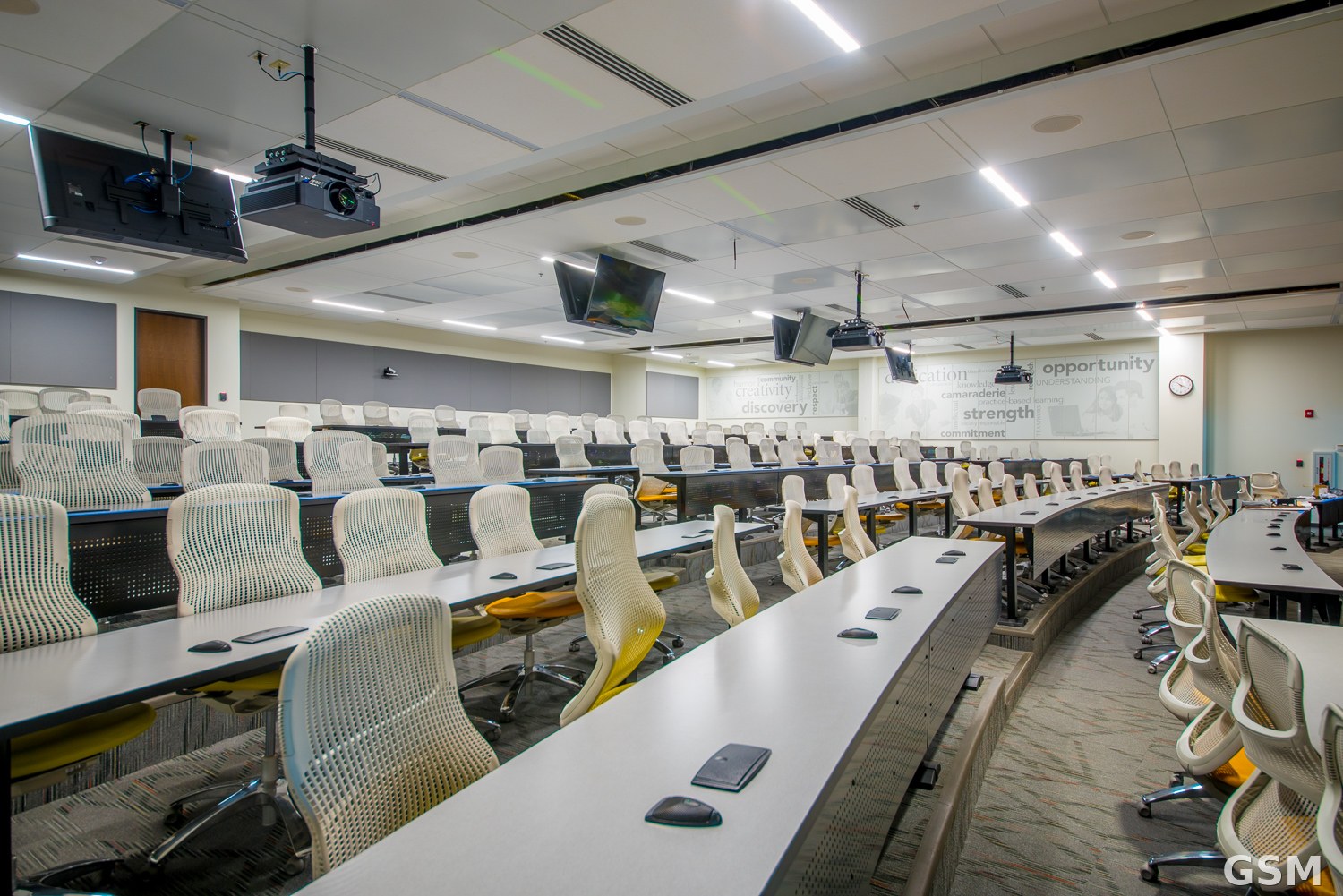
图片来源:图:Wake Forest 医学院供医学生一年级、二年级课程使用的阶梯教室(资料图)。Allengot 摄,CC BY-SA 4.0,经 Wikimedia Commons。 / Photo: A tiered lecture hall used for first- and second-year MD courses at Wake Forest School of Medicine (file photo). Photo by Allengot, CC BY-SA 4.0, via Wikimedia Commons.
GSM Global · 本篇英文版 English edition of this story