投票站开进大学校园:近5000万年轻选民迎中期选举,亚太裔青年登记增幅达19%
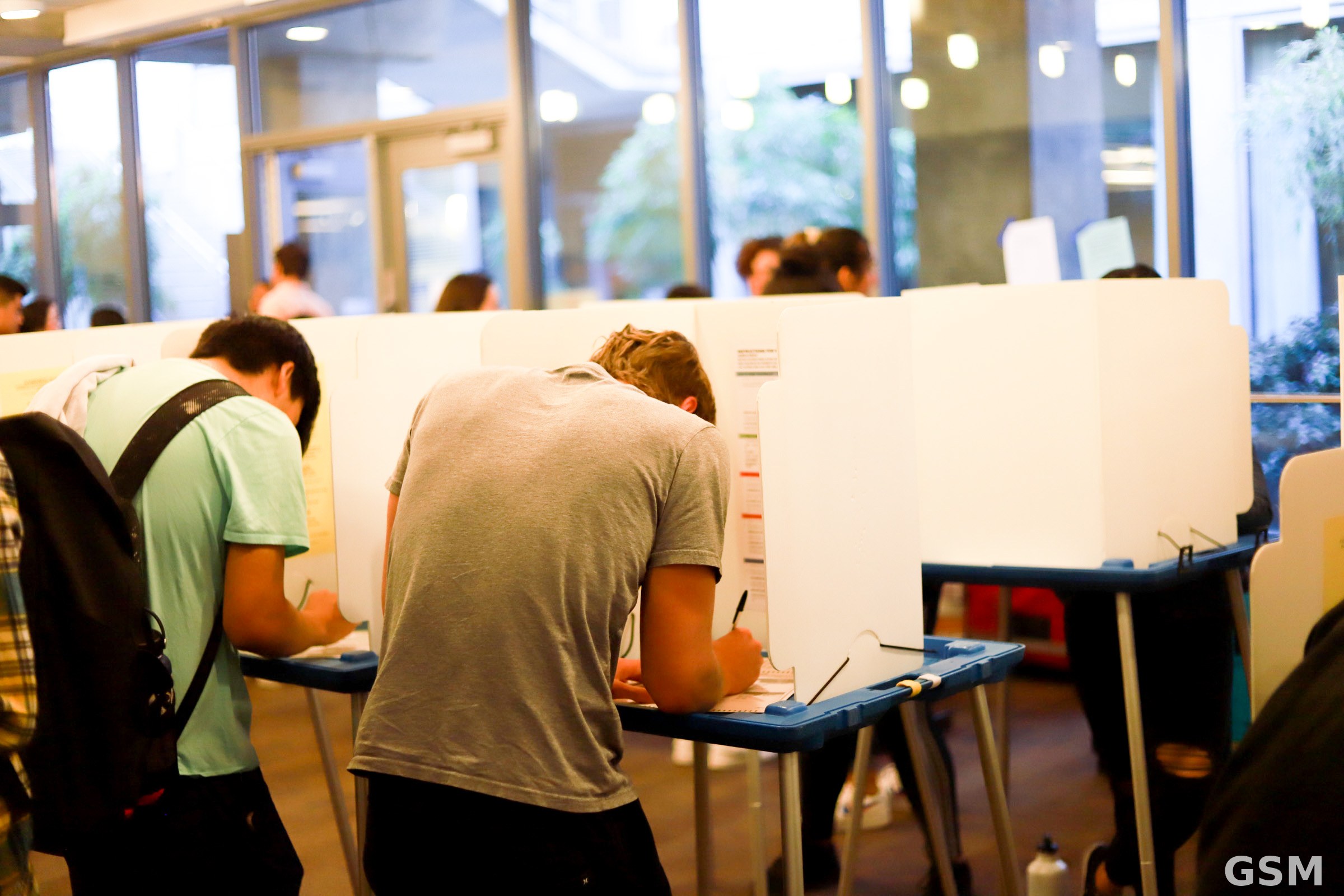
华盛顿,11月3日——11月3日是2026年美国中期选举投票日。从弗吉尼亚州到佛罗里达州,许多大学把学生活动中心和校舍变成了投票站,背着书包的学生在课间走进来,填一张选票,再赶去上下一节课。据塔夫茨大学公民学习与参与信息研究中心(CIRCLE)的统计,全美18至29岁有资格投票的年轻人接近5000万,其中约850万是2024年总统大选之后才年满18岁、第一次拥有投票资格的新选民。截至11月1日,全美已有超过5750万人提前投了票(佛罗里达大学选举实验室统计)。
在弗吉尼亚州 Lynchburg 的 Liberty 大学,设在校园内的市政投票站当天早上6点开门、晚上7点关门,地点就在 Montview 学生活动中心的校友宴会厅。这个校园投票站自2012年起每个选举日都开门。弗吉尼亚州允许选举日当天登记:住在校内的学生可以凭临时选票完成同日登记并投票,学校注册办公室的工作人员和地方选务委员会的人员在现场协助办理。该校新闻稿写道,住校学生可以在这里“发出自己的声音”。
提前投票阶段,校园投票站的人气已经创下纪录。据 Leon 县选举监督官办公室的数据,佛罗里达州立大学(Florida State University)学生活动中心投票站在提前投票期间共收到5535张选票,佛罗里达农工大学(Florida A&M University)收到2541张;2022年中期选举时,这两个数字分别只有1985张和507张。负责佛罗里达州立大学投票站的工作人员 Joseph Rodriguez 说,不少学生误以为没有在本地登记就不能在这里投票,其实当场就能办好登记手续。他说,这个校园投票站是全县第三忙的提前投票站,很可能是全州最忙的大学校园投票站。
不过,校园里有没有投票站,差别可以很大。北卡罗来纳州选举委员会的数据显示,截至10月28日,该州已有超过18.7万名18至29岁选民提前投票,占提前投票总人数的9%,高于2022年的7%。但同在该州,北卡罗来纳农工州立大学(North Carolina A&T State University)和北卡罗来纳大学 Greensboro 分校(University of North Carolina at Greensboro)今年没有校内提前投票站——提前投票站的选址由县级选务委员会决定。2024年大选时这两所学校都有校内站点,今年的中期选举则没有。
年轻人愿不愿意走进投票站,各家选前调查的读数并不一致。CIRCLE 10月27日发布的登记数据分析显示,基于截至10月19日的选民档案(覆盖42个州),全美青年选民登记人数比2022年中期选举同期高出3%,其中18至19岁新成年选民的登记增幅达8%;CIRCLE 年初的调查里,89%的受访年轻人表示愿意投票。但登记和意愿都不等于实际投票:2022年中期选举,合格青年选民的实际投票率只有23%。哈佛大学肯尼迪学院政治研究所10月发布的青年民调(9月30日至10月7日访问2024名18至29岁美国人)显示,只有33%的年轻人表示“一定会投票”,低于2018年和2022年选前的40%。这一代人最终的投票率,要等选后由 CIRCLE 与人口普查局估算。
他们最在意的是钱。CIRCLE 与 When We All Vote 今年1月26日至2月12日对5549名18至29岁美国人的调查(4月23日发布)显示,65%的年轻人把生活成本与通货膨胀列为首要议题,其次是医疗与住房成本;约六成年轻人表示,自己经常或有时难以应付基本开支。哈佛青年民调同样指出,这一代选民是在经济压力下走向投票站的。对在校学生来说,这些议题有具体的形状:下学期的学费、毕业后第一份工作的起薪、合租公寓的租金、助学贷款的余额。
对华人读者而言,这个投票日还有另一层含义。AAPI Data 与 APIAVote 8月发布的《2026年亚太裔选民调查》估计,全美有资格投票的亚太裔选民达1600万,是全美增长最快的选民群体,其中160万是2022年之后新获得资格的选民。在青年群体中,CIRCLE 的登记分析显示,亚太裔青年的选民登记增幅达19%,是各族群青年中最高的,拉丁裔青年为8%,白人青年为2%,黑人青年则下降8%。亚太裔的整体投票率也在爬升:亚裔选民的中期选举投票率从2014年的27%升到2018年和2022年的40%。同一项调查还显示,18至34岁的亚太裔选民把就业列为“极为重要”的比例达52%、教育达51%,都明显高于65岁以上选民的34%和36%——年轻一代的选票,写着工作和学业。
移民家庭的投票,往往是三代人的接力。祖辈和父母一辈中的许多人出生在美国之外,他们要先完成入籍,才能登记投票;在美国出生的子女则不同,年满18岁就拥有投票资格。今年新成年的850万年轻人中,不少人是移民的子女——父母可能还在为英文选票犯难,孩子已经在校园投票站投下人生第一票。AAPI Data 与 APIAVote 的调查显示,家人和朋友是亚太裔选民最信任的信息来源(62%),75%的亚太裔成年人在过去一年里与家人朋友讨论过政治。在许多移民家庭,投票从来不是一个人的事。
制度为这种接力留了位置。依据联邦《投票权法》第203条和人口普查局的认定,华人选民集中的县必须提供中文选票、中文选民材料和口译协助:加州的 Los Angeles 县、Orange 县、San Diego 县、San Francisco、Santa Clara 县、Sacramento 县等多县,Chicago 所在的 Cook 县,New York 市的 Queens 区、Brooklyn 区和 Manhattan,以及 Seattle 所在的 King 县,都在覆盖名单上。选举日当天,全国性的多语种选民热线 1-888-API-VOTE 提供包括普通话、广东话在内的语言协助。社区组织的触达同样关键:上述亚太裔选民调查显示,约58%的亚太裔成年人与社区组织有过接触,这一比例与民主党的触达率相当。
但校园里还有一群年轻人,今天只能看,不能投。美国联邦法律规定,只有美国公民可以在联邦选举中投票,非公民在联邦选举中投票是联邦罪行。持学生签证的留学生不是公民,持有绿卡的永久居民同样不是公民——他们可以在课堂上讨论选举、陪室友走到投票站门口,但那张选票不属于他们。分清这条线,既是对法律的尊重,也是对留学生本人的保护。
今晚,各州的投票站将陆续关闭。司法部今年向全美50个州派出了约1000名选举监察员,为史上最大规模、首次覆盖全部50个州,监督投票的进行。对第一次走进投票站的年轻人来说,今晚过后,他们的名字会第一次出现在“投过票的人”的记录里;而这一代人的最终投票率,要等选后才会见分晓。
关联:司法部选举日派约1000名监察员进驻全美50州:史上最大规模、首次全覆盖
Polling Places Move onto Campus: Nearly 50 Million Young Voters Face the Midterms as AAPI Youth Registration Jumps 19%
WASHINGTON, November 3 — November 3 is Election Day in the 2026 U.S. midterm elections. From Virginia to Florida, universities have turned student unions and campus buildings into polling places, where students carrying backpacks walk in between classes, mark a ballot, and hurry off to their next lecture. According to CIRCLE, the Center for Information & Research on Civic Learning and Engagement at Tufts University, nearly 50 million Americans ages 18 to 29 are eligible to vote this year, and about 8.5 million of them have become eligible for the first time since the 2024 presidential election. By November 1, more than 57.5 million Americans had already cast early ballots, according to the University of Florida Election Lab.
At Liberty University in Lynchburg, Virginia, the city voting precinct located on campus opened at 6 a.m. and closes at 7 p.m., in the Alumni Ballroom of the Montview Student Union. A precinct has operated on the campus on every Election Day since 2012. Virginia allows same-day registration on Election Day: students who live on campus can register and vote using a provisional ballot, with staff from the university's Registrar's Office and the local electoral board on hand to help. As the university's news release put it, students living on campus can "make their voices heard" there.
During early voting, campus voting sites were already setting records. According to the Leon County Supervisor of Elections, the early voting site at the Florida State University student union received 5,535 ballots during the early voting period, and Florida A&M University received 2,541. In the 2022 midterms, those numbers were just 1,985 and 507. Joseph Rodriguez, a clerk at the Florida State early voting site, said many students wrongly believed that if they were not registered locally they could not vote there, when in fact registration could be completed on the spot. He said the campus site was the third-busiest early voting location in the county, and probably the busiest college campus early voting site in Florida.
But whether a campus has a voting site at all can make a large difference. Data from the North Carolina State Board of Elections show that as of October 28, more than 187,000 North Carolinians ages 18 to 29 had voted early, making up 9% of all early voters, up from 7% in 2022. Yet North Carolina A&T State University and the University of North Carolina at Greensboro have no on-campus early voting sites this year — early voting plans are drawn up by county boards of elections. Both universities had on-campus sites during the 2024 presidential election, but not for this midterm.
Whether young people will actually walk into a polling place is a question on which pre-election surveys disagree. CIRCLE's registration analysis, released October 27 and based on voter files as of October 19 covering 42 states, found 3% more young voters registered than at the same point before the 2022 midterms, with registrations among newly eligible 18- and 19-year-olds up 8%. In CIRCLE's survey earlier this year, 89% of young respondents said they were willing to vote. But registration and willingness are not turnout: in the 2022 midterms, only 23% of eligible young people actually voted. The Harvard Youth Poll released in October by the Institute of Politics at Harvard Kennedy School (2,024 Americans ages 18 to 29, interviewed September 30 to October 7) found that only 33% of young people said they would definitely vote, down from 40% before both the 2018 and 2022 midterms. The generation's final turnout rate will only be estimated after the election, by CIRCLE and the Census Bureau.
What they care about most is money. In the survey CIRCLE conducted with When We All Vote among 5,549 Americans ages 18 to 29 between January 26 and February 12 (released April 23), 65% named the cost of living and inflation as their top issue, followed by health care and housing costs; about 60% said they sometimes or often have trouble meeting basic financial needs. The Harvard Youth Poll likewise describes a generation heading to the polls under financial pressure. For students, these issues have concrete shapes: next semester's tuition, the starting salary of a first job after graduation, the rent on a shared apartment, and the balance on a student loan.
For Chinese American readers, this Election Day carries an additional layer. The 2026 AAPI Voter Survey, released in August by AAPI Data and APIAVote, estimates 16 million eligible Asian American and Pacific Islander voters nationwide — the nation's fastest-growing voter bloc — including 1.6 million who became eligible after 2022. Among young people, CIRCLE's registration analysis shows AAPI youth registrations up 19%, the largest increase of any racial or ethnic group of youth, compared with 8% for Latino youth, 2% for white youth, and an 8% decrease for Black youth. AAPI turnout has been climbing as well: Asian American midterm turnout rose from 27% in 2014 to 40% in both 2018 and 2022. The same survey found that 52% of AAPI voters ages 18 to 34 called jobs extremely important and 51% said the same of education, far above the 34% and 36% among voters 65 and older — the young generation's ballot is written in the language of work and schooling.
In immigrant families, voting is often a three-generation relay. Many in the grandparents' and parents' generations were born outside the United States; they first had to take the oath of naturalization before they could register to vote. Their U.S.-born children are different: they hold the right to vote from birth, and exercise it at 18. Among the 8.5 million young people who became eligible this cycle, many are the children of immigrants — a parent may still struggle with an English-language ballot while their child casts a first-ever vote at a campus polling place. The AAPI survey found that family and friends are the most trusted messengers for AAPI voters (62%), and 75% of AAPI adults discussed politics with family or friends in the past year. In many immigrant families, voting has never been a one-person affair.
The system leaves room for that relay. Under Section 203 of the federal Voting Rights Act and the Census Bureau's coverage determinations, counties with large Chinese-speaking citizen populations must provide Chinese-language ballots, voter materials, and interpretation assistance. The covered jurisdictions include Los Angeles, Orange, San Diego, San Francisco, Santa Clara, and Sacramento counties in California; Cook County, home to Chicago; Queens, Brooklyn, and Manhattan in New York City; and King County, home to Seattle. On Election Day, the national multilingual voter hotline, 1-888-API-VOTE, offers help in languages including Mandarin and Cantonese. Community organizations matter as well: the AAPI survey found that about 58% of AAPI adults had been contacted by a community organization, a reach comparable to that of the Democratic Party.
Yet there is another group of young people on campus who can only watch today, not vote. Federal law provides that only U.S. citizens may vote in federal elections, and voting by a noncitizen in a federal election is a federal crime. International students on student visas are not citizens; neither are green-card holders, who are lawful permanent residents. They can discuss the election in class and walk a roommate to the polling place door, but the ballot itself is not theirs. Understanding that line is both respect for the law and protection for the students themselves.
Tonight, polling places across the states will close one after another. The Justice Department has sent about 1,000 election monitors to all 50 states this year, its largest deployment ever and the first to cover every state, to observe the voting. For the young people who walked into a polling place for the first time today, their names will appear tonight, for the first time, in the record of those who voted. What share of their generation joined them will not be known until after the count.
Related: DOJ Deploys About 1,000 Election Monitors Across All 50 States for the First Time
发布:GSM·美国(发布链接)
图片来源:图:加州大学伯克利分校的学生在校园投票站填写选票(资料图)。Josh Kahen 摄,The Daily Californian,以 0BSD(公有领域等效)授权发布,经 Wikimedia Commons。 / Photo: Students fill out ballots at a polling place on the UC Berkeley campus (file photo). Photo by Josh Kahen, The Daily Californian, released under the 0BSD public-domain-equivalent license, via Wikimedia Commons.
GSM Global · 本篇英文版 English edition of this story