环保署拟立新规管19种化学物质新用途:石墨烯等启用前须提前90天通报
美国环境保护署(Environmental Protection Agency,EPA)提出一项重要新用途规则(Significant New Use Rules,SNURs)提案,11月2日刊登于《联邦公报》(91 FR 68894,文件号2026-22295):提案针对19种曾提交制造前通报(PMN)、且已受环保署依《有毒物质控制法》(Toxic Substances Control Act,TSCA)发布命令约束的化学物质,拟在联邦法规40 CFR第721部分E分部新增第721.12320至721.12338条。规则定案后,任何人拟制造(依法含进口)或加工这些物质、从事被列为「重要新用途」的活动,须至少提前90天通报环保署。
按提案说明,通报将启动环保署对该用途的评估:在制造或加工开始之前,环保署将按该物质的使用条件审查;若认定该活动不太可能带来不合理风险,环保署将通知提交人该活动符合原命令的条款表述;若认定可能带来不合理风险,环保署将采取相应行动。现行命令对相关企业设有防护性限制,提案把同一套限制扩展到其他制造商与加工商:不符合原命令条款的用途将被列为重要新用途。
19种物质中可公开辨识的包括石墨烯片(第721.12333条)、氧化石墨烯(两条,分别对应不同的制造前通报)、一种用作密封剂与黏合剂催化剂的锡化合物(二辛基锡双月桂酸酯类,第721.12321条),以及两种光酸生成剂(芳香族锍盐与芳香族羧酸盐聚合物,第721.12337与721.12338条,其申报用途为光刻胶制备中的光酸生成)。其余条目包括功能化脂肪酸、高油酸葵花籽油马来酸化物、硅氧烷类等,另有多种物质因企业主张商业机密、仅以通用名称列示。
环保署估算,每提交一份重要新用途通报(SNUN),大企业的成本约为45,496美元、小企业约为19,496美元;按预计有1至5家企业提交通报计,提案的总合规成本估计在10,583至29,318美元之间。出口通报的费用估计为首份440美元、其后每份110美元。
该提案由环保署污染预防与有毒物质办公室主任 Mary Elissa Reaves 于10月28日签署,案卷号 EPA-HQ-OPPT-2026-5974,法规识别号 RIN 2070-AB27。公众评论须于2026年12月2日或之前送达环保署;提案定案前,相关物质的现行命令限制继续有效。
(来源:美国环境保护署)
EPA Proposes New-Use Rules for 19 Chemical Substances: 90-Day Notice Required Before Graphene and Other Listed Uses Begin
The U.S. Environmental Protection Agency (EPA) has proposed significant new use rules (SNURs), published in the Federal Register on November 2 (91 FR 68894, Document No. 2026-22295), for 19 chemical substances that were the subject of premanufacture notices (PMNs) and are also subject to orders EPA issued under the Toxic Substances Control Act (TSCA). The proposal would add sections 721.12320 through 721.12338 to subpart E of 40 CFR part 721. Once finalized, anyone intending to manufacture (defined by statute to include import) or process any of these substances for an activity designated as a significant new use would have to notify EPA at least 90 days before commencing that activity.
According to the proposal, the notification initiates EPA's evaluation of the use before manufacture or processing begins. If EPA finds the activity is not likely to present an unreasonable risk, it will notify the submitter that the activity satisfies the statement of terms of the underlying order; if it finds the activity may present an unreasonable risk, EPA will take action. The existing orders impose protective restrictions on the companies that filed the original notices, and the proposal extends the same framework to other manufacturers and processors: uses that do not conform to the terms of the orders would be designated as significant new uses.
Among the publicly identifiable substances are graphene platelets (section 721.12333), graphene oxide (two entries, under separate premanufacture notices), a tin compound used as a catalyst in sealants and adhesives (section 721.12321), and two photoacid generators (an aromatic sulfonium salt and an aromatic carboxylic acid salt polymer, sections 721.12337 and 721.12338, whose stated use is as photoacid generators in photoresist coating preparations). The remaining entries include functionalized fatty acids, maleated high-oleic sunflower oil and siloxanes, with several other substances listed only under generic names because their identities are claimed as confidential business information.
EPA estimates that each significant new use notice (SNUN) would cost about $45,496 for a large business submitter and $19,496 for a small business submitter, and estimates total compliance costs of $10,583 to $29,318, assuming one to five firms submit notices. An export notification is estimated at $440 for the first notice and $110 for each additional one.
The proposal was signed on October 28 by Mary Elissa Reaves, Director of EPA's Office of Pollution Prevention and Toxics, under docket EPA-HQ-OPPT-2026-5974 and RIN 2070-AB27. Comments must be received on or before December 2, 2026. Until the rules are finalized, the restrictions in the existing orders remain in effect.
(Source: U.S. Environmental Protection Agency)
来源:美国环境保护署
发布:GSM·美国(发布链接)
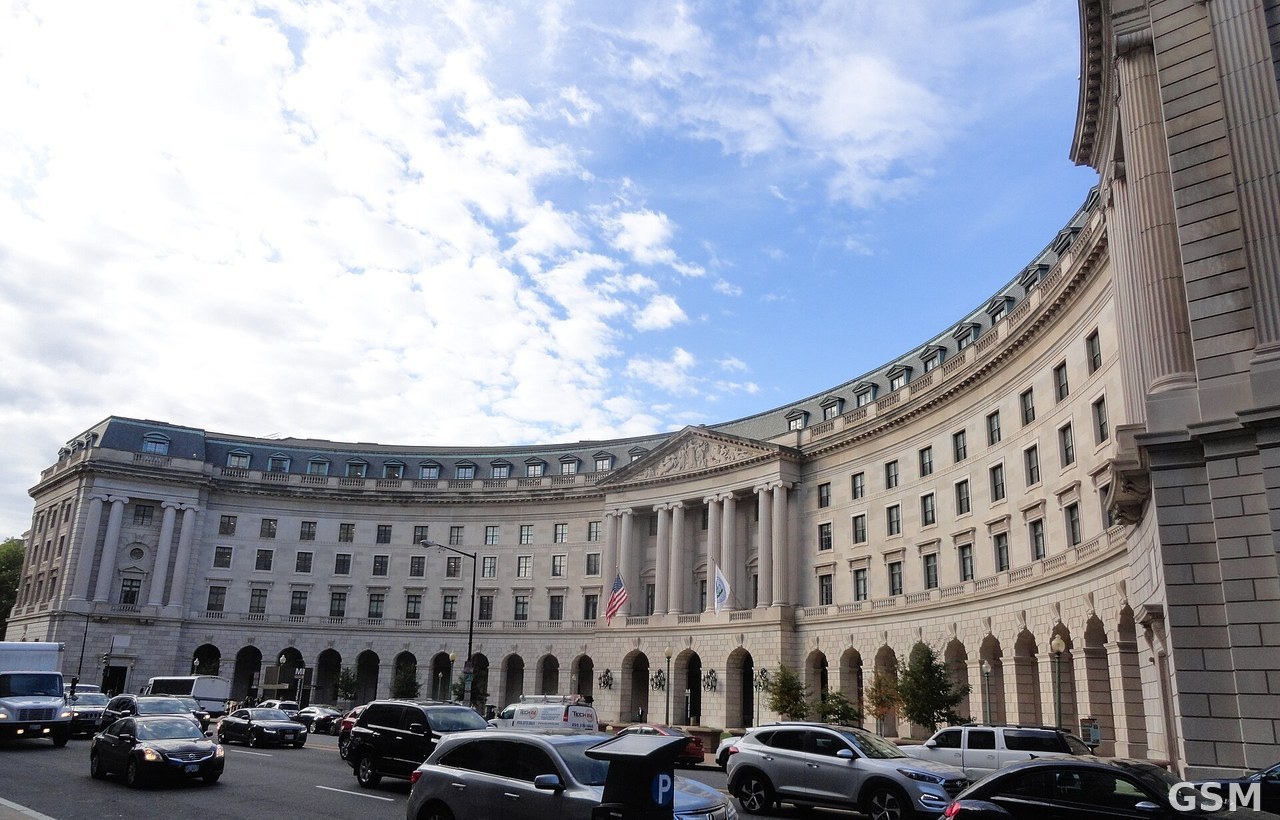
图片来源:图:美国环境保护署总部 WJ Clinton Building 正门(固定图库)。公共领域,经 Wikimedia Commons。 / Photo: Main entrance of EPA headquarters, the WJ Clinton Building (file photo). Public domain, via Wikimedia Commons.
GSM Global · 本篇英文版 English edition of this story