孟加拉国设立工资委员会应对服装工人抗议:529家工厂停工、近99万工人停工
孟加拉国政府11月1日宣布设立一个最低工资委员会,重新检视服装工人的薪酬。此前,服装工人连日抗议要求大幅加薪,抗议已迫使全国529家服装厂停工、987,190名工人停工,首都Dhaka及周边工业区周日再现封路示威,警方以催泪瓦斯和水炮驱散人群。路透社11月1日发自Dhaka的报道公布了上述停工数字与政府决定。
工人要求把月最低工资从现行的12,500塔卡提高到30,000塔卡(约合245美元),涨幅超过一倍。工人们表示,食品、住房、交通和医疗价格上涨已严重侵蚀购买力。服装工人Mahin Hossain说:「生活成本涨得远远超过我们的收入。付完房租,剩下的钱几乎不够买食物、供孩子上学和应付其他必要开支。许多人几乎无法养家。」(据路透社报道)
周日的抗议中,数千名服装工人在Dhaka和首都外的Gazipur封堵道路,扰乱主要工业区的交通。警方称,示威者向警察投掷砖块,一辆警车和一处警亭在两起两起不同的事件中被纵火,警方遂使用催泪瓦斯和水炮驱散人群,当局还部署了孟加拉国边境卫队人员维持秩序。此前一天,Dhaka郊外的大型服装制造中心Ashulia已有数十家工厂在工人抗议后停工。
停工数字来自孟加拉国服装制造商和出口商协会:本轮动荡共迫使529家服装厂关闭、987,190名工人停工,波及该国主要工业枢纽。孟加拉国成衣业雇用了约400万人,贡献该国80%以上的出口收入和约10%的国内生产总值,是仅次于中国的全球第二大成衣出口业,为众多西方领先品牌供货。
劳工与就业部长Ariful Haque Choudhury表示,工资委员会是在与工人代表和行业领袖讨论后组建的,他敦促工人复工。这个六人委员会由劳方代表2人、资方代表2人、政府代表1人和中立成员1人组成,任务是检视服装业工资并提出修订后的薪酬建议。Choudhury同时警告,停工若持续,出口发货和国际买家付款都可能延误,给制造商和工人带来进一步困难。
制造商一方则表示,行业正面临生产成本上升、天然气和电力周期性短缺,以及与中东紧张局势相关的能源市场不确定性。制造商协会第一副会长Salim Rahman就工人30,000塔卡的诉求表示:「这不可行。这样的要求没有任何逻辑或数学依据。」他说,如此大幅度的加薪会给本已利润微薄、还要与竞争对手服装生产国激烈竞争的制造商带来额外压力。
Bangladesh Sets Up Wage Board as Garment Protests Shut 529 Factories, Idling Nearly 990,000 Workers
Bangladesh's government said on November 1 that it had set up a wage board to review garment workers' pay, after days of protests demanding a large raise forced the closure of 529 garment factories and left 987,190 workers out of work, according to Reuters reporting from Dhaka on November 1. Thousands of workers again blocked roads in Dhaka and Gazipur on Sunday, and police used tear gas and water cannon to disperse demonstrators.
The workers are demanding a minimum monthly wage of 30,000 taka (about $245), more than double the current 12,500 taka, saying rising costs of food, housing, transport and healthcare have sharply eroded their purchasing power. "The cost of living has increased far beyond our incomes," worker Mahin Hossain said. "After paying rent, there is very little left for food, our children's education and other essential expenses. Many are finding it almost impossible to support their families," according to Reuters.
On Sunday, demonstrators blocked roads in Dhaka and in Gazipur, outside the capital, disrupting transport across key industrial areas. Police used tear gas and water cannon after demonstrators threw bricks at officers, and a police vehicle and a police box were set on fire in separate incidents. Authorities deployed Border Guard Bangladesh personnel to maintain order. The unrest followed demonstrations on Saturday in Ashulia, a major garment manufacturing hub on the outskirts of Dhaka, where dozens of factories suspended operations after workers protested for higher pay.
In all, the unrest has forced 529 garment factories to shut down and left 987,190 workers out of work across the country's main industrial hubs, according to the Bangladesh Garment Manufacturers and Exporters Association. The industry employs about 4 million workers, generates more than 80% of Bangladesh's export earnings and contributes about 10% of gross domestic product; Bangladesh is the world's largest ready-made garment exporter after China and supplies many leading Western brands.
Labour and Employment Minister Ariful Haque Choudhury said the six-member wage board was formed after discussions with workers' representatives and industry leaders, and urged workers to resume work. The board comprises two representatives each from workers and employers, along with a government representative and a neutral member, and has been tasked with reviewing wages in the garment sector and recommending revised pay rates. Choudhury warned that prolonged disruptions could delay export shipments and payments from international buyers, creating further difficulties for manufacturers and workers alike.
Manufacturers say the sector faces rising production costs, periodic gas and electricity shortages, and energy-market uncertainty linked to tensions in the Middle East. "It's not feasible. There is no logical or mathematical basis for such a demand," said Salim Rahman, first vice president of the manufacturers' association, referring to the demand for a 30,000-taka minimum wage. He said such a sharp increase would strain manufacturers already operating on tight margins against intense competition from rival apparel-producing countries.
来源:GSM·美国(原文链接)
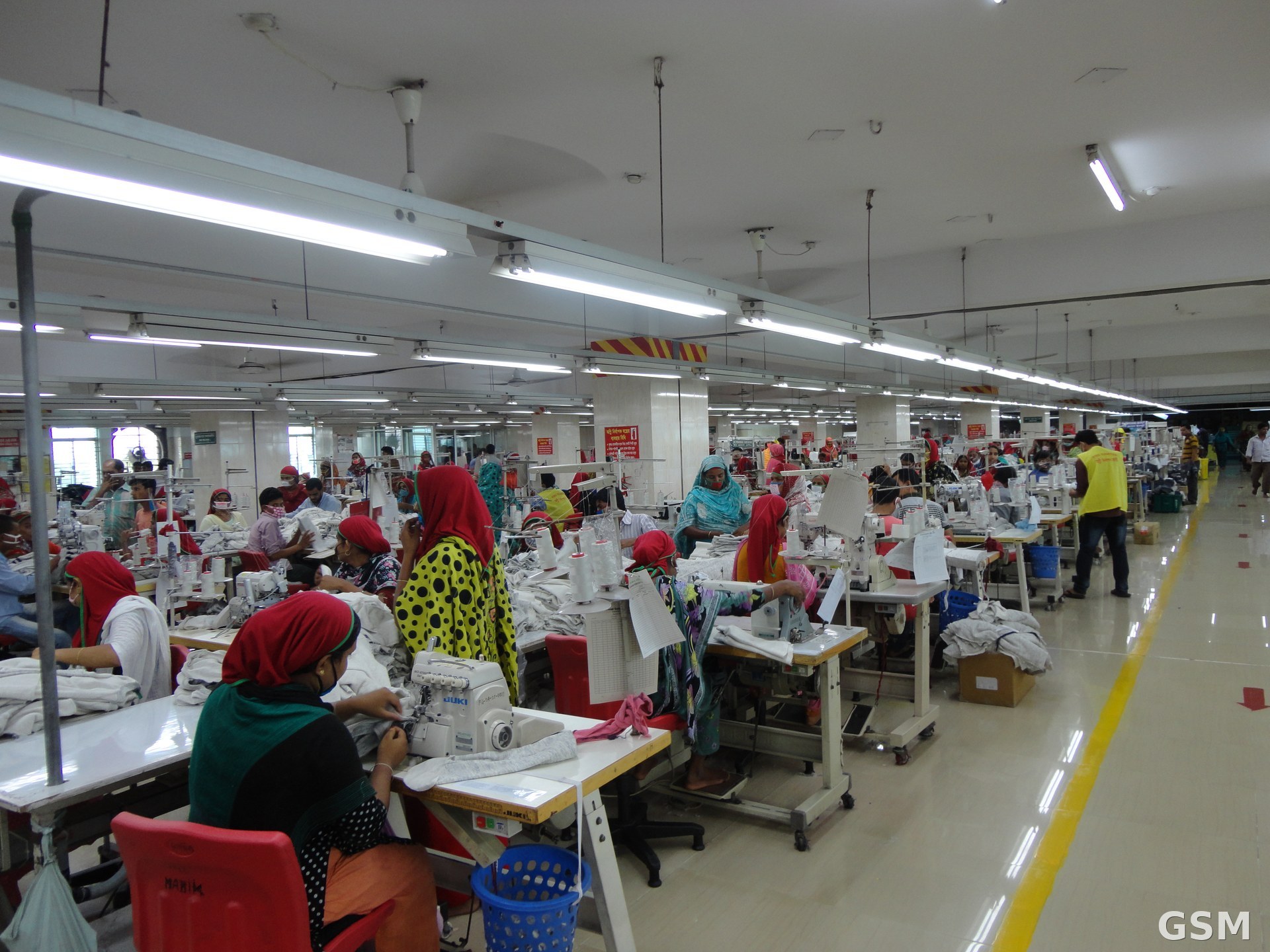
图片来源:图:孟加拉国一家服装厂的缝制车间(资料图)。Fahad Faisal 摄,CC BY-SA 4.0,经 Wikimedia Commons。 / A sewing floor at a garment factory in Bangladesh (file photo). Photo by Fahad Faisal, CC BY-SA 4.0, via Wikimedia Commons.
GSM Global · 本篇英文版 English edition of this story