美国教育部敲定高等教育认证最终规则:10月30日刊《联邦公报》,聚焦学生成果与认证机构竞争
美国教育部(Department of Education)10月29日在 Washington 宣布,已敲定一项改革、强化并现代化美国高等教育质量保障体系的最终规则。教育部称,这是联邦认证认可体系数十年来最重大的一次改革,最终规则旨在通过优先考虑学生成果、减少监管负担、促进创新与思想多样性、增加认证机构之间的竞争,来加强质量保障并提高高等教育的可负担性。
教育部说,美国的认证体系长期由少数认证机构主导,这些机构是每年超过1,000亿美元联邦学生援助与专业执照的守门人。教育部称,这一集中的体系使认证机构免于竞争、增加了行政成本、助长了不必要的学历膨胀,并促使高校专注于对改善教育质量作用有限的意识形态与程序要求。
教育部副部长 Nicholas Kent 说:「长期以来,认证机构实际上像一个卡特尔一样维护自身利益,而不是维护高等教育机构本应为学生提供的教育价值。这些改革将使认证重新聚焦于最重要的事情:学生的学业成就、教育价值与学术卓越。最终规则创造了一个更具竞争性、更透明的认证体系,同时确保各机构对为美国学生和家庭提供有意义的成果负责。」
这项最终规则名为「认证、创新与现代化」(Accreditation, Innovation, and Modernization,AIM)最终规则。在增加竞争方面,规则降低新认证机构申请联邦认可的不必要门槛,并提高高校与项目选择最符合其使命的认证机构的灵活性。
在学生成果与问责方面,最终规则把认证的重点转向评估有意义的学生成果,包括学生的学业成就、完成学业情况与毕业后的发展。在学分转换方面,规则对学分转换政策提出新要求,帮助学生更高效、更可负担地完成学业,减少迫使学生重复修课、增加成本并延长毕业时间的障碍。
在降低成本方面,规则在保持适当质量保障的同时,精简了对认证机构、高校与项目的联邦要求。在鼓励创新方面,规则支持创新教育模式,并给予高校更大灵活性开发满足劳动力与学生需求的项目。
在思想多样性方面,最终规则要求认证机构评估高校优先考虑思想多样性与思想自由交流的政策,确保学生接触到多种观点。在利益冲突方面,规则帮助消除认证机构与其关联行业协会之间的利益冲突。
教育部介绍,这项规则经协商规则制定程序形成,参与方包括认证机构、学生、退伍军人、州官员与纳税人等,并落实总统行政令第14279号《改革认证以加强高等教育》(Reforming Accreditation to Strengthen Higher Education)等行政优先事项。
背景程序方面,《1965年高等教育法》第492条要求教育部长在公布实施第四章学生援助项目的拟议规则前征求公众参与。教育部2026年1月27日宣布拟启动协商规则制定,AIM委员会在4月13日至17日、5月18日至22日举行了两轮协商,经过九天审议达成共识。教育部称,最终规则未作实质性修改,保留了AIM委员会达成一致并在拟议规则中公布的文本。
教育部说,最终规则文本将于10月29日当天在《联邦公报》供公众查阅,并将于10月30日正式刊登。
U.S. Education Department Finalizes Higher Education Accreditation Rule: Federal Register Publication October 30, Focus on Student Outcomes and Accreditor Competition
The U.S. Department of Education announced in Washington on October 29 that it has finalized a landmark rule to reform, strengthen and modernize America's higher education quality assurance system, marking the most significant overhaul of the federal recognition system in decades. The Department said the final rule is designed to strengthen quality assurance and improve affordability in higher education by prioritizing student outcomes, reducing regulatory burdens, promoting innovation and intellectual diversity, and increasing competition among accrediting agencies.
The Department said the nation's accreditation system has long been dominated by a small number of accrediting agencies that serve as gatekeepers to more than $100 billion in annual federal student aid and professional licensure. It said that concentrated system has insulated accreditors from competition, increased administrative costs, contributed to unnecessary credential inflation, and encouraged colleges and universities to focus on ideological and procedural requirements that do little to improve educational quality.
"For too long, accreditors have effectively served as a cartel to protect their interests, rather than the educational value that institutions of higher education are expected to deliver for students," said Under Secretary of Education Nicholas Kent. "These reforms will refocus accreditation on what matters most: student achievement, educational value, and academic excellence. The final rule creates a more competitive and transparent accreditation system while ensuring that institutions remain accountable for delivering meaningful outcomes for American students and families."
The final rule is the Accreditation, Innovation, and Modernization (AIM) final rule. On competition, it lowers unnecessary barriers for new accrediting agencies seeking federal recognition and increases flexibility for institutions and programs to select accreditors that best align with their missions.
On student outcomes and accountability, the final rule shifts the focus of accreditation toward assessing meaningful student outcomes, including measures of student achievement, completion, and post-completion success. On transfer of credit, it establishes new expectations intended to help students complete their education more efficiently and affordably, reducing barriers that force students to repeat coursework, increase costs and extend time to completion.
On reducing costs, the rule streamlines federal requirements for accrediting agencies, institutions and programs while maintaining safeguards for quality assurance. On innovation, it supports innovative educational models and gives institutions greater flexibility to develop programs that meet evolving workforce and student needs.
On intellectual diversity, the final rule directs accrediting agencies to evaluate policies at institutions that prioritize intellectual diversity and the free exchange of ideas, ensuring that students are exposed to a range of viewpoints. On conflicts of interest, it helps eliminate conflicts between accrediting agencies and affiliated trade associations, which the Department said will help prevent unnecessary credential inflation and undue influence over entry into certain professions.
The Department said the rule was developed through negotiated rulemaking that brought together accrediting agencies, students, veterans, state officials, taxpayers and others, and advances Executive Order 14279, Reforming Accreditation to Strengthen Higher Education, and other administration priorities.
On background, Section 492 of the Higher Education Act of 1965 requires the Secretary of Education to solicit public involvement before publishing a notice of proposed rulemaking to implement Title IV student assistance programs. The Department announced on January 27, 2026 that it intended to engage in negotiated rulemaking, and the AIM Committee conducted two sessions, from April 13-17 and May 18-22, 2026, reaching consensus after nine days of deliberation. The Department said it made no substantive changes to the final rule, retaining the text agreed upon by the committee and proposed in the NPRM.
The Department said the final rule will be on public inspection in the Federal Register on October 29 and will be published on October 30, 2026.
来源:GSM·美国(原文链接)
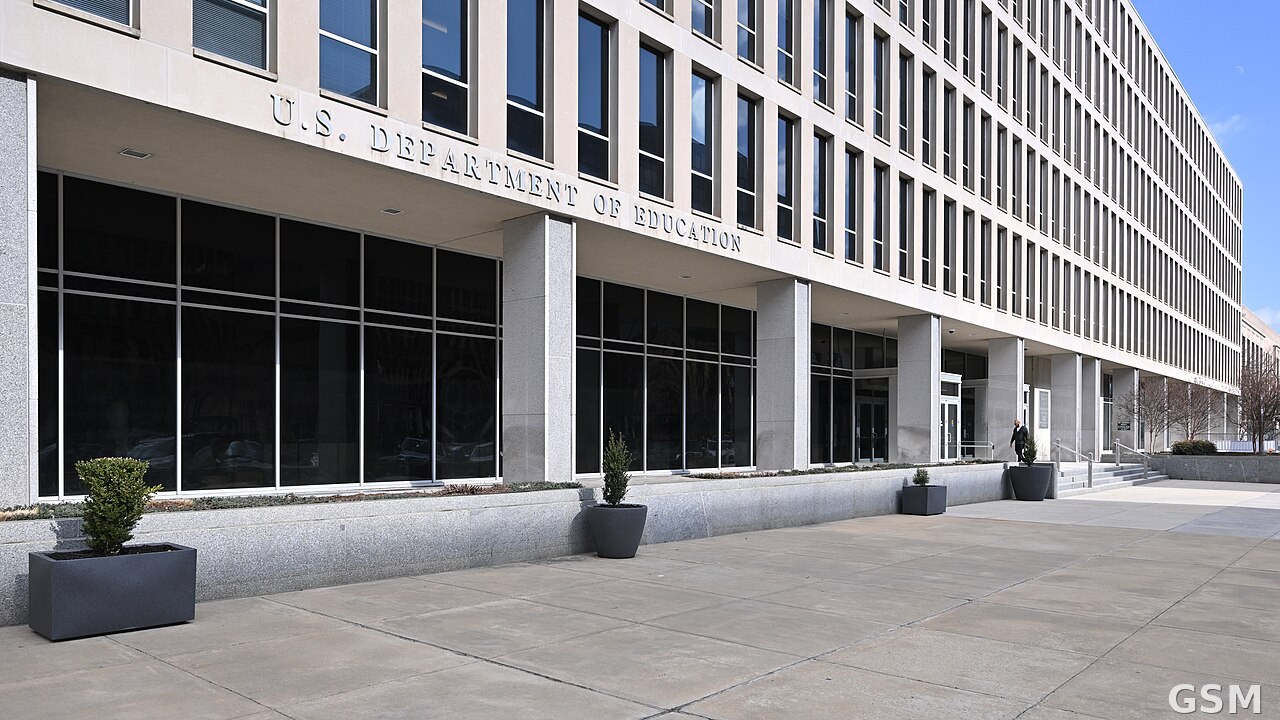
图片来源:图:位于 Washington 的美国教育部总部 Lyndon Baines Johnson 大楼入口(2025年2月4日)。G. Edward Johnson 摄,经 Wikimedia Commons,授权 CC BY 4.0。 / Entrance of the Lyndon Baines Johnson Department of Education Building, headquarters of the U.S. Department of Education in Washington (Feb. 4, 2025). Photo by G. Edward Johnson, via Wikimedia Commons, CC BY 4.0.