中美如何处理流浪汉问题:美国一年数一次人头,中国救助站计人次,口径不同,数字不能直接比
先说明口径。美国每年一夜统计无家可归者人数,包括收容所里的人和露宿街头、车里、营地的人;中国统计的是救助管理机构一年救助了多少人次,不发布街头人数。两边数的不是同一种东西,人数不能直接比。下面只对照两边的制度与做法,数字只作规模参照,不作制度裁决。
美国的办法:一年数一次,联邦出钱、地方执行。
美国住房与城市发展部每年1月做一次"时点统计"(Point-in-Time Count),数一个夜里全美有多少人无家可归。2024年1月的那次数出771,480人,比2023年的653,104人增加18.1%,是2007年开始这项统计以来的最高纪录;加利福尼亚州187,084人居各州之首,纽约州158,019人居第二;退伍军人是唯一人数下降的群体,下降8%。
2025年1月的统计数出745,652人,包括露宿者266,320人,比2024年下降3.3%,是2016年以来全国首次下降,但仍比2013年高27%。下降主要来自有子女家庭(减少11%)、无陪伴青少年(减少7.9%)、露宿者(减少2.9%)和退伍军人(减少1.2%);加州下降2.8%,纽约州下降7.9%。但单身成年人515,286人与长期无家可归者155,750人双双创下纪录;全国无家可归者联盟指出,2024年一年里平均每周约17,500人首次进入无家可归者救助系统。
联邦的钱通过"连续照护体系"(Continuum of Care)发到地方,由地方政府与服务机构执行。2000年代起,联邦项目采用"住房优先"(Housing First)做法:先提供稳定住房,再谈治疗与就业。2024年6月28日,联邦最高法院以6票对3票裁定《格兰茨帕斯诉约翰逊案》,城市可以执行露营禁令,即使没有收容床位也不受限制,推翻了此前下级法院对露宿者的保护;格兰茨帕斯市对露营的罚款从250美元起,屡犯可入狱。
2025年7月24日,总统签署《终结美国街头的犯罪与失序》行政令,要求联邦拨款优先给执行禁令的地方——禁止公开吸毒、城市露营、游荡与强占房屋,并把人转入治疗;政策方向从"住房优先"转向治疗与自立。支持者说,这兼顾公共安全与获得服务;反对者、包括全国无家可归者法律中心说,这会把无家可归定罪化,强制治疗既不道德也无效。两边的说法都已记录在案。
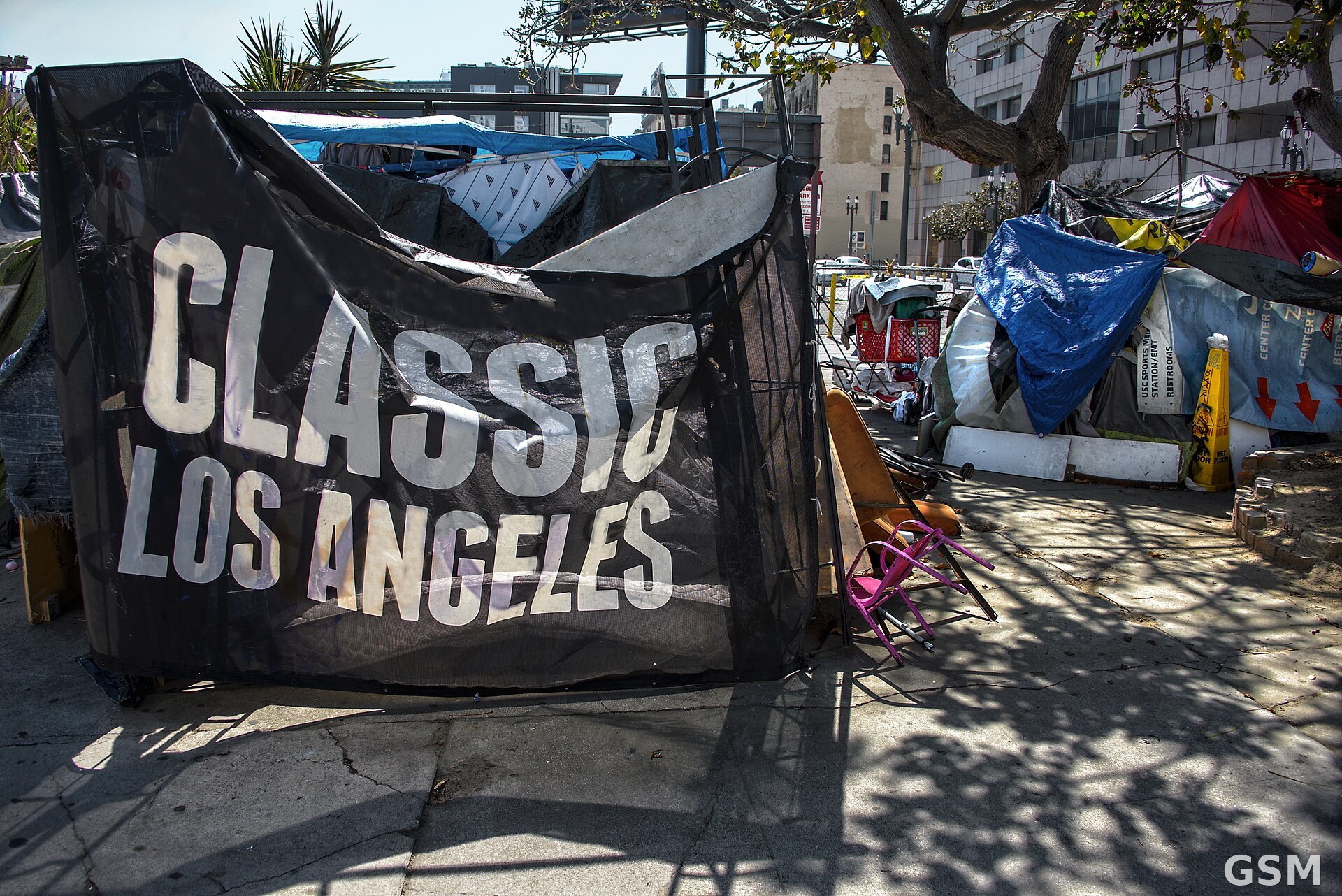
地方执行各不相同。洛杉矶市长巴斯的"市内安全"行动队截至10月初已把6,200多人带离街头;但洛杉矶县2026年统计显示,全县73,040人、市内45,194人,在连续两年下降后回升,市内露宿者增至29,115人;市县还在为谁掌管数据系统与住房匹配争执,县政委员会10月27日当天表决签署协议。
中国的办法:救助站,自愿、无偿。
中国对城市生活无着的流浪乞讨人员实行救助站制度。2003年,在孙志刚事件引发广泛社会关注后,国务院当年6月18日通过《城市生活无着的流浪乞讨人员救助管理办法》,8月1日起施行,同时废止了1982年的《城市流浪乞讨人员收容遣送办法》;民政部同年7月21日公布实施细则。制度从强制收容遣送转为自愿、无偿救助。
办法对救助对象有明确定义:因自身无力解决食宿,无亲友投靠,又不享受城市最低生活保障或者农村五保供养,正在城市流浪乞讨度日的人员。救助是临时性社会救助,由县级以上城市政府设立、民政部门主管的救助站实施。救助站不准拘禁或者变相拘禁受助人员,不准打骂、体罚、虐待,不准敲诈、勒索、侵吞财物,不准克扣生活供应品,不准扣压证件;要提供满足基本健康与安全需要的食物与住处,生病送医,并联系家属与户籍地、住所地政府,帮助返乡;对确实无家可归的残疾人、未成年人、老年人给予安置。
规模上,民政部2004年的数据显示,当年底全国共有救助站977个、床位4.5万张,先后救助城市生活无着的流浪乞讨人员82万人次。近年对象在变化:民政部2025年6月表示,传统的流浪乞讨人员逐渐减少,临时遇困人员成为主要服务对象;过去一年,民政部门和救助管理机构共救助各类暂时遇困人员70.9万人次,2024年帮助4,051名走失人员回归家庭。民政部2025年12月31日发布的数据称,当年救助流浪乞讨等生活无着人员62.5万人次。
称呼也在变。全国人大常委会法制工作委员会发言人表示,随着流浪乞讨人员数量逐年下降、明显减少,救助对象主要为走失或务工暂无着落等流散在外的"暂时遇困人员";2026年7月1日起施行的《社会救助法》把"流浪乞讨人员"的表述修改为"流散人员",称这样更为准确、中性、简洁,不涉及制度内容的调整。
更广的安全网是背景。民政部数据显示,截至2026年上半年,全国共有城乡低保对象3,935.4万人、特困人员493.7万人;"十四五"时期全国基本生活救助累计支出超过1.38万亿元,城乡低保平均标准分别增长22.8%和25%。这些是面向全体困难群众的基本生活保障,不是流浪乞讨专项统计。
两边的数字口径不同:美国数的是一个夜里的人数,中国数的是全年救助的人次;美国的统计包括收容所与街头,中国的救助对象限定为无力解决食宿、无亲友投靠、又不享受低保或五保、正在城市流浪乞讨度日的人员。制度设计也不一样:美国是联邦出资、地方连续照护体系执行、法院划定露营执法边界;中国是民政部门主管的救助站提供临时救助、帮助返乡与安置,并由更广的社会救助体系托底。
关联:洛杉矶无家可归者现状:2026年统计结束两年下降,市内露宿者增至约2.9万人,市县治理权今天表决
How China and the U.S. Handle Homelessness: America Counts People on One Night, China Counts Relief Visits: Different Yardsticks, No Direct Comparison
A note on measurement first. The United States counts homeless people on a single night each year, including people in shelters and people sleeping on streets, in cars and in encampments. China counts the number of relief visits at its aid stations over a year and does not publish a street headcount. The two sides do not count the same thing, so the headcounts cannot be compared directly. What follows compares the two systems and their practices; figures are scale references only, not a verdict on either system.
The American approach: one count a year, federal money, local delivery.
The U.S. Department of Housing and Urban Development conducts a Point-in-Time Count each January, tallying how many people are homeless on a single night. The January 2024 count found 771,480 people, up 18.1% from 653,104 in 2023 and the highest since the count began in 2007; California led all states with 187,084, followed by New York with 158,019; veterans were the only group whose numbers fell, down 8%.
The January 2025 count found 745,652 people, including 266,320 unsheltered, down 3.3% from 2024 — the first national decline since 2016, but still 27% above 2013. The decline was driven by families with children (down 11%), unaccompanied youth (down 7.9%), unsheltered people (down 2.9%) and veterans (down 1.2%); California fell 2.8% and New York 7.9%. But single adults (515,286) and people experiencing chronic homelessness (155,750) both hit record highs, and the National Alliance to End Homelessness noted that about 17,500 people a week entered homeless systems for the first time during 2024.
Federal money flows through local Continuums of Care, run by local governments and service providers. Since the 2000s, federal programs have used a "Housing First" approach: provide stable housing first, then address treatment and employment. On June 28, 2024, the U.S. Supreme Court ruled 6–3 in City of Grants Pass v. Johnson that cities may enforce camping bans even when no shelter beds are available, overturning lower-court protections for people sleeping outdoors; Grants Pass fines camping starting at $250, with jail time for repeat offenses.
On July 24, 2025, the president signed the executive order "Ending Crime and Disorder on America's Streets," directing federal grants to give priority to jurisdictions that enforce prohibitions on open drug use, urban camping, loitering and squatting, and moving people into treatment — a shift from "Housing First" toward treatment and self-sufficiency. Supporters said the approach balances public safety with access to services; critics, including the National Homelessness Law Center, said it criminalizes homelessness and that forced treatment is unethical and ineffective. Both positions are on the record.
Local execution varies. In Los Angeles, Mayor Karen Bass's Inside Safe teams had brought more than 6,200 people indoors as of early October, yet the county's 2026 count showed 73,040 people countywide and 45,194 in the city, rising after two years of declines, with the city's unsheltered population up to 29,115; the city and county were still disputing who controls the data system and housing matching, with the County Board of Supervisors voting on October 27 to sign an agreement.
The Chinese approach: aid stations, voluntary and free.
China runs an aid-station system for urban vagrants and beggars with no means of livelihood. In 2003, after the Sun Zhigang case drew widespread public attention, the State Council adopted the Regulations on Aid and Management for Urban Vagrants and Beggars with No Means of Livelihood on June 18, effective August 1, abolishing the 1982 measures on shelter and repatriation; the Ministry of Civil Affairs issued implementation rules on July 21, 2003. The system changed from compulsory shelter and repatriation to voluntary, free relief.
The regulations define the target group precisely: people who cannot secure food and lodging on their own, have no relatives or friends to turn to, do not receive urban minimum living allowances or rural five-guarantee support, and are currently living as vagrants and beggars in cities. Relief is temporary social assistance, delivered by aid stations established by city governments at county level and above and run by civil affairs departments. Stations may not detain or disguised-detain recipients, beat, abuse or punish them, extort or seize their property, withhold their living supplies, or hold back their documents; they must provide food and lodging meeting basic health and safety needs, send the sick for medical treatment, contact families and the governments of recipients' registered or actual residences, help them return home, and arrange placement for disabled people, minors and elderly people who genuinely have no home.
On scale, Ministry of Civil Affairs figures for 2004 showed 977 stations and 45,000 beds nationwide, with 820,000 person-times of relief provided to urban vagrants and beggars with no means of livelihood. The caseload has changed in recent years: the ministry said in June 2025 that traditional vagrants and beggars were gradually declining and that people in temporary difficulty had become the main service population; over the past year, civil affairs departments and aid stations assisted 709,000 person-times of people in temporary difficulty, and helped 4,051 lost people return to their families in 2024. Data released by the ministry on December 31, 2025, put the year's relief for vagrants, beggars and others with no means of livelihood at 625,000 person-times.
The terminology is changing too. A spokesperson for the Legislative Affairs Commission of the National People's Congress Standing Committee said that as the number of vagrants and beggars declined year by year, the people served were mainly those stranded away from home after getting lost or running into difficulty while working away — "people in temporary difficulty." The Social Assistance Law, effective July 1, 2026, replaced the term "vagrants and beggars" with "people adrift," described as more accurate, neutral and concise, without changing the content of the relief system.
The broader safety net is the backdrop. Ministry figures show that as of the first half of 2026, China had 39.354 million urban and rural minimum living allowance recipients and 4.937 million people receiving special hardship support; during the 14th Five-Year Plan period, cumulative basic livelihood assistance spending exceeded 1.38 trillion yuan, and average minimum living allowance standards rose 22.8% in urban areas and 25% in rural areas. These are basic livelihood protections for the whole disadvantaged population, not vagrancy-specific counts.
The two measurement yardsticks differ: the United States counts people on one night; China counts relief visits over a year. The U.S. count covers shelters and streets; China's relief target is limited to people unable to secure food and lodging, with no family support and no minimum allowance or five-guarantee support, currently living as vagrants and beggars in cities. The institutional designs also differ: the United States funds through the federal government, delivers through local Continuums of Care, and lets courts set the boundary for camping enforcement; China delivers temporary relief through civil affairs aid stations, helps people return home or find placement, and backs the system with a broader social assistance net.
来源:GSM·美国(原文链接)
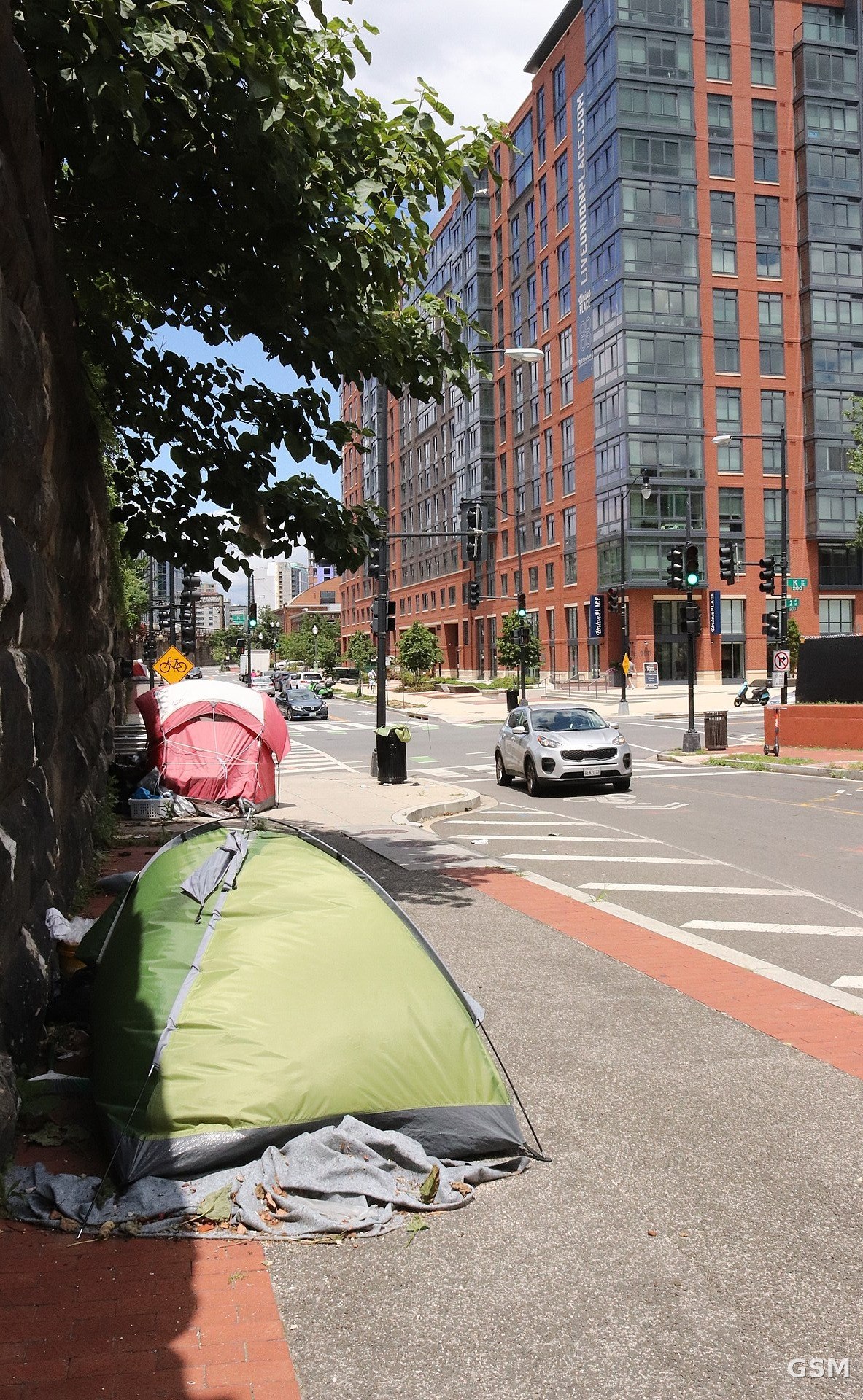
图片来源:美国华盛顿特区街头无家可归者营地的帐篷(资料图)。照片:Elvert Barnes,CC BY-SA 2.0,经维基共享资源。 / Tents at a homeless encampment in Washington, D.C. (file photo). Photo: Elvert Barnes, CC BY-SA 2.0, via Wikimedia Commons.