农业部选定8个化肥制造项目:约5.73亿美元拟投入联邦资金 撬动逾13.4亿美元总投资
华盛顿——美国农业部(USDA)10月22日宣布,副总统万斯与农业部长 Brooke Rollins 当天选定了8个化肥制造项目,通过农业部的「化肥投资与国内长期供应扩张计划」(FIELDS)进入拨款程序。农业部称,万斯当天在 Nebraska 州宣布了这一消息。
农业部表示,8个入选项目拟议总投资超过13.4亿美元,其中包括约5.73亿美元的农业部拟议资金,目标是加强美国国内化肥制造、减少对外国供应商的依赖,并提高美国农民长期可获得的化肥供应。FIELDS 计划由特朗普总统任内启动,规模为5亿美元;农业部同时把从上一届政府「化肥生产扩张计划」(FPEP)失败项目中收回的资金追加投入,称将把纳税人资金转向财务可行性更强、私人投资已落实、生产成效可衡量的项目。
万斯表示:「我很自豪今天在 Nebraska 宣布13亿美元的国内化肥制造投资,就在美国本土。」他说,全美187万名农民、耕种超过874万英亩土地,将能用上美国人制造的、成本更低的化肥。农业部长 Brooke Rollins 表示:「农场安全就是国家安全。美国不能再依赖外国来提供种植粮食、养活我们家庭所需的化肥。」她说,农业部正采取果断行动重建美国化肥制造基础,把关键生产带回美国本土。
农业部在发布中列出了行业集中的背景数据:4家公司控制着北美约77%的氮肥产能,2家公司占磷肥产能的90%以上,2家公司生产北美约90%的钾肥。农业部的经济分析估计,入选项目投产后,新增产能可使氮肥价格下降4.4%、钾肥价格下降5.3%,国内氮肥产量提高3.7%,钾肥产量提高近40%;8个项目合计每年可支持约108万吨的国内化肥产量与产能,产品覆盖氮、磷、钾、硫肥。
8个入选项目分别为:TalusAg(Iowa、Kentucky、Minnesota、Tennessee、Nebraska、Illinois 与南达科他州)获约9,980万美元拟议资金,对应2.702亿美元项目,将在7个州的11个地点部署20套模块化合成氨装置,预计年产无水氨约13万吨;Peace Valley(Florida)获约1,990万美元,对应5,060万美元项目,扩建 Bartow 的化肥厂,预计年产含氮、磷、钾、硫肥料约25万吨;PCI Nitrogen(德克萨斯州与 Oregon)获约1亿美元,对应2亿美元项目,改造 Pasadena 与 St. Helens 的化肥设施,预计年产量约148,280吨;Intrepid Potash(New Mexico)获约1.39亿美元,对应2.65亿美元项目,在 Carlsbad 附近新建硫酸钾厂,预计年产约22万吨;AdvanSix(Virginia)获约4,740万美元,对应9,810万美元项目,改造扩建 Hopewell 的合成氨厂,预计年产无水氨约8.4万吨;SUL4R-PLUS Illinois(Illinois)获约3,490万美元,对应6,970万美元项目,扩建 Marissa 的硫肥厂,预计年产硫肥约10万吨;True Organic Products(加利福尼亚州、Oregon 与 Arizona)获约1,530万美元,对应3,060万美元项目,扩建 Helm、Boardman 与 Arlington 三地设施,以农业副产品为原料,预计年产量约142,805吨;Agriculture Project Holdco(Kansas 与 Indiana)获约1.169亿美元,对应3.6亿美元项目,在 Lewis 与 Fair Oaks 新建两座化肥厂,把奶牛粪肥转化为液态硝酸铵肥料,预计年产约4,100吨。
农业部称,FIELDS 计划由农业部乡村发展署下属的乡村企业合作社局使用商品信贷公司的授权实施,更多信息可通过农业部乡村发展署查询。
USDA Selects Eight Fertilizer Manufacturing Projects: About $573 Million in Proposed Federal Funding Toward More Than $1.34 Billion in Total Investment
WASHINGTON — The U.S. Department of Agriculture (USDA) announced on October 22 that Vice President JD Vance and Secretary of Agriculture Brooke Rollins had selected eight fertilizer manufacturing projects to receive funding through USDA's Fertilizer Investment & Expansion for Long-Term Domestic Supply (FIELDS) Program. USDA said Vance made the announcement in Nebraska that day.
The eight selected projects represent more than $1.34 billion in total proposed investment, including approximately $573 million in proposed USDA funding, to strengthen domestic fertilizer manufacturing, reduce America's dependence on foreign suppliers, and increase long-term fertilizer availability for American farmers, USDA said. Under President Donald J. Trump, USDA launched the $500 million FIELDS Program; the Administration is also making additional funding available recovered from failed projects under the previous Fertilizer Production Expansion Program (FPEP), redirecting taxpayer resources toward projects with stronger financial viability, private-sector investment, and measurable manufacturing outcomes.
"I was proud to be in Nebraska today to announce 1.3 billion dollars of investment in domestic fertilizer manufacturing right here in the United States," said Vice President JD Vance. "1.87 million farmers who are farming over 8.74 million acres all across the United States of America are going to have fertilizer at lower costs that is made by Americans." Secretary Brooke L. Rollins said: "Farm security is national security. America cannot afford to depend on foreign nations for the fertilizer needed to grow our food and feed our families." She said USDA is taking decisive action to rebuild America's fertilizer manufacturing base and bring critical production back to American soil.
USDA said America's fertilizer industry has become increasingly consolidated: four companies control approximately 77% of North American nitrogen fertilizer production capacity, two companies account for more than 90% of phosphate production capacity, and two companies produce approximately 90% of North America's potash. USDA economic analysis estimates that the additional production could reduce nitrogen fertilizer prices by 4.4% and potash prices by 5.3%, while increasing domestic nitrogen production by 3.7% and potash production by nearly 40% once the projects are operational. The projects are expected to support approximately 1.08 million tons of annual domestic fertilizer production and capacity, covering nitrogen, phosphorus, potassium, and sulfur fertilizers.
The eight projects are: TalusAg, selected for approximately $99.8 million in proposed USDA funding toward a $270.2 million project to deploy 20 modular ammonia manufacturing units across 11 locations in seven states (Iowa, Kentucky, Minnesota, Tennessee, Nebraska, Illinois, and South Dakota), expected to produce approximately 130,000 tons of anhydrous ammonia annually; Peace Valley in Florida, approximately $19.9 million toward a $50.6 million project to expand fertilizer manufacturing in Bartow, expected to produce approximately 250,000 tons annually; PCI Nitrogen in Texas and Oregon, approximately $100 million toward a $200 million project to modernize facilities in Pasadena, Texas, and St. Helens, Oregon, expected to support approximately 148,280 tons of annual production; Intrepid Potash in New Mexico, approximately $139 million toward a $265 million project to construct a sulfate of potash facility near Carlsbad, expected to produce approximately 220,000 tons annually; AdvanSix in Virginia, approximately $47.4 million toward a $98.1 million project to modernize and expand an ammonia facility in Hopewell, expected to produce approximately 84,000 tons of anhydrous ammonia annually; SUL4R-PLUS Illinois, approximately $34.9 million toward a $69.7 million project to expand a sulfur fertilizer facility in Marissa, expected to support approximately 100,000 tons annually; True Organic Products in California, Oregon, and Arizona, approximately $15.3 million toward a $30.6 million project to expand facilities in Helm, California; Boardman, Oregon; and Arlington, Arizona, expected to support approximately 142,805 tons annually using agricultural byproducts; and Agriculture Project Holdco in Kansas and Indiana, approximately $116.9 million toward a $360 million project to develop two facilities in Lewis, Kansas, and Fair Oaks, Indiana, converting dairy manure into approximately 4,100 tons of liquid ammonium nitrate fertilizer annually.
USDA said the FIELDS Program is administered by USDA Rural Development's Rural Business-Cooperative Service using Commodity Credit Corporation authorities, and that additional information is available through USDA Rural Development.
发布:GSM·美国(发布链接)
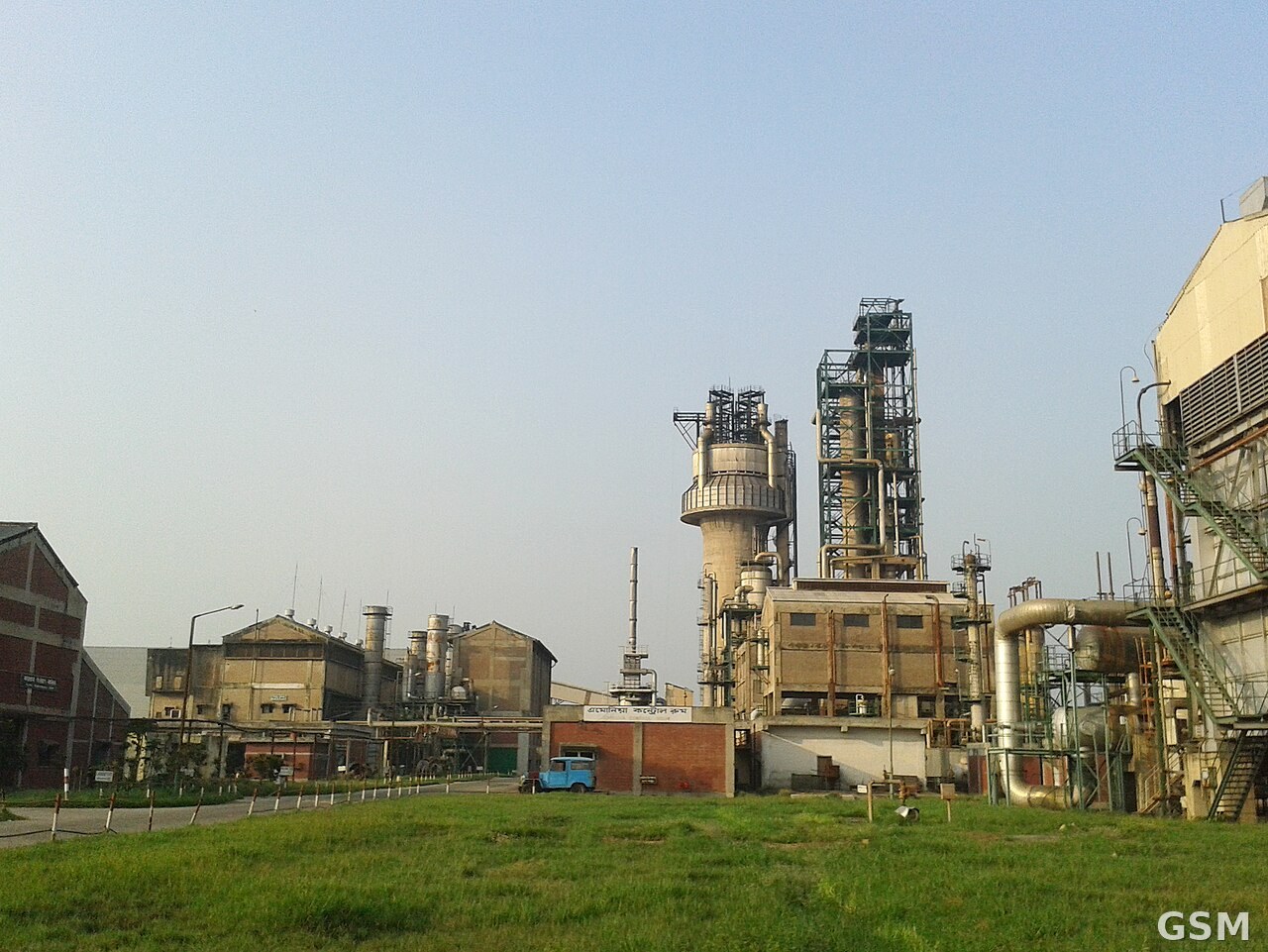
图片来源:图:一家尿素化肥厂的工艺装置(资料图)。照片:Mar11,CC BY-SA 4.0,经 Wikimedia Commons。 / File photo: process plant of a urea fertilizer factory. Photo by Mar11, CC BY-SA 4.0, via Wikimedia Commons.
GSM Global · 本篇英文版 English edition of this story