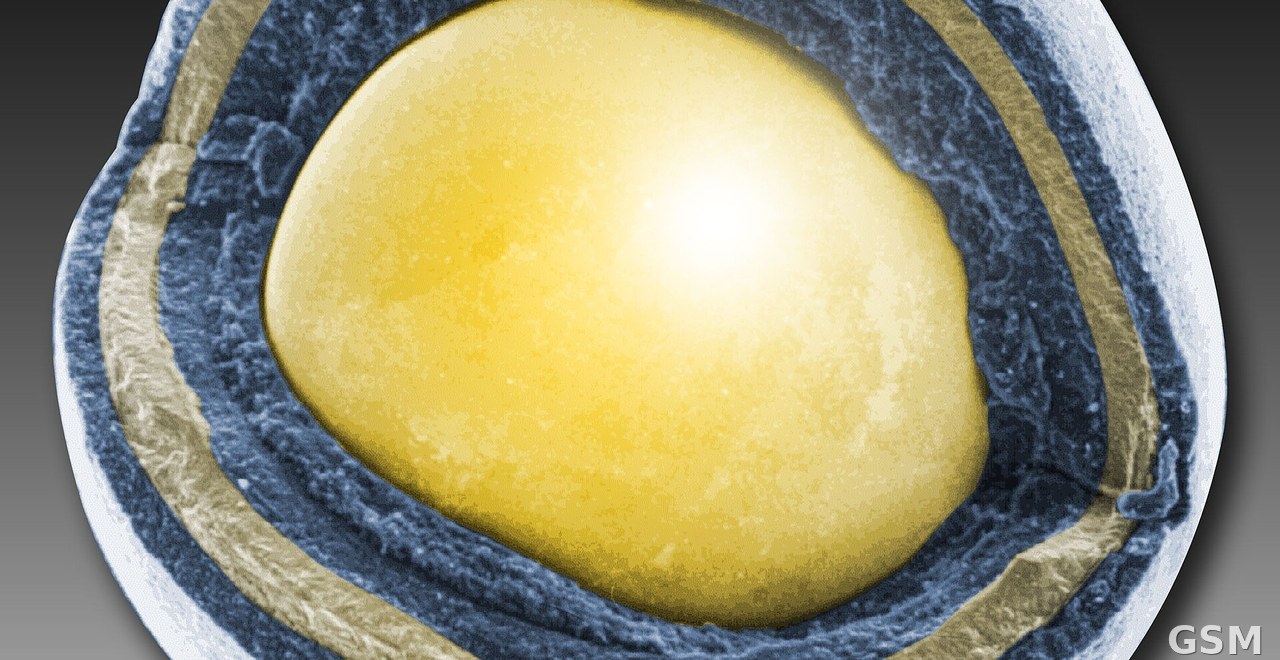
重仅1克:中国科学家研制世界最轻无线介观显微镜 单只小鼠可同时记录8500多个神经元 成果发表于《自然》
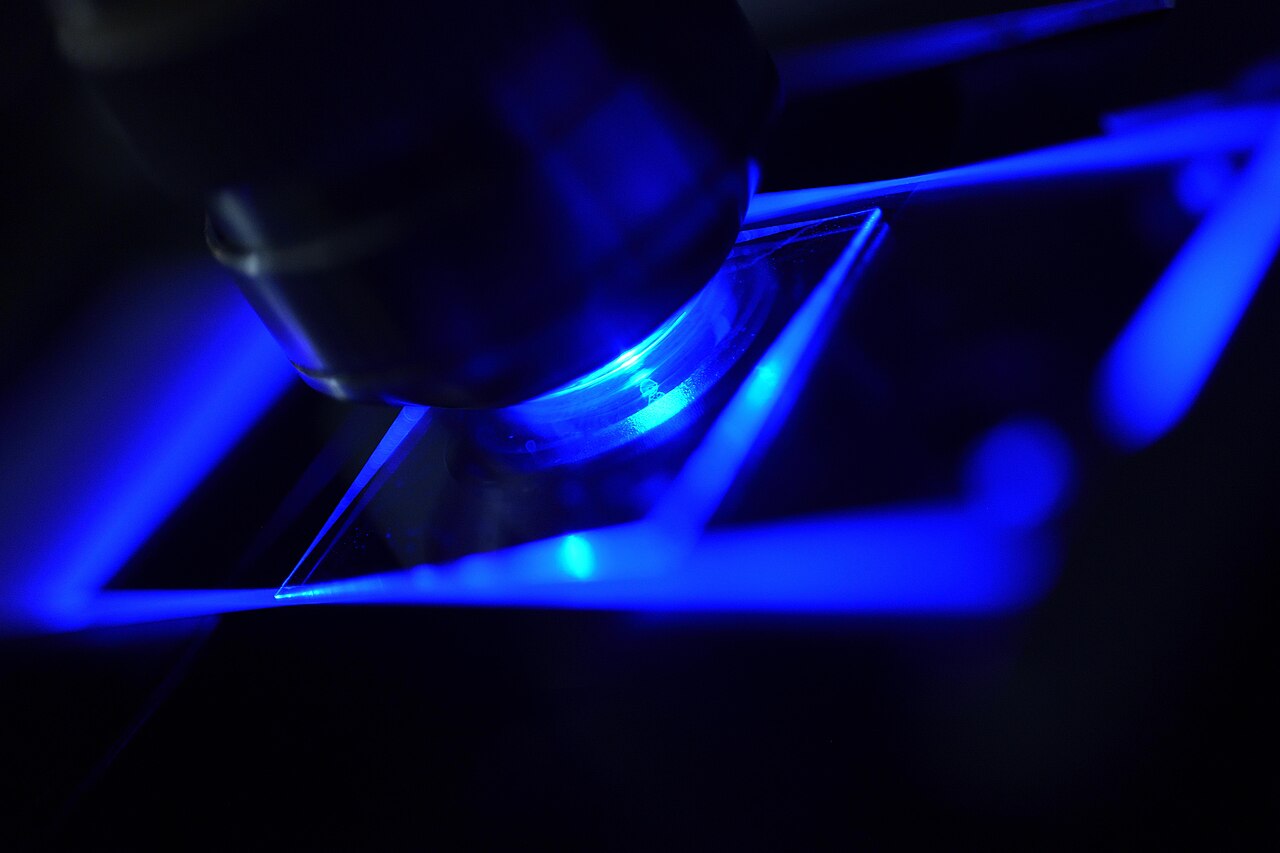
据新华社10月19日报道,如何在自然、群体行为中清楚「看到」大脑神经元对复杂行为的调控,是理解智能的重要基础。我国科学家研制出目前世界最轻的无线介观显微镜,重量仅1克,可在6毫米视场内以单细胞分辨率记录小鼠大脑皮层的神经活动,单只小鼠可同时记录8,500多个神经元,是现有同类型设备的25倍。该成果19日在线发表于《自然》。
报道说,让显微镜同时能「看得广、看得清、戴得轻、不拴线」是神经科学研究的一大挑战:现有能分辨单个神经元的显微镜虽看得清,但往往需将小鼠头部固定在仪器下或用线缆将其「拴」住,很难研究动物的一些复杂自然行为;头戴式微型显微镜虽不用拴线,但视场通常不足1毫米,仅能看到很小一块脑区。想要同时覆盖更大范围皮层又要有更高清分辨率,就需要更重且更大功耗的显微镜。
为此,中国工程院院士、清华大学教授戴琼海团队与解放军总医院戴朴团队合作,通过集成化设计和系统性优化,研制出超轻无线介观显微镜Airscope,仅用4片非球面镜片,就在6毫米视场内实现单细胞分辨率(即4至6微米)的观测。清华大学自动化系副教授吴嘉敏介绍:「无线、轻巧、宽视场、高通量是Airscope的显著特点。」常规头戴式微型显微镜重量通常超过3克,会影响小鼠自由活动;而Airscope不仅摆脱了线缆束缚,尺寸更轻巧,还通过200万像素图像传感器实现端侧压缩,使百万像素级图像得以无线传输。
借助这种动物「可穿戴」设备,团队完成了许多过去受线缆或设备重量所限难以实现的实验,如在5平方米自然栖息地中同时记录多只小鼠探索时的大脑皮层活动,在32个末端的大型迷宫中追踪小鼠长时间自主探索等。戴琼海认为,这一新型显微镜为理解智能的神经基础提供了新工具,将推动光学脑机接口向更精准神经探测发展,未来其应用还有望从神经科学拓展到免疫、肿瘤等领域,实现对疾病发生过程的完整追踪。(GSM 据新华社报道)
Weighing Just 1 Gram: Chinese Scientists Build the World's Lightest Wireless Mesoscope, Recording over 8,500 Neurons in a Single Mouse; Published in Nature
Chinese scientists have developed the world's lightest wireless mesoscope, weighing just 1 gram, Xinhua reported on October 19. The device can record neural activity in the mouse cerebral cortex at single-cell resolution across a 6-millimetre field of view, capturing more than 8,500 neurons in a single mouse at the same time — 25 times the capacity of existing devices of its type. The results were published online in Nature on October 19.
Xinhua said that making a microscope that can simultaneously "see wide, see clearly, be light to wear and be free of cables" is a major challenge in neuroscience: microscopes that can resolve individual neurons usually require the mouse's head to be fixed under the instrument or tethered by cables, making it hard to study complex natural behaviour, while head-mounted miniature microscopes need no cables but typically have a field of view of less than 1 millimetre. Covering a larger area of cortex at higher resolution has required heavier, more power-hungry instruments.
To address this, a team led by Dai Qionghai, a professor at Tsinghua University and an academician of the Chinese Academy of Engineering, working with a team led by Dai Pu of the Chinese PLA General Hospital, built the ultra-light wireless mesoscope, named Airscope, through integrated design and systematic optimisation. Using just four aspheric lenses, it achieves single-cell resolution (4 to 6 micrometres) across a 6-millimetre field of view. Wu Jiamin, an associate professor in Tsinghua's Department of Automation, said wireless operation, light weight, a wide field of view and high throughput are Airscope's defining features: conventional head-mounted miniature microscopes usually weigh more than 3 grams and affect the mouse's free movement, while Airscope removes the cable constraint and uses a 2-megapixel image sensor with on-device compression to transmit megapixel-level images wirelessly.
Using the wearable device, the team carried out experiments that cable or weight constraints previously made difficult, such as recording cortical activity in several mice exploring simultaneously in a 5-square-metre natural habitat, and tracking mice over long periods as they freely explored a large maze with 32 end points. Dai Qionghai said the new microscope provides a new tool for understanding the neural basis of intelligence, will push optical brain-computer interfaces toward more precise neural detection, and could in future extend from neuroscience to fields such as immunology and oncology, enabling complete tracking of disease processes. (GSM, via Xinhua)
来源:GSM·美国(原文链接)
图片来源:图:荧光显微成像特写。中国科学家研制的无线介观显微镜Airscope重仅1克,可在小鼠自由活动时记录其大脑皮层神经活动。(供稿图)
GSM Global · 本篇英文版 English edition of this story