陶哲轩称自己进入「战时状态」:OpenAI批量发布SI证明后,他把时间转去组织数学界应对
洛杉矶——据《纽约时报》2026年10月16日报道,数学家陶哲轩(Terence Tao)在加州大学洛杉矶分校(UCLA)一场为期两天的数学研讨会上表示,自己眼下很少做数学研究,而是处于「战时状态」。报道称,这场研讨会的主题是超级智能时代的偏微分方程,与会者大量谈及超级智能给数学领域带来的冲击。陶哲轩现年51岁,是UCLA数学教授,2006年获菲尔兹奖。
据《纽约时报》报道,研讨会前数日,OpenAI宣布已解出纳维—斯托克斯(Navier–Stokes)问题——七个「千禧年大奖难题」之一。该说法是OpenAI的宣布,尚待数学界检验。陶哲轩在研讨会前于UCLA办公室受访时说:「现在已经没有任何规则了。我对一年前还会让我震惊不已的事情已经麻木了。」他评价OpenAI的纳维—斯托克斯证明在技术上可读,但「我交谈过的专家中,没有人真正理解了整个论证」。
更大的冲击发生在10月6日。据《纽约时报》报道,OpenAI当日发布了350多项研究成果,覆盖代数、数论、理论计算机科学、数学逻辑和拓扑等几乎所有数学子领域,一些研究多年接近解出相关问题的数学家发现自己的问题被超级智能抢先解出。按文件计数的另一口径数字更大:人类数学协会(Association for Human Mathematics)在公开声明中称,OpenAI「一次性发布700多份文件」;其他公开计数显示,这批材料共700多份文稿、归为约372个成果族,同一项成果包含主证明与多份支撑文件。两个数字计量单位不同:350多指成果项数,700多指文件份数。
陶哲轩说,他现在的大量时间花在自己所称的「社区组织」工作上:召集数学家、谋划应对、回应媒体、就超级智能作讲座、为同行提供咨询。他说:「有人在呼喊求助。我没有带宽直接帮他们,但我能帮他们找到可以谈的人。」据《纽约时报》报道,他自2023年起试用OpenAI的模型,曾主张超级智能与数学家「两全其美」的未来;但他表示,过去一年与该公司的关系已经改变:「他们把数学用在了他们需要的地方,那就是评估他们的模型。」他说:「在现阶段,我看不到建设性接触的途径。」OpenAI发言人 Laurance Fauconnet 回应称,该公司重视与陶哲轩及更广泛数学界的接触,并将继续听取反馈。
需要分清的是,公开呼吁数学家停止与OpenAI合作的是人类数学协会而非陶哲轩本人。该协会在声明中称,一次性发布700多份文件「不是学术的展示,而是力量的展示」。该声明以客座帖形式转载于陶哲轩的博客,落款为该协会传播工作组。陶哲轩本人另与另外24位菲尔兹奖得主联署过一份声明,批评超级智能在数学领域的应用方式与目标错位。
陶哲轩对学生的处境亦有直接描述。据《纽约时报》报道,他指导的三名博士生正面临论文题目被超级智能发布冲击、求职时如何披露超级智能协助等新问题;他说,自己与学生的每周会面「越来越像治疗时段,多过技术指导」。他在10月9日于加州理工学院的公开讲座《Math 2.0》中已提出,数学学科在「证明丰盛期」应更重阐释、理论建设与社区培养(本站10月9日已报道该讲座)。
关联:
陶哲轩Caltech讲座《Math 2.0》:数学进入「证明丰盛期」 学科应更重阐释与社区建设
Terry Tao Says He Is 'on a War Footing' as OpenAI's SI Proof Release Roils Mathematics
LOS ANGELES — Mathematician Terence Tao told a two-day workshop at UCLA that he is doing very little math these days and is instead 'on a war footing,' The New York Times reported on October 16. The workshop, on partial differential equations in the age of super intelligence, was dominated by discussion of SI's impact on the field. Tao, 51, is a UCLA professor who won the Fields Medal in 2006.
Days earlier, OpenAI announced it had solved the Navier–Stokes problem, one of the seven Millennium Prize problems — a company claim that remains unverified by the mathematics community. 'There are no rules any more,' Tao said. He described OpenAI's Navier–Stokes proof as technically readable, but said no expert he had spoken to had understood the whole argument.
On October 6, OpenAI released more than 350 findings spanning nearly every subfield of mathematics, according to the Times. A separate count by files is larger: the Association for Human Mathematics said OpenAI had released 'over 700 files at once,' a body of material grouped into roughly 372 result families. The two figures measure different units — findings versus files. Tao said much of his time now goes to what he calls 'community organizing': convening mathematicians, responding to media and advising colleagues. Of OpenAI, he said: 'They used math for what they needed, which was to evaluate their models,' and 'At this point, I don't see a way to constructively engage.' An OpenAI spokesperson said the company values its engagement with Tao and the wider community. The public call for mathematicians to discontinue work with OpenAI came from the Association for Human Mathematics, in a statement published as a guest post on Tao's blog — not from Tao himself.
Related:
发布:GSM·美国(发布链接)
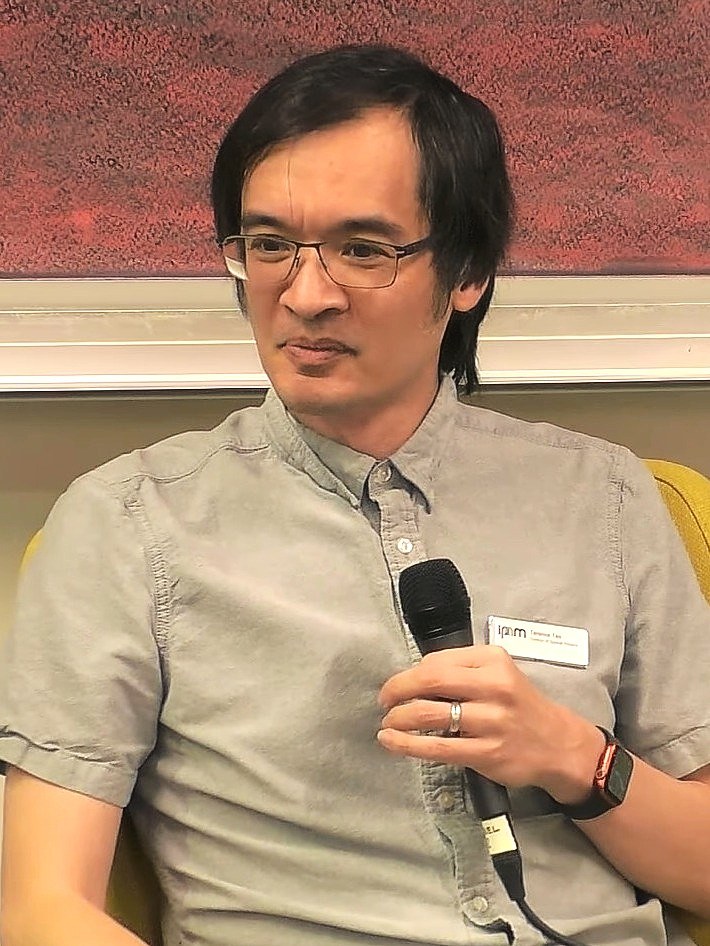
图片来源:图:陶哲轩2026年在加州大学洛杉矶分校纯粹与应用数学研究所(IPAM)炉边谈话上发言。图片来源:IPAM,CC BY 4.0,经维基共享资源。Photo: Terence Tao speaking at an IPAM Fireside Chat at UCLA in 2026. Source: IPAM, CC BY 4.0, via Wikimedia Commons.
GSM Global · 本篇英文版 English edition of this story