法律术语解读:「税务欺诈」与「资产侵占」在美国法里到底指什么
「税务欺诈」「资产侵占」是社区交谈里常被随口说出的两个重词。它们在美国法律里各有严格的定义与构成要件,是否成立、由谁认定,都有明确的程序。本期「法律术语解读」依据联邦与加州现行法条,逐项拆解这两个术语,并在其后附一节华人日常容易踩中的其他罪名清单。
一、税务欺诈(Tax Fraud)
一句白话:不是「报税报出了错」,而是「明知有税要缴,故意用造假、隐瞒的办法逃掉」——核心是「故意」与「欺骗」。
构成要件:联邦逃税罪(《美国法典》第26编第7201条)须具备三项:确实有税款应缴而少缴(欠税存在);有积极的欺骗行为,如隐瞒收入、伪造账目;在报税文件上故意作虚假陈述的,另构成同编第7206条的虚假陈述罪;且主观上必须是「故意」(willfully),即自愿违反自己明知的纳税义务(联邦最高法院 Cheek v. United States 案确立的标准)。罚则上,第7201条为重罪,最高可处五年监禁;第7206条最高三年。够不上刑事的,IRS 可在民事上加征欺诈罚款:少缴税款中归因于欺诈的部分罚75%(第6663条),且欺诈须由税务机关以「清晰且令人信服的证据」证明,举证责任在 IRS(第7491(c)条)。加州方面,民事欺诈罚款见《税收与收入法典》第19164条;刑事上,故意提交虚假报税表或作虚假陈述以逃避税款,依该法典第19705条属轻罪,可处罚金与监禁。
由谁认定:IRS 稽查取证,经刑事调查后移送联邦司法部,由检察官起诉、法院审判,检方须以「排除合理怀疑」的标准举证,被告在定罪前享有无罪推定。没有走完这条程序,任何人都不能宣称某人「是税务欺诈犯」。
常见误解有三:其一,报错不等于欺诈。疏忽、记错、理解偏差属于「过失」,后果是补税加 20% 的准确性罚款(第6662条),不是犯罪。其二,报税身份是法定选择:已婚分别申报、离婚后以单身或户主身份申报,都是税法明文列出的申报身份——分居、离婚后分开报税完全合法。其三,谁没有履行自己的报税义务,受罚的是他本人;曾共同申报年份的责任如何划分,也要按记录与程序认定,不靠任何一方的指控。
二、资产侵占(Conversion / Embezzlement)
一句白话:中文的「侵占」在美国法里对应两个不同的概念——民事上的 conversion(非法支配他人财物)与刑事上的 embezzlement(受托挪用)。两者的共同前提是:对象必须是他人的财产。
构成要件:民事 conversion 是一种侵权索赔,须具备:原告对该财物有所有权或合法占有权;被告未经授权、以排斥原告权利的方式支配它,如擅自处分、拒不返还;原告因此受有损害。刑事 embezzlement 依加州《刑法典》第503条,是指财产先经合法受托交到行为人手中、再被以欺诈方式据为己有——「先受托、后挪用」,且财产是他人的。
关键澄清——夫妻财产另有规则:加州是共同财产州,婚姻期间取得的财产推定为夫妻共同财产(《家庭法典》第760条),婚姻期间双方对共同财产都有管理与处置权(第1100条),离婚时由家事法庭依法分割(第2550条)。因此,对共有财产的使用、住进共同的房子、收取出租收益这类争议,属于离婚程序中的分产与费用结算问题:法庭按取得时间(婚前还是婚后)、登记名义、是否与个人财产混同逐项查明裁决,并核算占用与垫付。在法庭认定纯属一方个人财产之前,把配偶对共有财产的使用直接称作「侵占」,在法律上并不成立。
三、华人常见的其他易踩坑罪名
以下按同样的体例,把日常生活中较常被踩中的其他罪名简列如下。刑罚均为法定大致范围,实际处理取决于情节、犯罪记录与检察官裁量。本节以加州法为准,涉及联邦法的已单独标注;各州罪名与刑罚不尽相同,身在其他州的以当地法为准。
1. 酒驾(DUI,Driving Under the Influence):在酒精或药物影响下驾车,违反《车辆法典》第23152条,一般属轻罪,致人重伤、死亡或多次再犯的可升为重罪。常见的踩法是自认「只喝了两杯、意识清醒」照样开车,或节日聚餐后抱侥幸心理上路。大致后果是罚款连同附加费数千美元、驾照吊销约六个月、县监狱刑期(初犯常以缓刑执行),并留下犯罪记录。
2. 肇事逃逸(Hit and Run):交通事故后未停车、出示身份与保险信息即离开现场,违反《车辆法典》第20001、20002条,仅损及财物的属轻罪,致人受伤或死亡的属可轻可重的罪名。常见的踩法是剐蹭停放的车辆觉得「没人看见」直接开走,或小碰撞后未交换信息就驶离。大致后果是轻罪最高六个月县监狱与罚款,致人重伤或死亡可判二、三或四年监禁,并吊销驾照、承担民事赔偿。
3. 商店盗窃与自助结账漏扫(Shoplifting / Theft):怀着盗窃意图进入营业中的商店、所涉财物不超过950美元的,依《刑法典》第459.5条构成商店盗窃,属轻罪;在自助结账时故意漏扫、少扫商品,则属第484、488条的盗窃。常见的踩法是「只漏扫一两件小东西、金额不大」不当回事,或把商品藏进自带购物袋后直接离店。大致后果是最高六个月县监狱与1,000美元罚款并留下窃盗记录,2024年通过的第36号提案施行后,多次窃盗再犯可被升为重罪处理,非公民还可能因此影响移民身份与入籍。
4. 家庭暴力(Domestic Violence):对配偶、同居伴侣或子女的另一方父母施加身体暴力,依《刑法典》第243(e)(1)条构成家庭殴打罪,属轻罪;造成身体伤害的,依第273.5条可按轻罪或重罪起诉。常见的踩法是争吵中推搡、抓扯、动手打人,即便伤势轻微、事后一方反悔,警方到场后仍常依法逮捕,是否起诉由检方决定、不由当事人撤告。大致后果是轻罪最高一年县监狱,第273.5条重罪可判二、三或四年,另有强制矫治课程与法院保护令,非公民还面临递解与终身禁枪的风险。
5. 把幼儿单独留在车内(Child Left Unattended in Vehicle / Child Endangerment):《车辆法典》第15620条(俗称「凯特琳法」)禁止把六岁及以下儿童单独留在车内而无十二岁以上人员看护,尤其是在引擎未熄火、钥匙留在点火开关上或环境对儿童健康安全有重大风险时;情节严重的另构成《刑法典》第273a条危害儿童罪,可按轻罪或重罪处理。常见的踩法是「下车买杯咖啡、几分钟就回来」,把熟睡的幼儿留在熄火的车里。大致后果是违反第15620条属违规、可处100美元罚款,若儿童处于可能致重伤或死亡的环境,第273a条重罪可判二、四或六年。
6. 拆分现金存款规避申报(Structuring):银行对单笔超过一万美元的现金交易须向财政部提交货币交易报告,以逃避这一申报为目的、把现金拆成多笔小额存入或汇出的,依联邦《美国法典》第31编第5324条独立成罪。常见的踩法是听人支招「每次只存九千多、分几天存」,即便钱款来源完全合法,拆分行为本身已构成犯罪。大致后果是联邦重罪最高五年监禁,若十二个月内以成模式的方式涉案金额超过十万美元,最高可判十年并加倍罚款。
7. 海外账户与海外收入未申报(FBAR / Unreported Foreign Income):美国税务居民在海外的银行与金融账户全年任一时点合计超过一万美元的,须每年向财政部金融犯罪执法网络(FinCEN)提交 FBAR(第114号表);同时,美国对全球收入征税,海外账户的利息、租金与经营收入都要在税表上申报。常见的踩法是认为「钱放在海外、美国查不到」,多年既不报 FBAR 也不报海外收入,或漏报实际由自己控制的账户。大致后果是非故意未报 FBAR 的罚款上限为每次一万美元,故意未报的罚款可达经通胀调整的十万美元与账户余额50%两者中的较高者,并可追究刑事责任,漏报的收入另按逃税规则补税、罚款。
8. 替人转账收款的洗钱风险(Money Laundering / Money Mule):明知或有意回避知情、仍以自己的账户为他人收取、转移来源不正的资金并从中抽成的,可构成联邦洗钱罪(《美国法典》第18编第1956、1957条),无牌为他人办理汇款的另触犯第1960条。常见的踩法是网上「代收代付、帮忙走账赚佣金」的兼职,或熟人请托「用你的账户过一笔钱」并给好处费。大致后果是洗钱罪最高可判二十年监禁并处罚款,即便自称不知情,也常先被冻结账户、查扣资金并被银行销户。
9. 无证经营(Unlicensed Business——装修、按摩、餐饮):加州承揽五百美元以上(人工与材料合计)的装修工程须持承包商执照,无证承揽违反《商业与职业法典》第7028条;按摩服务须符合加州按摩治疗委员会(CAMTC)认证与地方许可要求;餐饮经营须先取得县卫生部门的食品设施许可证。常见的踩法是靠口碑私下接装修活、在家中开按摩工作室、做私房外卖,都在无证经营之列。大致后果是无证装修初犯可处最高5,000美元罚款与六个月县监狱刑期,经营场所可被勒令停业,且无证者收取的工程款在诉讼中难以讨回。
10. 现金发薪逃避工资税(Payroll Tax Evasion):雇主须为员工代扣代缴所得税与工资税,并向州就业发展局(EDD)申报工资,故意不代扣或不上缴的,依联邦《美国法典》第26编第7202条构成重罪。常见的踩法是餐馆、装修、零售等行业以全现金「台下价」发工资、不入账、不申报。大致后果是最高五年监禁,另须补缴税款、利息与罚款,州一级还可追缴失业保险费并处罚款,情节重的可吊销营业执照。
11. 销售假冒商品(Selling Counterfeit Goods):制造、销售或持有待售的假冒注册商标商品,违反加州《刑法典》第350条,联邦层面另有《美国法典》第18编第2320条的商标假冒罪。常见的踩法是在夜市、网店、直播带货中出售「高仿」名牌包、鞋、表,即便明说仿品出售同样违法。大致后果是依数量与金额按轻罪或重罪处理,面临罚款、监禁与假货没收销毁,商标权利人还可另行提起民事索赔。
12. 刑事威胁(Criminal Threats):以口头、书面或电子通讯方式威胁杀害或重伤他人、并使对方持续处于恐惧之中的,构成《刑法典》第422条的刑事威胁罪,可按轻罪或重罪起诉,并属可计「三振」的严重重罪。常见的踩法是纠纷气头上发短信、微信放狠话,如「弄死你」「让你全家不得安宁」,事后辩称气话、无意执行,也可能被立案。大致后果是轻罪最高一年县监狱,重罪可判州监狱刑期,并可能伴随法院刑事保护令。
13. 对执法人员作虚假陈述(False Statements to Law Enforcement):在联邦事务中对联邦执法或调查人员就重大事项作虚假陈述,违反《美国法典》第18编第1001条;在加州,向警员提供虚假姓名等身份信息,另违反《刑法典》第148.9条。常见的踩法是被盘查、约谈时随口编造说法——隐瞒身份、否认在场、替他人打掩护。大致后果是联邦虚假陈述罪最高可判五年监禁,实务中不少人最终被重判的正是这条「说谎罪」,而非最初被调查的事项。
(说谎与诬陷一组)
14. 报假案与虚假指控(False Report of a Crime):明知不实、仍向警察、检察官等报称发生了重罪或轻罪的,违反《刑法典》第148.5条,属轻罪。常见的踩法是纠纷中为占上风报警称对方「偷了东西」「动手打人」,或夸大、编造案情施压对方。大致后果是最高六个月县监狱与1,000美元罚款,若虚假指控引出逮捕或搜查,行为人还可能被对方另行索赔。
15. 伪证(Perjury):在宣誓之后——包括出庭作证、宣誓书、笔录证词,以及在注明「违者按伪证论处」的文件上签字时——故意就重大事项作虚假陈述的,构成《刑法典》第118、118a条的伪证罪,属重罪。常见的踩法是在离婚、债务、事故等诉讼的宣誓文件里隐瞒财产、低报收入,或出庭时为他人作不实证明。大致后果是二、三或四年监禁,一旦定罪,日后在任何案件中的证词可信度都会被质疑。
16. 恶意起诉(Malicious Prosecution):这不是刑事罪名,而是一项民事侵权索赔——以恶意、在缺乏合理根据的情况下启动或推动针对他人的刑事检控等程序,且该程序最终以被诉一方胜诉终结的,被诉一方可反过来起诉索赔。常见的踩法是把报警、提告当作施压筹码,明知指控站不住脚仍推动程序、拖累对方。大致后果是须赔偿对方的律师费、名誉与精神损害,情节恶劣的还可被判惩罚性赔偿,参与的律师另有职业纪律风险。
四、谁有给人定罪的权柄
一句白话:没有任何个人有这个权力。在美国,刑事罪名只能由检察官向法院起诉,经审判、以「排除合理怀疑」的标准证明,由法官或陪审团裁决;税务刑事案件在起诉前还要先过 IRS 调查这一关。在此之前,任何人在微信群里、网络上的公开指控,法律上只叫「指控」(allegation),不产生法律效力。
反过来,指控者要为自己的话负责:依加州《民法典》第45条、第45a条,以书面形式发表不实内容、损害他人名誉的,构成书面诽谤(libel);其中「指控他人犯了罪」属于当然诽谤(libel per se),被指控者无须另行举证实际损失即可主张赔偿。随口给人定罪的人,自己先站到了被告席边上。
五、被公开指控时的一般自保要点
一是不在公开场合对线自证:隔空争吵不产生法律好处,只可能被断章取义利用,有用的只有记录。二是完整保存记录:把对方发言的时间、平台、原文与截图原样保存,包括经他人转述的部分。三是只认正式文件:律师函、法院传票、税务机关的正式通知才是需要回应的东西,出现时第一时间交给自己的律师、在法定期限内处理;网络喊话不是法律程序,无需回应。四是以原始记录为准:税务与财产争议最终看的是申报表、合同、转账与登记文件,把这些原始材料原样封存、不删改。
主要出处:26 USC §§7201、7206、6662、6663、7491(c)、7202;18 USC §§1001、1956、1957、1960、2320;31 USC §§5321、5324;IRS.gov 与 FinCEN 的 FBAR 申报说明;加州《税收与收入法典》§§19705、19164;加州《刑法典》§§118、118a、148.5、148.9、243(e)(1)、273.5、273a、350、422、459.5、503;《车辆法典》§§23152、20001、20002、15620;《商业与职业法典》§7028;《家庭法典》§§760、1100、2550;《民法典》§§45、45a。
本文为法律常识介绍,不构成法律意见(This article is general legal information, not legal advice)。具体个案请咨询有执照的律师。
Legal Terms Explained: What "Tax Fraud" and "Asset Misappropriation" Actually Mean Under U.S. Law
"Tax fraud" and "asset misappropriation" are heavyweight terms often tossed around casually in community conversation. Under U.S. law, each has a strict definition and a defined set of elements, and whether either is established — and who gets to decide — follows a set process. This installment of Legal Terms Explained breaks down both terms element by element, based on current federal and California statutes, and closes with a checklist of other offenses that commonly trip people up in everyday life.
1. Tax Fraud
In plain terms: it is not "making a mistake on a tax return." It is knowingly owing tax and deliberately using deception or concealment to evade it — the core is willfulness and deceit.
Elements: The federal crime of tax evasion (26 U.S.C. § 7201) requires three things: a tax actually due and owing that was underpaid (a tax deficiency); an affirmative act of deception, such as concealing income or falsifying books; and willfulness — voluntarily violating a known legal duty (the standard set by the U.S. Supreme Court in Cheek v. United States). Willfully making a false statement in a return or document is separately punishable under § 7206. Section 7201 is a felony carrying up to five years' imprisonment; § 7206 up to three years. Where the conduct does not rise to the criminal level, the IRS may impose a civil fraud penalty of 75% of the portion of the underpayment attributable to fraud (§ 6663), and fraud must be proven by the IRS by clear and convincing evidence — the burden of proof is on the agency (§ 7491(c)). In California, the civil fraud penalty appears at Revenue and Taxation Code § 19164, and willfully filing a false return or making a false statement to evade tax is a misdemeanor under § 19705, punishable by fine and imprisonment.
Who decides: The IRS examines and investigates; criminal cases are referred to the U.S. Department of Justice; a prosecutor must bring charges and prove guilt beyond a reasonable doubt at trial, and the accused is presumed innocent until convicted. Until that process runs its course, no one can declare another person "a tax fraudster."
Three common misconceptions: First, an error is not fraud. Negligence — a careless mistake or a misunderstanding — results in back taxes plus a 20% accuracy-related penalty (§ 6662), not a crime. Second, filing status is a statutory choice: married filing separately, or filing as single or head of household after a divorce, are statuses the tax code itself provides — filing separately after separation or divorce is entirely lawful. Third, a person who fails to meet his or her own filing obligation bears the penalty personally; how liability for jointly filed years is allocated is decided on the records and through established procedures, not by anyone's accusation.
2. Asset Misappropriation (Conversion / Embezzlement)
In plain terms: the Chinese term "qinzhan" (侵占) maps onto two distinct concepts in U.S. law — conversion in civil law (wrongful dominion over another's property) and embezzlement in criminal law (fraudulent appropriation by a person in a position of trust). Both share one premise: the property must belong to someone else.
Elements: A civil conversion claim requires that the plaintiff own, or have the right to possess, the property; that the defendant, without authority, exercised dominion over it in a way that excluded the owner's rights — for example, disposing of it or refusing to return it; and that the plaintiff suffered resulting damages. Criminal embezzlement, under California Penal Code § 503, means property was first lawfully entrusted to the person and then fraudulently appropriated — "entrusted first, diverted second" — and the property is another's.
A key clarification — marital property follows different rules: California is a community-property state. Property acquired during marriage is presumed to be community property (Family Code § 760); during the marriage, both spouses have management and control rights over community property (§ 1100); and at divorce, the family court divides it according to law (§ 2550). Disputes over the use of jointly owned property — living in a jointly owned home, collecting rental income — are therefore matters of property division and expense accounting within the divorce proceeding: the court determines, item by item, when the property was acquired (before or during the marriage), under whose name it is titled, and whether it was commingled with separate property, and it credits occupancy and advances. Until a court finds that property is purely one spouse's separate property, calling the other spouse's use of shared property "misappropriation" has no legal footing.
3. Other Offenses That Commonly Trip People Up
The following offenses, which people run into most often in everyday life, are summarized in the same format. The penalties stated are general statutory ranges; actual outcomes depend on the circumstances, the person's record, and prosecutorial discretion. This section is based on California law, with federal provisions noted separately; offenses and penalties differ from state to state, and the law of the state where the conduct occurs controls.
1. DUI (Driving Under the Influence): Driving under the influence of alcohol or drugs violates Vehicle Code § 23152 and is generally a misdemeanor, rising to a felony where it causes serious injury or death, or on repeat offenses. The common trap is judging oneself "only had two drinks, perfectly sober" and driving anyway, or taking a chance driving home after a holiday gathering. Typical consequences are fines that, with penalty assessments, run to several thousand dollars, a driver's license suspension of about six months, and county jail time (often suspended for first offenders on probation), plus a criminal record.
2. Hit and Run: Leaving the scene of an accident without stopping and providing identification and insurance information violates Vehicle Code §§ 20001 and 20002; property-damage-only cases are misdemeanors, while cases involving injury or death are wobblers chargeable as either a misdemeanor or a felony. The common trap is scraping a parked car and driving off because "no one saw it," or leaving a minor collision without exchanging information. Consequences range from up to six months in county jail and fines for the misdemeanor, to two, three, or four years' imprisonment where someone is seriously injured or killed, plus license revocation and civil liability.
3. Shoplifting and Self-Checkout Skip-Scanning (Shoplifting / Theft): Entering an open commercial establishment with intent to steal property worth $950 or less is shoplifting under Penal Code § 459.5, a misdemeanor; deliberately failing to scan items at a self-checkout is theft under §§ 484 and 488. The common trap is treating "skipping just one or two small items" as no big deal, or concealing merchandise in a personal bag and walking out. Consequences include up to six months in county jail and a $1,000 fine, plus a theft record; since Proposition 36 took effect in 2024, repeat theft offenders can face felony charges, and non-citizens may also suffer immigration and naturalization consequences.
4. Domestic Violence: Inflicting physical violence on a spouse, cohabitant, or fellow parent of one's child is domestic battery under Penal Code § 243(e)(1), a misdemeanor; where it causes bodily injury, § 273.5 applies and may be charged as a misdemeanor or a felony. The common trap is pushing, grabbing, or hitting during an argument — even where the injury is slight and the other party later has second thoughts, police who respond commonly make an arrest, and the decision to prosecute rests with the prosecutor, not with either party. Consequences include up to one year in county jail for the misdemeanor, two, three, or four years for a § 273.5 felony, mandatory batterer-intervention programs and court protective orders, and for non-citizens, deportation and a lifetime firearms ban.
5. Leaving a Young Child Alone in a Car (Child Left Unattended in Vehicle / Child Endangerment): Vehicle Code § 15620 (known as "Kaitlyn's Law") prohibits leaving a child age six or younger alone in a vehicle without supervision by a person at least twelve years old — in particular where the engine is left running, the keys are in the ignition, or conditions present a significant risk to the child's health or safety; in serious cases, Penal Code § 273a child endangerment also applies, as a misdemeanor or a felony. The common trap is "just grabbing a coffee, back in five minutes," leaving a sleeping toddler in a parked car. Consequences are an infraction with a $100 fine under § 15620, but where a child is placed in circumstances likely to produce great bodily harm or death, a § 273a felony carries two, four, or six years.
6. Structuring: Banks must file a currency transaction report with the Treasury Department for cash transactions over $10,000; breaking cash into smaller deposits or transfers for the purpose of evading that reporting requirement is a standalone federal crime under 31 U.S.C. § 5324. The common trap is following advice to "deposit only nine thousand at a time, spread over several days" — even if the money is entirely legitimate, the act of splitting it is itself the crime. Consequences are a federal felony carrying up to five years' imprisonment, and up to ten years plus doubled fines where the pattern involves more than $100,000 in a twelve-month period.
7. Unreported Foreign Accounts and Foreign Income (FBAR / Unreported Foreign Income): U.S. tax residents whose foreign bank and financial accounts exceed $10,000 in aggregate at any point during the year must file an FBAR (FinCEN Form 114) annually; the United States also taxes worldwide income, so interest, rent, and business income from foreign accounts must be reported on the tax return. The common trap is assuming "the money is overseas, the U.S. can't see it," and going for years filing neither FBARs nor reporting the income, or omitting accounts one actually controls. Consequences include a maximum penalty of $10,000 per non-willful FBAR failure, while willful failures can be penalized at the greater of an inflation-adjusted $100,000 or 50% of the account balance, with criminal exposure as well, and unreported income is separately subject to back taxes and penalties under the tax-evasion rules.
8. Moving Money for Others (Money Laundering / Money Mule): Knowingly — or deliberately avoiding knowledge — using one's own account to receive and move funds from an improper source for others, taking a cut, can constitute federal money laundering (18 U.S.C. §§ 1956, 1957), and transmitting money for others without a license separately violates § 1960. The common trap is online gig offers like "receive and forward payments, earn commission for passing money through," or an acquaintance asking to "run one transfer through your account" for a fee. Consequences include up to twenty years' imprisonment and fines for laundering, and even those who claim ignorance commonly face frozen accounts, seized funds, and bank account closures first.
9. Unlicensed Business (Contracting, Massage, Food Service): In California, contracting for construction work of $500 or more (labor and materials combined) requires a contractor's license, and contracting without one violates Business and Professions Code § 7028; massage services must comply with California Massage Therapy Council (CAMTC) certification and local permit requirements; and operating a food business requires a food facility permit from the county health department first. The common traps are taking renovation jobs by word of mouth, running a massage studio out of a home, or selling home-cooked meals for delivery — all unlicensed operations. Consequences include, for a first unlicensed-contracting offense, a fine of up to $5,000 and up to six months in county jail, shutdown orders for the business, and the practical problem that amounts owed to an unlicensed operator are hard to recover in court.
10. Paying Wages in Cash to Evade Payroll Taxes (Payroll Tax Evasion): Employers must withhold and pay over employee income and payroll taxes and report wages to the state Employment Development Department (EDD); willfully failing to withhold or pay over is a felony under 26 U.S.C. § 7202. The common trap, especially in restaurants, construction, and retail, is paying all-cash "under the table" wages that are never booked or reported. Consequences include up to five years' imprisonment, plus back taxes, interest, and penalties, and at the state level, recovery of unemployment insurance contributions and fines, with business licenses at risk in serious cases.
11. Selling Counterfeit Goods: Manufacturing, selling, or possessing for sale goods bearing a counterfeit registered trademark violates California Penal Code § 350, and at the federal level, trademark counterfeiting under 18 U.S.C. § 2320. The common trap is selling "high-quality replica" brand-name bags, shoes, and watches at swap meets, online shops, or livestream sales — openly saying they are imitations is still unlawful. Consequences depend on quantity and value and may be charged as a misdemeanor or a felony, with fines, imprisonment, and seizure and destruction of the counterfeit goods, and trademark owners may also sue civilly.
12. Criminal Threats: Threatening, orally, in writing, or by electronic communication, to kill or seriously injure another person, in a way that puts the person in sustained fear, is a criminal threat under Penal Code § 422, chargeable as a misdemeanor or a felony and counted as a serious "strike" offense. The common trap is firing off angry texts or WeChat messages in a dispute — "I'll kill you," "your whole family will never know peace" — and later claiming they were empty words never meant to be carried out; charges may still be filed. Consequences include up to one year in county jail as a misdemeanor, state prison as a felony, and possible criminal protective orders.
13. False Statements to Law Enforcement: Making a materially false statement to federal law enforcement or investigators in a federal matter violates 18 U.S.C. § 1001; in California, providing a false name or other false identifying information to an officer separately violates Penal Code § 148.9. The common trap is making something up on the spot when questioned or interviewed — concealing one's identity, denying being present, or covering for someone else. Consequences include up to five years' imprisonment for the federal offense, and in practice, many people end up punished most heavily for this "lying offense" rather than for the matter originally under investigation.
(The Lying-and-False-Accusation Group)
14. False Report of a Crime: Knowingly reporting to police, prosecutors, or similar authorities that a felony or misdemeanor has been committed, when the report is false, violates Penal Code § 148.5 and is a misdemeanor. The common trap is calling the police during a dispute to gain leverage — claiming the other party "stole something" or "hit me," or exaggerating and fabricating facts to pressure them. Consequences include up to six months in county jail and a $1,000 fine, and where a false accusation leads to an arrest or a search, the accuser may also face a civil claim from the person accused.
15. Perjury: Willfully making a false statement on a material matter after taking an oath — including testimony in court, sworn declarations, deposition testimony, and documents signed under penalty of perjury — is perjury under Penal Code §§ 118 and 118a, a felony. The common trap is concealing assets or understating income in sworn filings in divorce, debt, or accident litigation, or testifying falsely on someone else's behalf. Consequences are two, three, or four years' imprisonment, and once convicted, a person's credibility as a witness will be questioned in every later case.
16. Malicious Prosecution: This is not a crime but a civil tort claim — a person who was subjected to a criminal prosecution (or similar proceeding) that was initiated or continued with malice and without probable cause, and that ended in that person's favor, may sue in return for damages. The common trap is using police reports and lawsuits as leverage — pushing proceedings one knows cannot stand, simply to wear the other side down. Consequences include liability for the other side's attorney's fees and reputational and emotional-distress damages, punitive damages in egregious cases, and professional discipline exposure for any attorney who participated.
4. Who Has the Power to "Convict"
In plain terms: no private individual has that power. In the United States, a criminal charge can only be brought by a prosecutor in court, proven at trial beyond a reasonable doubt, and decided by a judge or jury; criminal tax cases must first pass through IRS investigation. Before that, a public accusation in a WeChat group or online is, in law, merely an allegation, with no legal effect.
The accuser, by contrast, answers for his or her own words: under California Civil Code §§ 45 and 45a, publishing false statements in writing that harm another's reputation is libel; falsely accusing someone of a crime is libel per se, for which the person accused need not separately prove actual damages to recover. Someone who casually pronounces others guilty has put himself or herself next to the defendant's table.
5. General Self-Protection Points When Publicly Accused
First, do not argue or try to prove innocence in public: online sparring produces no legal benefit and can be quoted out of context; what matters is the record. Second, preserve complete records: save the time, platform, full text, and original screenshots of the other party's statements, including anything relayed by third parties. Third, respond only to formal documents: an attorney's letter, a court summons, or an official notice from a tax authority is what requires action — hand it to your own attorney immediately and act within the legal deadlines; online shouting is not a legal proceeding and needs no reply. Fourth, rely on original records: tax and property disputes ultimately turn on returns, contracts, transfers, and title documents — preserve those originals intact and unaltered.
Principal sources: 26 U.S.C. §§ 7201, 7206, 6662, 6663, 7491(c), 7202; 18 U.S.C. §§ 1001, 1956, 1957, 1960, 2320; 31 U.S.C. §§ 5321, 5324; IRS.gov and FinCEN FBAR guidance; California Revenue and Taxation Code §§ 19705, 19164; California Penal Code §§ 118, 118a, 148.5, 148.9, 243(e)(1), 273.5, 273a, 350, 422, 459.5, 503; Vehicle Code §§ 23152, 20001, 20002, 15620; Business and Professions Code § 7028; Family Code §§ 760, 1100, 2550; Civil Code §§ 45, 45a.
This article is general legal information, not legal advice. For a specific matter, consult a licensed attorney.
发布:GSM·美国(发布链接)
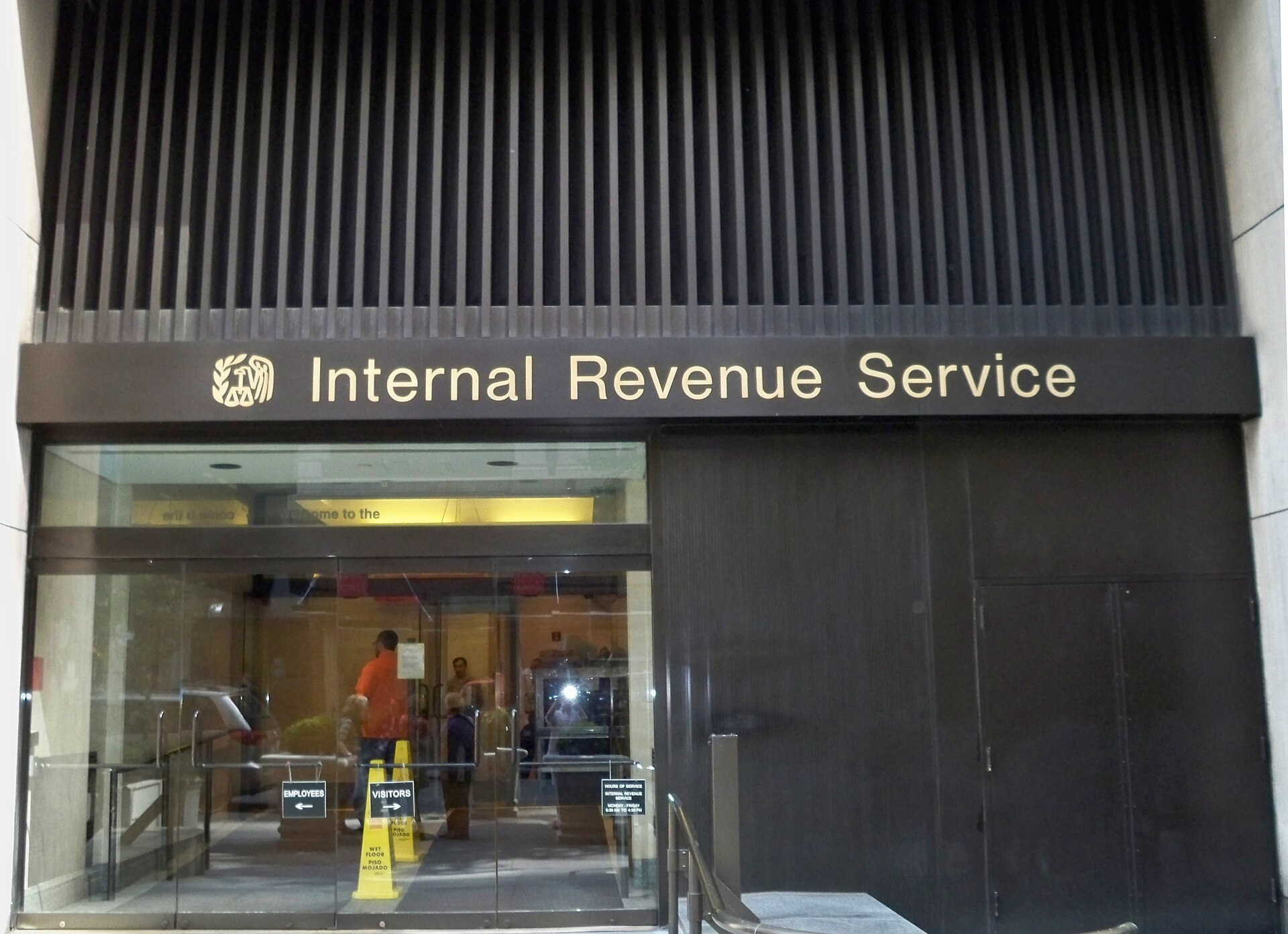
图片来源:美国国税局(IRS)纽约办公楼入口,MBisanz 摄,CC BY-SA(Wikimedia Commons)/ Entrance of an Internal Revenue Service office in New York, photo by MBisanz, CC BY-SA (Wikimedia Commons)
GSM Global · 本篇英文版 English edition of this story