诺奖背后的算力:San Diego超级计算机中心与「冰立方」合作逾十年 曾跨三大云平台调集约5.15万块GPU
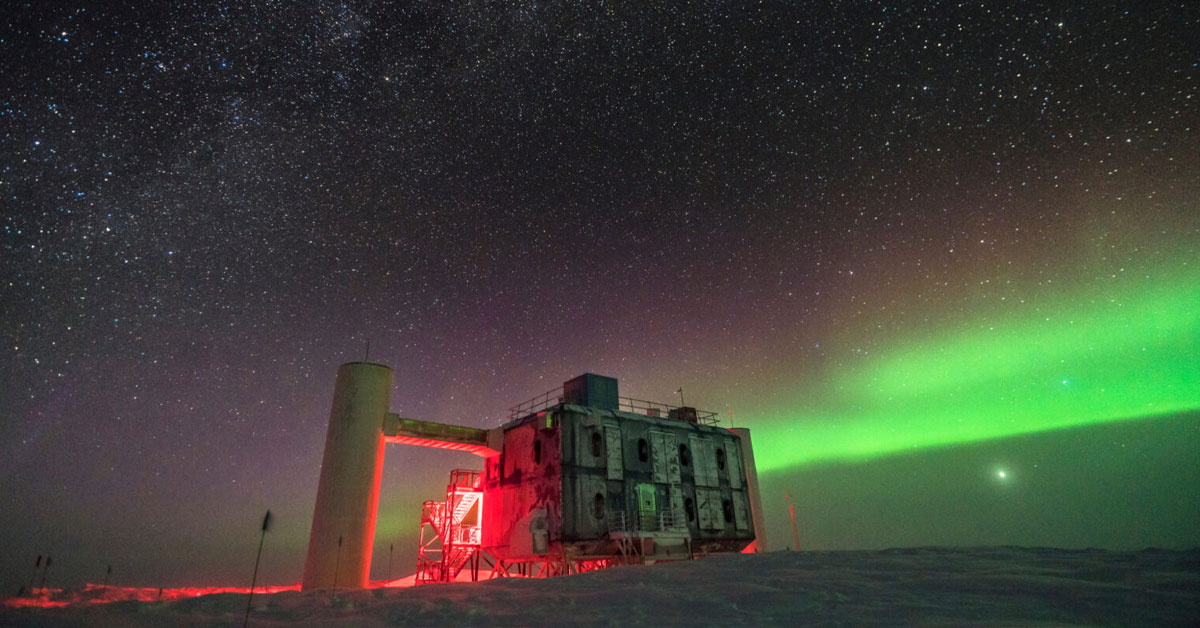
加州大学San Diego分校下属的San Diego超级计算机中心(SDSC)10月7日发布消息称,该中心与南极「冰立方」中微子天文台(IceCube)合作逾十年,为搜寻来自太空的高能中微子提供计算基础设施与专业支持。这项研究本周获得2026年诺贝尔物理学奖认可。
瑞典皇家科学院10月6日宣布,威斯康星大学麦迪逊分校物理学家弗朗西斯·哈尔岑(Francis Halzen)因对冰立方中微子天文台的决定性贡献、以及发现天体物理起源的高能中微子,获得今年的诺贝尔物理学奖(本站10月6日已报道奖项揭晓)。冰立方在南极一立方公里的冰层中布设光传感器,捕捉极少与普通物质发生作用的中微子留下的信号;天文台于2011年建成,此后探测到来自太阳系外的高能中微子,使中微子成为传递宇宙信息的「信使」。
哈尔岑表示,冰立方的发现不仅依赖南极的探测器,也依赖科学家模拟和解读观测结果的能力;十多年来,与SDSC的合作把计算专业能力与资源带给了这一挑战。SDSC主任弗兰克·维尔特魏因(Frank Würthwein)指出,高能光在抵达地球之前会被吸收,中微子却能基本不受干扰地穿越宇宙,因此宇宙中许多最极端的事件只能通过中微子或引力波来研究。
双方规模最大的一次合作演示发生在2019年11月16日:SDSC与威斯康星冰立方粒子天体物理中心在约两小时内,跨亚马逊AWS、微软Azure与谷歌云三大云平台、北美、欧洲与亚洲共28个云区域,调集约51,500块图形处理器(GPU)运行冰立方模拟,并用HTCondor软件把这些资源整合为一个统一资源池。SDSC称,冰立方的计算需求也影响了该中心Expanse等系统的建设思路。
资料来源:San Diego超级计算机中心(加州大学San Diego分校)10月7日新闻稿。
Behind the Nobel: SDSC's Decade of Computing Support for IceCube Included a 51,500-GPU Cloud Demonstration
A long-standing collaboration with the San Diego Supercomputer Center (SDSC) at the University of California San Diego has helped provide the computing expertise behind the search for high-energy neutrinos from space, work recognized this week with the 2026 Nobel Prize in Physics, SDSC said in a release issued October 7.
The Royal Swedish Academy of Sciences awarded the prize on October 6 to Francis Halzen, a physicist at the University of Wisconsin-Madison, "for decisive contributions to the IceCube Neutrino Observatory and the discovery of high-energy neutrinos of astrophysical origin" (GSM reported the award on October 6). At the South Pole, IceCube uses light sensors embedded in a cubic kilometer of Antarctic ice to detect the rare interactions of neutrinos, particles that usually pass through matter unnoticed. Halzen first presented his vision for the observatory in 1988; completed in 2011, IceCube went on to detect high-energy neutrinos originating beyond our solar system, establishing neutrinos as cosmic messengers and opening a new field of astronomy.
"IceCube's discoveries depend not only on the detector at the South Pole, but also on our ability to simulate and interpret what it observes," Halzen said, adding that the partnership with SDSC has brought computing expertise and resources to that challenge for more than a decade. SDSC Director Frank Würthwein explained that high-energy light is absorbed before it reaches Earth, while neutrinos can travel across the universe largely undisturbed, so many of the universe's most extreme events can be studied only with neutrinos or gravitational waves.
In one particularly ambitious demonstration on November 16, 2019, SDSC and the Wisconsin IceCube Particle Astrophysics Center ran an approximately two-hour experiment using some 51,500 graphics processing units (GPUs) across Amazon Web Services, Microsoft Azure and Google Cloud Platform, spanning 28 cloud regions in North America, Europe and Asia, with HTCondor software integrating the cloud GPUs into a single resource pool. SDSC said IceCube's computing needs have also helped inform its approach to systems including Expanse.
Source: San Diego Supercomputer Center, University of California San Diego, news release issued October 7, 2026.
发布:GSM·美国(发布链接)
图片来源:南极冰立方中微子天文台 / The IceCube Neutrino Observatory at the South Pole. Photo: Martin Wolf, NSF IceCube
GSM Global · 本篇英文版 English edition of this story