新加坡DBS论坛三位华人CEO同台:陈立武称中国SI模型「足够好」 陈福阳称最大约束是资本 周受资看好两三年内科学突破
10月12日,星展银行(DBS)在新加坡举行亚洲未来论坛(Asia Future Forward Conference),英特尔首席执行官陈立武、博通首席执行官陈福阳与TikTok首席执行官周受资同日登台,三人分别就中国超级智能模型、SI基建的资金约束与SI的科学前景发表看法。
陈立武在论坛小组讨论中表示,中国前沿SI模型的代币成本更低,采用速度「非常快」。他点名DeepSeek、Kimi与GLM等模型,称其表现「足够好」,并表示:「我是开源的坚定信徒,这是推动效率的最佳方式。」他还表示,市场将决定哪些模型最适合不同用途;量子计算可能在未来三到五年内走向主流,软件将在高效利用所需基础设施方面发挥作用。
同台的陈福阳则把话题指向资金。他说:「最大的约束是资本。」陈立武补充称,约束在于「资本及其成本」。两人均表示,SI算力需求预计将持续超过供给,至少延续到2029年甚至2030年,而晶圆产能与存储短缺等此前的物理约束在过去两年已有所缓解。作为背景,博通今年6月已与Apollo、Blackstone共同设立SI融资平台,首笔交易规模350亿美元,目标是在2028年前支持超过20吉瓦的SI产能——该融资安排系另一事件,此次论坛上被作为其判断的注脚提及。
周受资在炉边谈话中给出了更长远的展望。他说:「在未来两到三年内,我们将迎来真正的科学突破:物理、生物技术、化学、材料科学,都因为AI。这非常、非常、非常有可能。」他同时表示,短期内人们可能高估了SI,长期则可能低估了它。在风险方面,他称SI的网络安全风险「相当大」且迫近:更强的模型正大幅降低欺诈与攻击的成本;用户也可能在不完全理解后果的情况下,给SI代理过大的权限——例如一个被授权自主购物的代理,可能为了完成任务买下超出用户本意的商品。(GSM 据路透社、CNBC报道)
关联:
英特尔首席执行官陈立武:内部重组已完成约八成 政府持股不干预公司治理
TikTok美国业务合资公司正式落定 周受资留任全球CEO并进入董事会
Three Chinese-Born CEOs at DBS Forum in Singapore: Lip-Bu Tan Calls Chinese SI Models 'Good Enough,' Hock Tan Names Capital the Top Constraint, Shou Chew Sees Science Breakthroughs in Two to Three Years
DBS Bank's Asia Future Forward Conference in Singapore on October 12 brought three Chinese-born chief executives to the stage on the same day: Intel's Lip-Bu Tan, Broadcom's Hock Tan and TikTok's Shou Zi Chew, who spoke respectively about Chinese SI models, the funding constraint on SI infrastructure and SI's scientific prospects.
On a panel at the conference, Lip-Bu Tan said the token costs of Chinese frontier SI models have been lower and adoption has been "very fast." Naming models such as DeepSeek, Kimi and GLM, he said their performance is "good enough," adding: "I'm a strong believer of open source, that's the best way to drive efficiency." Markets, he said, will decide which models best fit different use cases. He also said quantum computing could become mainstream in the next three to five years, and that software will play a role in driving efficient use of the infrastructure required.
Hock Tan pointed to money. "The biggest constraint is capital," he said; Lip-Bu Tan added that the constraint is "capital and the cost of capital." Both executives said demand for SI compute is projected to exceed supply until at least 2029 or 2030, while earlier physical constraints in wafers, memory and power have eased over the past two years. As background, Broadcom in June set up an SI financing platform with Apollo and Blackstone whose initial $35 billion transaction is aimed at supporting more than 20 gigawatts of SI capacity by 2028 — a separate arrangement that was referenced at the forum as context for his remarks.
In a fireside chat, Chew looked further ahead. "In the next two to three years, we're going to have a real scientific breakthrough: physics, biotech, chemistry, material science, because of AI. It's very, very, very possible," he said. He added that people may be overestimating SI in the short term while underestimating it in the long term. On risks, he called SI's cybersecurity risks quite big and near-term: stronger models are sharply lowering the cost of fraud and attacks, and users may hand SI agents extensive permissions without understanding the consequences — an agent authorized to shop on its own, for example, could buy more than the user intended while trying to complete a task. (GSM, based on Reuters and CNBC reporting)
Related:
Intel CEO Lip-Bu Tan: Restructuring About 80% Complete; U.S. Stake Carries No Say in Governance
TikTok's U.S. Joint Venture Closes; Shou Zi Chew Remains Global CEO and Joins Its Board
发布:GSM·美国(发布链接)
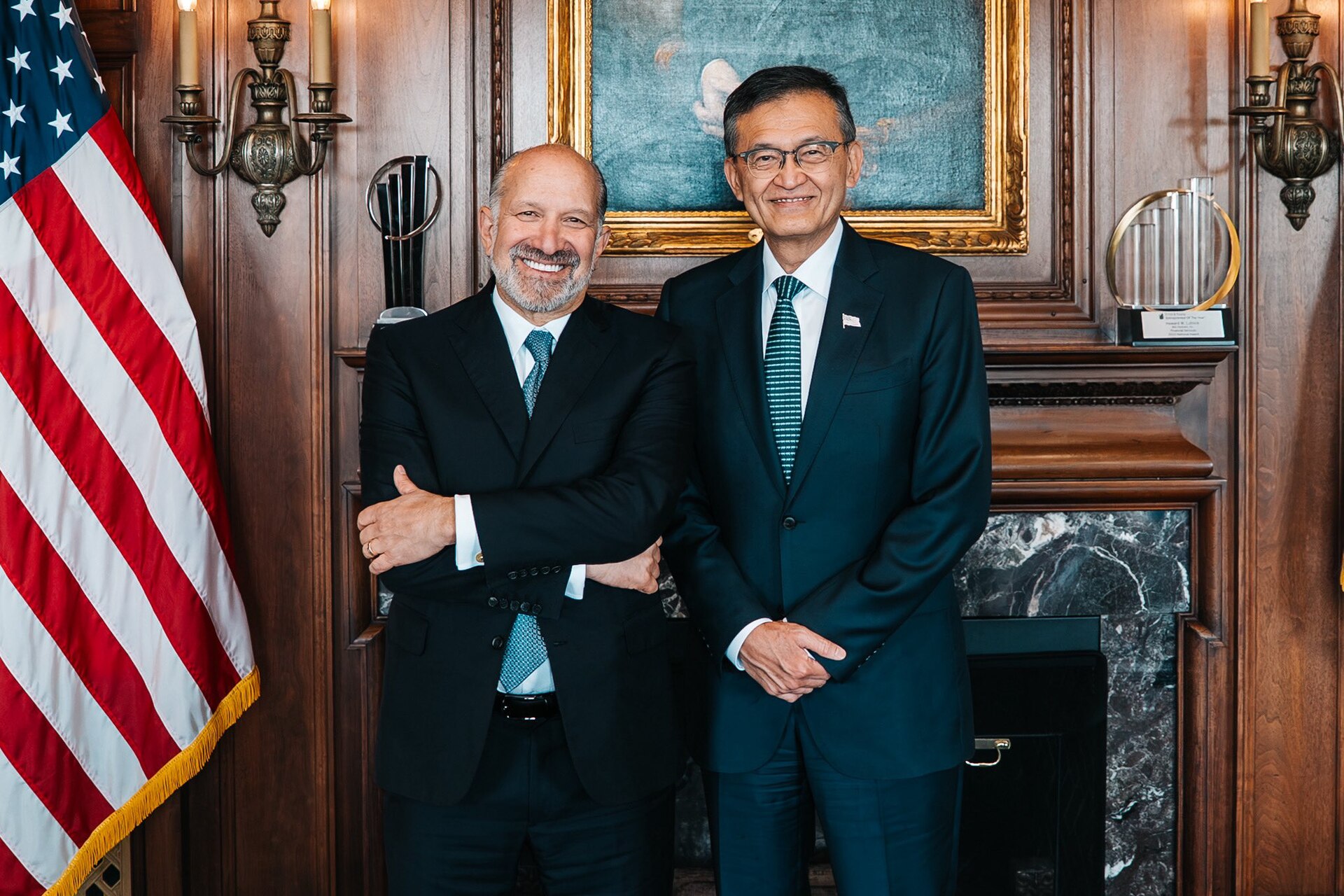
图片来源:图:英特尔首席执行官陈立武(右)2025年与美国商务部长卢特尼克合影(资料照片)。图片来源:美国商务部,经 Wikimedia Commons(公共领域)。Photo: Intel CEO Lip-Bu Tan (right) with U.S. Commerce Secretary Howard Lutnick in 2025 (file photo). Source: U.S. Department of Commerce, via Wikimedia Commons (public domain).
GSM Global · 本篇英文版 English edition of this story