韩国「世界号」火箭第五次发射:一箭搭载15颗卫星、14颗成功入轨释放
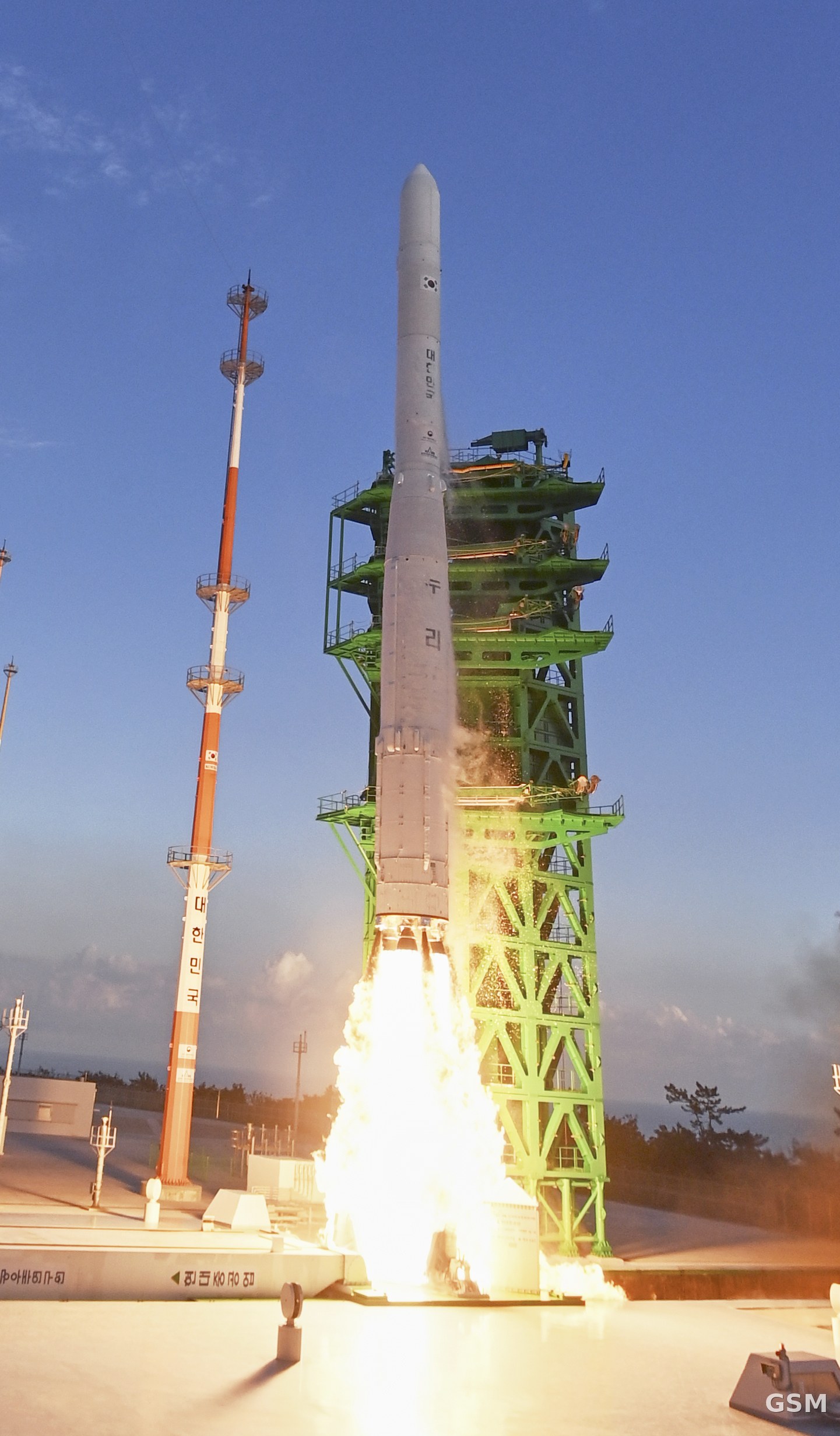
首尔——韩国自主研制的「世界号」(Nuri,KSLV-II)运载火箭10月7日下午12时25分自全罗南道高兴郡的罗老宇宙中心升空,约20分钟后抵达575公里的目标轨道,将所搭载15颗卫星中的14颗依次释放,第五次飞行取得成功。
本次载荷总重1071公斤,为「世界号」历次发射中最重的一次。主载荷是5颗NEONSAT微型卫星(2号至6号),属于韩国为国土安全建设的对地观测星座;另有10颗由韩国大学、研究机构与初创企业研制的立方星搭载升空。韩国宇宙航空厅(KASA)与韩国航空宇宙研究院确认,5颗主星已全部按间隔35至40秒依次分离,当晚即与南极世宗科学站取得首次联系。
唯一的遗憾来自搭载的立方星:Quaternion公司研制的PERSAT02因释放装置盖板故障未能与火箭分离。KASA表示,其余14颗卫星全部成功部署,这一结果不影响本次飞行的主要任务目标。
此次发射还有一层体制意义:「世界号」的发射运营首次由韩华航空航天全面接管,KASA由运营主导转为监督与支援角色,被韩国舆论视为该国向民营主导的商业发射服务过渡的关键一步。星座规划方面,NEONSAT最终将由10颗卫星组成,其余5颗计划随「世界号」第六次飞行在2027年下半年升空。
「世界号」是韩国第一型完全自主研制的三级运载火箭,2021年首飞未能入轨,此后2022年、2023年与2025年三次发射均告成功,本次为第五飞、第四次成功。
(来源:韩联社)
South Korea's Nuri Rocket Flies for a Fifth Time: 14 of 15 Satellites Deployed Into Orbit
Seoul — South Korea's domestically developed Nuri rocket (KSLV-II) lifted off from the Naro Space Center in Goheung, South Jeolla Province, at 12:25 p.m. on October 7 and reached its target orbit 575 kilometers above Earth about 20 minutes later, sequentially deploying 14 of the 15 satellites it carried on its fifth flight.
At 1,071 kilograms, the payload was the heaviest Nuri has ever flown. The primary payload comprised five NEONSAT microsatellites, numbered 2 to 6, part of an Earth-observation constellation for national safety, along with ten CubeSats built by Korean universities, research institutes and startups. The Korea AeroSpace Administration (KASA) and the Korea Aerospace Research Institute (KARI) confirmed that all five primary satellites separated at intervals of 35 to 40 seconds and made initial contact with the King Sejong Station in Antarctica by that evening.
The single failure involved a secondary payload: PERSAT02, a CubeSat built by the company Quaternion, never separated from the rocket because of a dispenser cover malfunction. KASA said the other 14 satellites were all deployed successfully and that the mission's primary objectives were met.
The flight also marked an institutional first: Hanwha Aerospace held full operational command of a Nuri launch for the first time, with KASA moving from operational lead to a supervisory and advisory role — a step widely seen in South Korea as a transition toward privately led commercial launch services. The NEONSAT constellation will eventually comprise ten satellites, with five more planned to fly on Nuri's sixth launch in the second half of 2027.
Nuri is South Korea's first fully homegrown three-stage orbital rocket. Its maiden flight in 2021 failed to reach orbit, while the flights in 2022, 2023 and 2025 succeeded, making this its fourth success in five launches.
(Source: Yonhap News Agency)
来源:韩联社
发布:GSM·美国(发布链接)
图片来源:图:韩国「世界号」(KSLV-II)运载火箭发射升空(资料图,2021年首飞)。韩国航空宇宙研究院,KOGL Type 1,经 Wikimedia Commons。 / Photo: South Korea's Nuri (KSLV-II) rocket lifting off (file photo, maiden flight in 2021). Korea Aerospace Research Institute, KOGL Type 1, via Wikimedia Commons.
GSM Global · 本篇英文版 English edition of this story