三名科学家因开发金属有机框架获2025年诺贝尔化学奖
2025年10月8日,瑞典斯德哥尔摩,瑞典皇家科学院宣布,将2025年诺贝尔化学奖授予北川进(Susumu Kitagawa)、Richard Robson 与 Omar M. Yaghi,表彰他们开发金属有机框架。
金属有机框架是一种新的分子建筑:金属离子像墙角一样立在结构里,由长条的有机分子连接起来,组成内部有大量空腔的晶体,气体与其他化学物质可以在这些空腔中进出。这类材料可以从沙漠的空气里收集水分、捕集二氧化碳、储存有毒气体,还能催化化学反应,也被用来从水中分离全氟和多氟烷基物质、分解环境中的药物残留、储存氢气。诺贝尔化学委员会主席 Heiner Linke 说,金属有机框架潜力巨大,给按需要定制的新材料带来了此前没有想到的机会。
这条路始于1989年。Robson 把带正电的铜离子与一种四臂分子结合,得到一种排列整齐、内部满是空腔的晶体,像一块装满空洞的钻石,但这种结构不稳定、容易塌。1992年至2003年间,北川进与 Yaghi 各自作出一系列关键发现:北川进证明气体可以在这类结构中进出,并预言这类框架可以做成柔性的;Yaghi 制成了一种非常稳定的金属有机框架,并证明可以用理性设计的方法改造它、赋予它新的性质。
在此之后,化学家已经造出数以万计种不同的金属有机框架。北川进任职于日本京都大学,Robson 任职于澳大利亚墨尔本大学,Yaghi 任职于美国加州大学伯克利分校。三人将平分1,100万瑞典克朗奖金。
关联:委内瑞拉反对派领袖 Machado 获2025年诺贝尔和平奖
(来源:瑞典皇家科学院)
Three Scientists Win the 2025 Nobel Prize in Chemistry for Developing Metal-Organic Frameworks
On October 8, 2025, in Stockholm, Sweden, the Royal Swedish Academy of Sciences announced that the Nobel Prize in Chemistry 2025 was awarded to Susumu Kitagawa, Richard Robson and Omar M. Yaghi, for the development of metal-organic frameworks.
A metal-organic framework is a new form of molecular architecture: metal ions function as cornerstones and are linked by long organic molecules, forming crystals that contain large cavities through which gases and other chemicals can flow. The materials can be used to harvest water from desert air, capture carbon dioxide, store toxic gases or catalyse chemical reactions, and have also been used to separate PFAS from water, break down traces of pharmaceuticals in the environment and store hydrogen. Heiner Linke, chair of the Nobel Committee for Chemistry, said metal-organic frameworks have enormous potential, bringing previously unforeseen opportunities for custom-made materials with new functions.
It all started in 1989, when Robson combined positively charged copper ions with a four-armed molecule and obtained a well-ordered, spacious crystal, like a diamond filled with innumerable cavities, although the construction was unstable and collapsed easily. Between 1992 and 2003, Kitagawa and Yaghi separately made a series of revolutionary discoveries: Kitagawa showed that gases can flow in and out of the constructions and predicted that such frameworks could be made flexible, while Yaghi created a very stable metal-organic framework and showed it could be modified using rational design, giving it new and desirable properties.
Chemists have since built tens of thousands of different metal-organic frameworks. Kitagawa is at Kyoto University in Japan, Robson at the University of Melbourne in Australia, and Yaghi at the University of California, Berkeley, in the United States. The three will share the prize of 11 million Swedish kronor equally.
Related: Venezuelan Opposition Leader Machado Wins the 2025 Nobel Peace Prize
(Source: The Royal Swedish Academy of Sciences)
来源:瑞典皇家科学院
发布:GSM·美国(发布链接)
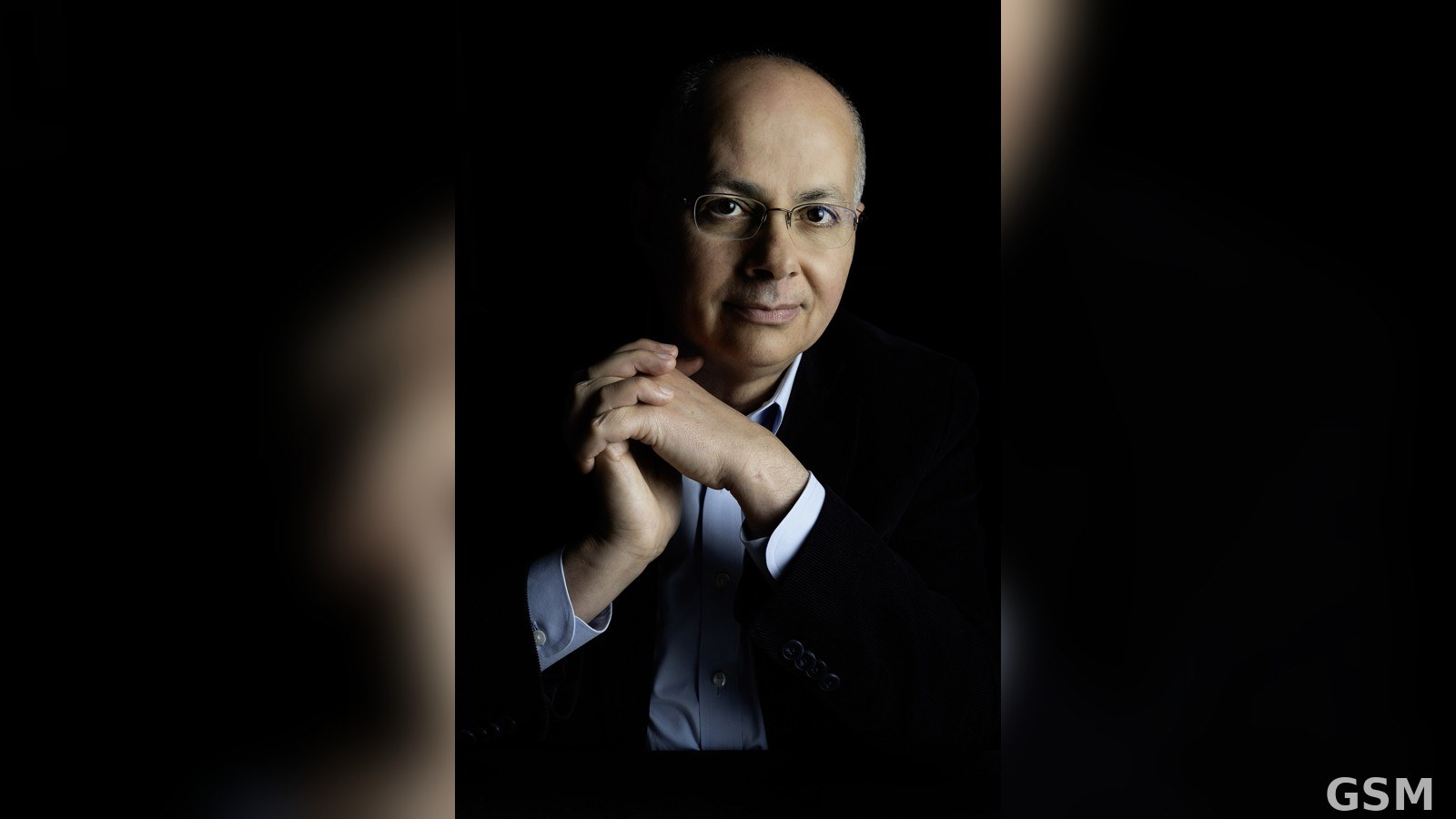
图片来源:图:Omar M. Yaghi 肖像,2025年。Christopher Michel,CC BY-SA 4.0,经 Wikimedia Commons。 / Photo: Omar M. Yaghi in 2025. By Christopher Michel, CC BY-SA 4.0, via Wikimedia Commons.
GSM Global · 本篇英文版 English edition of this story
- 2025-10-06 18:34三名科学家因发现调节性T细胞获2025年诺贝尔生理学或医学奖
- 2025-10-08 18:34三名科学家因开发金属有机框架获2025年诺贝尔化学奖本篇
- 2025-10-10 17:43委内瑞拉反对派领袖 Machado 获2025年诺贝尔和平奖